



Can a 48V battery be used in a street light? This is a question that often comes up when considering the power sources for street lighting systems. As a 48V battery supplier, I can provide in - depth insights into this matter, exploring the technical feasibility, advantages, challenges, and the specific battery options available.
Technical Feasibility
Street lights typically operate within a certain electrical range. Many modern street lighting fixtures are designed to work with low - to medium - voltage power sources. A 48V battery can be a suitable choice in terms of voltage compatibility. Most LED street lights, which are widely used today due to their energy - efficiency and long lifespan, can operate effectively within a range close to 48V.
The electrical components in a street light system, such as the driver for the LED lights, can be configured to work with a 48V power supply. These drivers are responsible for regulating the power going to the LEDs, ensuring that they receive a stable and appropriate amount of electricity. With proper design and setup, a 48V battery can provide the necessary power to the driver, which in turn powers the LED street lights.
Advantages of Using a 48V Battery in Street Lights
Energy Efficiency
One of the significant advantages of using a 48V battery in street lights is energy efficiency. Compared to lower - voltage batteries, a 48V battery can deliver power with less current for the same amount of power output. According to electrical principles, power (P) is equal to the product of voltage (V) and current (I), i.e., P = VI. When the voltage is higher, the current can be lower to achieve the same power. Lower current means less power loss due to resistance in the wiring, as the power loss in a wire is given by (I^{2}R) (where R is the resistance of the wire). This results in more efficient power transmission from the battery to the street lights.
Longer Cable Runs
A 48V battery allows for longer cable runs between the battery and the street lights. Since the power loss in the cables is reduced at higher voltages, the distance between the battery storage location and the individual street lights can be increased without a significant drop in power. This is particularly useful in large - scale street lighting projects where the battery may be located at a central point to serve multiple street lights spread over a large area.
Compatibility with Renewable Energy Sources
In many modern street lighting setups, renewable energy sources such as solar panels are used to charge the batteries. A 48V battery is often compatible with the output voltage of solar panel arrays. Solar panels can be connected in series to achieve a higher output voltage, making it easier to charge a 48V battery directly. This integration of renewable energy with a 48V battery system can make street lighting more sustainable and reduce reliance on the grid.
Challenges of Using a 48V Battery in Street Lights
Initial Cost
The initial cost of a 48V battery system can be relatively high compared to lower - voltage battery systems. High - voltage batteries often require more advanced technology and materials, which drive up the cost. However, it's important to consider the long - term benefits of energy efficiency and longer lifespan, which can offset the initial investment over time.
Safety Concerns
Working with a 48V power source requires strict safety measures. While 48V is generally considered a relatively low - voltage compared to some industrial applications, it can still pose a risk of electrical shock if proper safety protocols are not followed. Installers and maintenance personnel need to be trained to handle 48V battery systems safely.
Specific Battery Options
As a 48V battery supplier, we offer a range of battery products suitable for street lighting applications.


- 48V 100ah Lifepo4 Bms Inside Battery: This battery uses LiFePO4 (Lithium Iron Phosphate) technology, which is known for its high energy density, long cycle life, and excellent thermal stability. The built - in Battery Management System (BMS) ensures the safe and efficient operation of the battery, protecting it from over - charging, over - discharging, and short - circuits.
- Rechargeable Smart BMS Bluetooth Lithium Ion Battery 48v 100ah Lithium Battery Lifepo4 Battery: In addition to the benefits of LiFePO4 technology, this battery features a smart BMS with Bluetooth connectivity. This allows for remote monitoring and management of the battery's status, such as its state of charge, temperature, and any potential faults. It is a great option for large - scale street lighting projects where centralized monitoring is required.
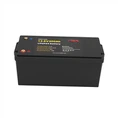
- Deep Cycle 200ah 48v Lithium Iron Phosphate Rechargeable Lifepo4 Lithium Battery Pack: For applications where a higher capacity is needed, this deep - cycle 200ah battery is an ideal choice. It can provide a longer runtime for street lights, reducing the frequency of recharging. The deep - cycle design also allows the battery to withstand frequent discharging and recharging cycles without significant degradation.
Conclusion
In conclusion, a 48V battery can indeed be used effectively in street lights. Its technical feasibility, combined with the numerous advantages it offers in terms of energy efficiency, longer cable runs, and compatibility with renewable energy sources, make it a compelling choice for modern street lighting projects. While there are some challenges, such as initial cost and safety concerns, the long - term benefits often outweigh these drawbacks.
If you are considering implementing a 48V battery system for your street lighting project, or if you need more information about our products, we encourage you to reach out for a purchase consultation. We are committed to providing you with the best - suited battery solutions for your street lighting needs.
References
- Power Electronics in Renewable Energy Systems, by Muhammad H. Rashid
- Lighting Handbook: Reference and Application, by Illuminating Engineering Society of North America