


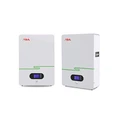
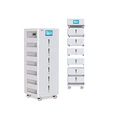
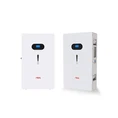
Stackable Battery
Your Professional Stackable Battery Supplier!
SUNNEW is a manufacturer of energy storage battery packs with 15 years of professional experience in lithium battery manufacturing, specializing in the research and development and sales of energy storage battery packs.
Large Production Scale
The company has a 10,000 square meter factory. 7 production lines, including 3 energy storage battery production lines, 3 power battery production lines, 1 digital battery production line, and more than 30 sets of professional testing equipment.
Advanced Production Equipment
Cell sorting equipment, laser spot welding equipment, automatic welding equipment, automatic film sticking equipment, automatic gluing equipment, tensile testing equipment, gravity testing equipment, high and low temperature testing equipment, etc.
Sold Overseas
Our products are exported to South Africa, France, Poland and other regions.
Quick Response
We promise to respond to your inquiries within 24 hours to ensure that you receive the information and support you need in a timely manner.


Modular design
Stackable batteries usually adopt modular structure, which can be freely combined and stacked according to needs, conveniently expanding capacity and power.
Space efficiency
The stacking design makes the battery take up less space in the vertical direction, which is suitable for application scenarios with limited space.
Easy maintenance and replacement
If a module fails, it can be replaced alone without replacing the entire battery system, reducing maintenance costs.
Flexibility and scalability
Users can add or reduce battery modules as needed to meet different energy needs.
Higher energy density
By optimizing the design and materials, stacked batteries can provide higher energy density and enhance their performance in high energy demand scenarios.
Improved thermal management
Reasonable stacking design can enhance the heat dissipation performance of the battery, help maintain the operating temperature of the battery, and improve safety and life.
Multiple charging and discharging methods
The stackable battery system can support multiple charging and discharging strategies to adapt to different usage scenarios.
Positive Electrode (Anode)
This is the electrode in the battery that participates in the oxidation reaction. It is usually made of materials such as lithium nickel cobalt manganese oxide (NMC) and lithium cobalt oxide (LCO).
Negative Electrode (Cathode)
This is the electrode in the battery that participates in the reduction reaction. Common materials include graphite or silicon-based composites.
Electrolyte
The electrolyte is used to conduct ions. It is usually a liquid, electrolyte polymer or solid electrolyte. It allows ions to move between the positive and negative electrodes.
Separator
The separator is located between the positive and negative electrodes to prevent direct contact between the two and short circuit, while allowing lithium ions to pass through. Common materials include polyethylene (PE) and polypropylene (PP).


Housing
The battery's housing provides structural support and protects the internal components. It is usually made of metal or plastic.
Terminals
The terminals are used to connect the battery to the external circuit to ensure that the current can flow smoothly.
Current Collectors
These are conductive materials that connect the electrodes to ensure that the current can be effectively transmitted to the external circuit of the battery.
Thermal Management System
In high-energy-density batteries, temperature management is very critical and additional heat dissipation components may be required to prevent overheating.
Application of Stackable Battery
Renewable Energy Storage
Stackable batteries can be used in solar and wind energy storage systems, which can balance the gap between power generation and consumption and improve the efficiency of renewable energy utilization.
Electric Vehicles
In electric vehicles, stacked batteries can increase the battery's energy storage capacity by increasing the number of battery cells, thereby extending the driving range.
Home Energy Storage Systems
Many households choose to install energy storage systems to store electricity, especially after installing solar power generation systems. The design of stackable batteries makes these systems more flexible and scalable.
Portable Devices
In portable electronic devices such as smartphones, tablets and laptops, stacked batteries can provide a smaller and more efficient energy solution.
Grid Regulation
In grid regulation equipment used by power companies, stackable batteries can be used to store electricity to cope with peak demand and help balance supply and demand.
Medical Devices
Some medical devices and wearable devices use stacked batteries to achieve a more compact and long-lasting design.
Aerospace
In drones and other aerospace applications, stacked batteries can provide the necessary light weight and high energy output.

Types of Stackable Battery
Lithium-ion battery
This is the most common type of stackable battery, with high energy density and long cycle life, widely used in electric vehicles, mobile devices and energy storage systems.
Lithium polymer battery (Li-Po)
Similar to lithium-ion battery, but with polymer electrolyte, it has a more flexible shape design and is suitable for various devices, especially portable electronics.
Nickel metal hydride battery (NiMH)
This is a common stackable battery, commonly used in hybrid vehicles and some household appliances, with good energy density and environmental protection characteristics.
Lead-acid battery
Although relatively heavy, lead-acid batteries have high power output and low cost, and are often used in automotive starting batteries and uninterruptible power supply (UPS) systems.
Fuel cell
Produces electricity through chemical reactions, and multiple units can be stacked to increase voltage and power output.
Precautions for Stackable Battery


Compatibility
Make sure the batteries used are of the same model, capacity, and chemical composition. Mixing batteries of different types or capacities may result in performance degradation or damage.
Charger matching
Use a charger that is compatible with the stackable battery. Different voltages or charging methods may cause the battery to overheat or be damaged.
Temperature control
Avoid using or charging in extreme temperatures. High temperatures may cause the battery to swell, leak, or explode, while low temperatures may cause the battery capacity to decrease.
Regular inspection
Check the appearance of the battery regularly to confirm whether there are any abnormalities such as leakage, swelling, or corrosion. If any problems are found, replace the battery in time.
Avoid short circuits
Make sure the positive and negative poles of the battery do not touch to prevent short circuits from causing fire or explosion.
Safe placement
When storing or using stackable batteries, make sure to place them on a stable, dry surface to avoid impact or squeezing.
Charge and discharge management
Avoid overcharging or over-discharging, which will affect the life and performance of the battery. Use charging equipment and power management systems with protection functions.
Timely replacement
For batteries that are used frequently, check their status regularly and replace them in time to ensure the normal operation of the device.
Proper storage
When not in use for a long time, the battery should be stored in a dry, cool place and maintained at a moderate state of charge (usually about 50%).
Certificate


Frequently Asked Questions
We're professional stackable battery manufacturers and suppliers in China, specialized in providing high quality customized products. We warmly welcome you to buy or wholesale high-grade stackable battery in stock here from our factory. Good service and low price are available.
stackable battery for musictech applications, stackable battery for automotive applications, stackable battery for toys