



Can a 48V battery be used in a forklift?
As a supplier of 48V batteries, I often encounter questions from customers regarding the compatibility of 48V batteries with forklifts. This topic is not only crucial for those in the material handling industry but also for anyone looking to optimize the performance and cost - efficiency of their forklift operations. In this blog, I will delve into the technical aspects, advantages, and potential limitations of using a 48V battery in a forklift.
Technical Compatibility
Forklifts come in various power requirements, and the voltage of the battery is a key factor. Many modern forklifts are designed to operate on 48V systems. This is because a 48V battery can provide a good balance between power output and safety. Forklifts need a significant amount of power to lift heavy loads, move around warehouses, and perform other tasks. A 48V battery can supply sufficient energy to drive the forklift's electric motor, hydraulic system, and other components.
The electrical system of a forklift is engineered to work within a specific voltage range. When a 48V battery is used in a forklift designed for this voltage, the electrical components such as the motor controller, solenoids, and sensors can function optimally. For example, the motor controller is calibrated to handle the voltage and current supplied by a 48V battery. If the voltage is too low, the forklift may not have enough power to lift heavy loads or move at a reasonable speed. On the other hand, if the voltage is too high, it can damage the electrical components due to over - voltage stress.
Advantages of Using a 48V Battery in a Forklift
- Energy Efficiency: 48V batteries, especially lithium - ion batteries like the 48V 100ah Lifepo4 Bms Inside Battery, are known for their high energy efficiency. They can convert a larger percentage of the stored energy into useful work compared to traditional lead - acid batteries. This means that forklifts using 48V lithium - ion batteries can operate for longer periods on a single charge, reducing the need for frequent recharging.
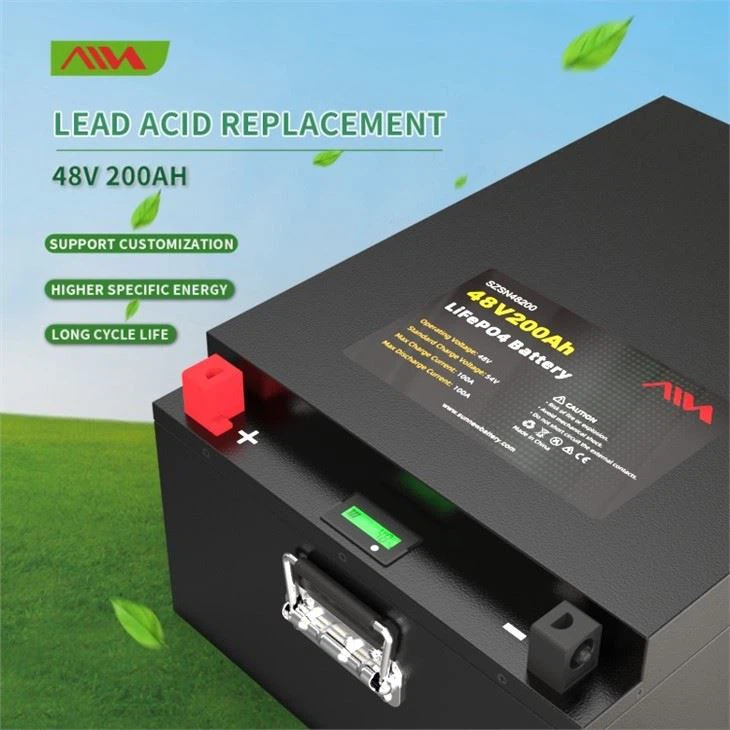
- Longer Lifespan: Lithium - ion 48V batteries generally have a longer lifespan than lead - acid batteries. For instance, the Deep Cycle 48V 200ah EV Battery can withstand a greater number of charge - discharge cycles. This reduces the long - term cost of battery replacement and maintenance.
- Fast Charging: Many 48V lithium - ion batteries support fast - charging technology. This is a significant advantage in a busy warehouse environment where downtime for charging needs to be minimized. For example, the Rechargeable Smart BMS Bluetooth Lithium Ion Battery 48v 100ah Lithium Battery Lifepo4 Battery can be charged much faster than a traditional lead - acid battery, allowing forklifts to get back to work quickly.
- Low Maintenance: Unlike lead - acid batteries, 48V lithium - ion batteries do not require regular maintenance such as adding water or equalizing charges. This saves time and labor costs for forklift operators and maintenance teams.
Potential Limitations
- Initial Cost: One of the main drawbacks of using 48V lithium - ion batteries is the higher initial cost compared to lead - acid batteries. However, when considering the long - term savings in energy costs, maintenance costs, and battery replacement costs, the total cost of ownership over the battery's lifespan can be comparable or even lower.
- Temperature Sensitivity: Lithium - ion batteries are more sensitive to temperature changes than lead - acid batteries. Extreme temperatures, either too hot or too cold, can affect the performance and lifespan of the battery. Forklift operators need to ensure that the batteries are stored and operated within the recommended temperature range.
Considerations Before Using a 48V Battery in a Forklift
- Forklift Model Compatibility: Before purchasing a 48V battery, it is essential to check the forklift's manual or consult the manufacturer to ensure that the forklift is designed to use a 48V battery. Some older forklift models may require modifications to the electrical system to work with a 48V battery.
- Battery Capacity: The capacity of the 48V battery, measured in amp - hours (Ah), is also an important consideration. A higher capacity battery can provide more energy and allow the forklift to operate for longer periods. However, a larger capacity battery may also be heavier and more expensive. Forklift operators need to balance the need for longer runtime with the practical limitations of the forklift's weight capacity and available space.
- Charging Infrastructure: Adequate charging infrastructure needs to be in place to support the use of 48V batteries. This includes the right type of chargers and a suitable charging area. For fast - charging batteries, the electrical supply needs to be able to handle the high - power charging requirements.
Conclusion
In conclusion, a 48V battery can be used in a forklift, and in many cases, it offers significant advantages over traditional lead - acid batteries. The high energy efficiency, long lifespan, fast charging, and low maintenance make 48V lithium - ion batteries an attractive option for forklift operators. However, the higher initial cost and temperature sensitivity need to be carefully considered.
If you are interested in exploring the use of 48V batteries for your forklifts, I encourage you to contact us for more information and to discuss your specific requirements. We can provide detailed product information, technical support, and help you find the best 48V battery solution for your forklift fleet.

References
- "Electric Forklift Batteries: A Guide to Selection and Maintenance" - Industry Handbook
- "Lithium - Ion Battery Technology for Industrial Applications" - Academic Research Paper