



Satellite communication devices are at the forefront of modern technology, enabling seamless global connectivity, real - time data transmission, and a wide range of applications from weather forecasting to military surveillance. As a 48V battery supplier, I often get asked whether a 48V battery can be used in satellite communication devices. In this blog, we'll explore the technical aspects, advantages, and challenges of using a 48V battery in such high - tech equipment.
Technical Compatibility
To determine if a 48V battery can be used in a satellite communication device, we first need to understand the power requirements of these devices. Satellite communication devices typically have a complex power system that needs to supply stable and reliable energy.
Most satellite communication devices are designed to operate within a specific voltage range. While some devices may be designed for a standard 12V or 24V power supply, others can be adapted to work with a 48V battery. The key lies in the power management system of the device. A well - designed satellite communication device will have a voltage regulator that can step down or step up the voltage as needed.
For instance, if a device requires a lower voltage for its internal components, a step - down converter can be used to convert the 48V from the battery to the appropriate level. On the other hand, if the device can directly utilize the 48V power, the battery can be connected without significant modifications.
Advantages of Using a 48V Battery
Higher Energy Density
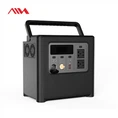
48V batteries, especially Rechargeable Smart BMS Bluetooth Lithium Ion Battery 48v 100ah Lithium Battery Lifepo4 Battery, often have a higher energy density compared to lower - voltage batteries. This means that they can store more energy in a smaller and lighter package. In satellite applications, where weight and space are at a premium, a 48V lithium - ion battery can be a great advantage. A higher energy density allows the satellite to carry more power for a longer mission without adding excessive weight.
Reduced Current
According to Ohm's law (V = IR), for a given power requirement (P = VI), a higher voltage results in a lower current. When using a 48V battery instead of a 12V battery, the current flowing through the wires is significantly reduced. This has several benefits. Firstly, it reduces the power loss in the wires due to resistance (P_loss = I²R). Secondly, it allows for the use of thinner and lighter wires, which further saves weight and space in the satellite.
Compatibility with Modern Electronics
Many modern electronic components are designed to work with higher voltages. A 48V battery can directly power these components without the need for complex voltage conversion circuits. This simplifies the design of the satellite communication device and reduces the number of components, which in turn increases the reliability of the system.


Challenges of Using a 48V Battery
Safety Concerns
Higher voltages pose greater safety risks. A 48V battery can deliver a significant amount of energy, and if not handled properly, it can cause electrical shock, short - circuits, and even fires. In a satellite environment, where maintenance and repair are extremely difficult, ensuring the safety of the battery system is crucial. Special safety features such as over - voltage protection, under - voltage protection, and short - circuit protection need to be incorporated into the battery management system (BMS).
Cost
48V batteries, especially those with advanced features like smart BMS and Bluetooth connectivity, can be more expensive than lower - voltage batteries. The initial investment for using a 48V battery in a satellite communication device may be higher. However, when considering the long - term benefits such as reduced weight, lower power loss, and increased reliability, the cost may be justified.
Charging and Discharging Management
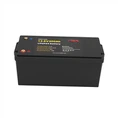
Satellite communication devices often have irregular power consumption patterns. The battery needs to be charged and discharged in a controlled manner to ensure its longevity. A 48V battery requires a more sophisticated charging and discharging management system compared to a lower - voltage battery. The BMS of the Deep Cycle 48V 200ah EV Battery needs to be able to monitor the battery's state of charge, state of health, and temperature accurately and adjust the charging and discharging parameters accordingly.
Case Studies
There have been several successful applications of 48V batteries in satellite communication devices. For example, some small satellites used for earth observation and communication experiments have adopted 48V lithium - ion batteries. These batteries have provided reliable power for the satellite's communication systems, allowing for continuous data transmission and reception.
In one case, a research satellite used a 48V 100ah Lifepo4 Bms Inside Battery to power its communication payload. The high energy density of the battery allowed the satellite to operate for an extended period without the need for frequent recharging. The built - in BMS ensured the safety and proper operation of the battery throughout the mission.
Conclusion
In conclusion, a 48V battery can be used in a satellite communication device, provided that the technical challenges are properly addressed. The advantages of higher energy density, reduced current, and compatibility with modern electronics make 48V batteries an attractive option for satellite applications. However, safety concerns, cost, and charging/discharging management need to be carefully considered.
If you are in the satellite communication industry and are considering using a 48V battery for your devices, we are here to help. As a leading 48V battery supplier, we offer a wide range of high - quality 48V batteries with advanced features and reliable performance. We can work with you to understand your specific requirements and provide customized solutions. Contact us for procurement and let's discuss how our 48V batteries can enhance the performance of your satellite communication devices.
References
- Ohm's law: Physics textbooks and online resources on electrical engineering.
- Battery energy density and performance data: Manufacturer datasheets of 48V lithium - ion batteries.
- Satellite power system design: Research papers on satellite engineering and space technology.