



Can a backup battery be used to charge a small air purifier? This is a question that many people, especially those concerned about indoor air quality and emergency preparedness, often ask. As a backup battery supplier, I'm here to provide you with a comprehensive answer based on scientific knowledge and practical experience.
Understanding the Basics: Backup Batteries and Air Purifiers
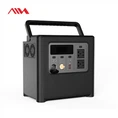
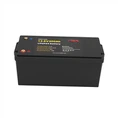
First, let's understand what backup batteries and small air purifiers are. Backup batteries, also known as portable power stations or emergency power supplies, are designed to store electrical energy and provide power when the main power source fails. They come in various capacities and power outputs, suitable for different applications. For example, the Sunnew 1229Wh Big Capacity Multi - function Emergency Power Supply Quick Charge Solar Charging 1000W Portable Power Station offers a large capacity and multiple charging options, making it a versatile choice for different scenarios.


On the other hand, small air purifiers are devices used to remove pollutants, allergens, and odors from the air in a confined space. They typically consume relatively low power compared to larger appliances, but the power consumption can vary depending on the model, size, and the features it offers.
Compatibility: Voltage, Current, and Power Requirements
To determine whether a backup battery can charge a small air purifier, we need to consider three key electrical parameters: voltage, current, and power.
- Voltage: The voltage of the backup battery must match the voltage requirements of the air purifier. Most small air purifiers operate on standard household voltages, which are typically 110 - 120V in North America and 220 - 240V in many other parts of the world. Backup batteries usually have different output voltage options. For instance, some portable power stations can provide both 12V DC output (commonly used for charging small electronics) and 110/220V AC output (similar to household outlets). As long as the backup battery can supply the appropriate voltage, this is a good start for compatibility.
- Current: Current is the flow of electric charge. The backup battery should be able to supply the required current to the air purifier. The current requirement of an air purifier can be found on its product label or in the user manual. If the backup battery cannot provide enough current, the air purifier may not operate properly or may not turn on at all.
- Power: Power is the product of voltage and current (P = V x I). The power rating of the backup battery should be equal to or greater than the power consumption of the air purifier. For example, if a small air purifier has a power consumption of 50W, the backup battery should have a continuous power output of at least 50W to support its operation. The 600W Portable Generator For Outdoor Camping can easily handle the power needs of most small air purifiers, given its relatively high power output.
Calculating the Runtime
Once we have established the compatibility in terms of voltage, current, and power, we can calculate how long the backup battery can power the small air purifier. This calculation depends on the capacity of the backup battery and the power consumption of the air purifier.
The capacity of a backup battery is usually measured in watt - hours (Wh). To calculate the runtime (T), we use the formula: T = Battery Capacity (Wh) / Power Consumption of Air Purifier (W). For example, if we have a Sunnew 2304Wh High Capacity Lithium Iron Battery Accessories Solar Charging 800W Quick Charge Portable Power Station and a small air purifier with a power consumption of 40W, the runtime would be T = 2304 Wh / 40 W = 57.6 hours. However, in real - world scenarios, there may be some losses due to inefficiencies in the battery and the charging process, so the actual runtime may be slightly less.
Practical Considerations
In addition to the technical aspects, there are some practical considerations when using a backup battery to charge a small air purifier.
- Portability: If you plan to use the air purifier in different locations, such as during outdoor activities or in emergency situations, the portability of both the backup battery and the air purifier is important. Smaller and lighter backup batteries are easier to carry around, but they may have a lower capacity.
- Charging Options: Backup batteries with multiple charging options, such as solar charging, can be very useful. Solar charging allows you to recharge the battery even when there is no access to a traditional power outlet, ensuring that you can keep the air purifier running for an extended period.
- Noise Level: Some backup batteries, especially those with built - in generators, may produce noise during operation. If you are using the air purifier in a quiet environment, such as a bedroom or a study, a quiet backup battery would be a better choice.
Conclusion
In conclusion, a backup battery can be used to charge a small air purifier as long as the electrical parameters are compatible and the backup battery has sufficient capacity to meet the power requirements. This setup can be very useful in emergency situations, such as power outages, or for those who want to improve the air quality in areas without access to a traditional power source.
If you are interested in purchasing a backup battery for your small air purifier or have any questions about our products, we welcome you to contact us for procurement discussions. We have a wide range of backup batteries with different capacities, power outputs, and features to meet your specific needs.
References
- Electrical Engineering textbooks for understanding voltage, current, and power concepts.
- Product manuals of backup batteries and small air purifiers for specific technical specifications.