


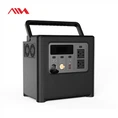
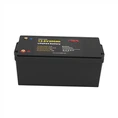
Hey there! As a cabinet battery supplier, I often get asked this question: Can a cabinet battery be used in a vehicle? Well, let's dive right into it and break it down.
First off, what exactly is a cabinet battery? Cabinet batteries are typically designed for stationary energy storage applications. They're commonly used in solar power energy storage systems, home energy storage setups, and server racks. For example, our Stacked Solar Energy Storage Battery 48v 100ah Server Rack Battery 5kwh Cabinet Energy Storage Lifepo4 Battery is a great option for storing solar - generated power in a server rack environment. These batteries are built to provide a stable and long - term energy supply in a fixed location.
Now, let's talk about vehicle batteries. Vehicle batteries, whether they're for cars, trucks, or other types of vehicles, have some very specific requirements. They need to be able to deliver a high amount of current quickly to start the engine. This is known as cranking amps. Once the engine is running, the battery also needs to support the electrical systems in the vehicle, like the lights, radio, and air conditioning.
So, can a cabinet battery be used in a vehicle? In theory, it might seem possible. After all, both are batteries and they store electrical energy. However, there are several factors that make it a bit more complicated.
Compatibility
One of the biggest issues is voltage and capacity compatibility. Vehicle batteries usually operate at 12 volts, although some larger vehicles or electric vehicles may have higher - voltage systems. Cabinet batteries, on the other hand, can come in a variety of voltages, such as 48 volts. Our Solar Power Energy Storage System 48V 150Ah Lifepo4 Battery Pack is a 48 - volt battery, which is not directly compatible with a standard 12 - volt vehicle electrical system. You'd need a complex voltage conversion system to make it work, and that can be costly and may not be very efficient.


Physical Design
Cabinet batteries are designed to be installed in a cabinet or a stationary rack. They're often quite large and heavy, which is not ideal for a vehicle. Vehicles need lightweight and compact batteries to save space and reduce the overall weight of the vehicle, which in turn improves fuel efficiency (for traditional vehicles) or range (for electric vehicles). For instance, our Cabinet 48V 120Ah Home ESS Battery is built for home use and is not designed to withstand the vibrations, shocks, and temperature variations that a vehicle battery has to endure.
Cranking Ability
As I mentioned earlier, vehicle batteries need to have a high cranking ability. Cabinet batteries are generally designed for a slow and steady discharge over a long period. They're not optimized to deliver a large burst of power in a short time, which is essential for starting an engine. So, even if you manage to get the voltage right and install the cabinet battery in a vehicle, it might not be able to start the engine.
Safety
Safety is another crucial aspect. Vehicle batteries are designed with safety features that are specific to the vehicle environment. For example, they need to be able to handle the heat generated during normal operation and in case of a short - circuit. Cabinet batteries may not have the same level of safety features designed for the dynamic conditions of a vehicle.
However, there are some scenarios where a cabinet battery could potentially be used in a vehicle. In some specialized electric vehicles or hybrid vehicles with custom - designed electrical systems, a cabinet battery might be adapted for use. For example, in a large electric bus or a specialized electric utility vehicle, where the space and weight constraints are a bit more relaxed, and the electrical system can be designed to work with a higher - voltage battery.
Benefits of Using Cabinet Batteries in Specialized Vehicles
If a cabinet battery can be used in a specialized vehicle, there are some benefits. Cabinet batteries often have a higher energy density, which means they can store more energy in a given volume. This could potentially increase the range of an electric vehicle. They also tend to have a longer lifespan compared to some traditional vehicle batteries, which could reduce the long - term cost of ownership.
In conclusion, while it's not a straightforward yes or no answer, in most cases, using a cabinet battery in a standard vehicle is not a good idea. But for specialized vehicles with custom - designed electrical systems, it might be worth exploring.
If you're in the market for a cabinet battery for your solar energy storage needs, home energy system, or other stationary applications, we've got you covered. We offer a wide range of high - quality cabinet batteries that are reliable and efficient. Whether you need a battery for a small home setup or a large - scale server rack, we can provide the right solution for you.
If you're interested in learning more about our products or have any questions regarding cabinet batteries, feel free to reach out to us. We're always happy to have a chat and help you find the perfect battery for your needs. Let's start a conversation about your energy storage requirements and see how we can work together to meet them.
References
- Battery University: A comprehensive resource on battery technology and applications.
- SAE International: Publications and research on vehicle battery standards and requirements.