


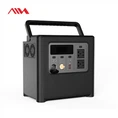
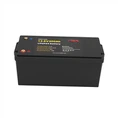

Hey there! As a home battery supplier, I've often been asked if our home batteries can be used in industrial settings. It's a pretty valid question, and today, I'm gonna break it down for you.
First off, let's talk about what a home battery is. In simple terms, a home battery is designed to store electrical energy for use in a residential setting. It can store excess energy generated by solar panels during the day and then release that energy when the sun goes down or when there's a power outage. These batteries come in different sizes and capacities, but they're generally made to meet the energy needs of a typical household.
Now, when we think about industrial settings, things get a bit more complex. Industries have much higher energy demands compared to homes. They run heavy machinery, large - scale equipment, and often operate 24/7. So, the big question is, can a home battery cut it in such an environment?


Advantages of Using Home Batteries in Industrial Settings
One of the main advantages of using home batteries in industrial settings is cost - savings. If an industry has periods of low energy demand, they can charge the home batteries during off - peak hours when electricity is cheaper. Then, during peak hours, they can use the stored energy from the batteries instead of drawing power from the grid at a higher rate. This strategy, known as peak shaving, can significantly reduce electricity bills.
Another benefit is reliability. In case of a power outage, home batteries can provide backup power to keep essential equipment running. For industries where even a short power interruption can lead to significant losses, having a backup power source is crucial. For example, a data center can't afford to lose power as it may result in data loss and service disruptions. A home battery can act as a stop - gap measure until the main power supply is restored.
Also, home batteries are often more environmentally friendly. Many of them are paired with renewable energy sources like solar panels. By using home batteries to store solar energy, industries can reduce their reliance on fossil - fuel - based power generation, which is not only better for the environment but can also improve the company's public image.
Limitations of Home Batteries in Industrial Settings
However, there are also some limitations. One of the most significant drawbacks is capacity. Home batteries are typically designed to meet the energy needs of a single - family home, which are much lower compared to industrial requirements. For instance, a large manufacturing plant may need hundreds of kilowatts or even megawatts of power, while a home battery may only have a capacity of a few kilowatt - hours.
Another issue is durability. Industrial settings are often harsher environments compared to homes. There may be more vibrations, higher temperatures, and exposure to dust and chemicals. Home batteries may not be built to withstand these conditions for an extended period, which can lead to a shorter lifespan and more frequent replacements.
The charging and discharging rate is also a concern. Industries may require a high - speed charging and discharging process to keep up with their operations. Home batteries usually have a lower charge and discharge rate, which may not be sufficient to meet the rapid energy demands of industrial machinery.
Adaptability and Scalability
Despite these limitations, there are ways to make home batteries more suitable for industrial use. One approach is scalability. Multiple home batteries can be connected in parallel or series to increase the overall capacity. This way, industries can customize the battery system according to their specific energy requirements.
For example, if an industry needs a larger capacity for backup power, they can connect several home batteries together. This setup can still offer the cost - savings and environmental benefits associated with home batteries while providing more power.
Product Examples
If you're interested in exploring some of the products that could potentially be used in industrial settings, we have a few great options. Check out our 500W Solar Portable Power Station. It's a compact yet powerful unit that can store solar energy and be used for various applications. Another option is the Sunnew Portable Outdoor Solar Energy System Power Station 700w Lithium Ion Portable Power Station. With its 700 - watt capacity, it can provide a decent amount of power for small - scale industrial operations. And for those who need a bit more power, our 900W Portable Generator For Outdoor Camping can also be a great addition to an industrial backup power setup.
Conclusion
So, can a home battery be used in industrial settings? The answer is yes, but with some caveats. While home batteries offer certain advantages like cost - savings, reliability, and environmental friendliness, they also have limitations in terms of capacity, durability, and charging/discharging rates. However, through scalability and proper planning, industries can find ways to incorporate home batteries into their energy systems.
If you're an industry looking to explore the possibility of using home batteries, I'd love to have a chat with you. We can discuss your specific energy needs and see how our home battery solutions can be tailored to your requirements. Whether it's for peak shaving, backup power, or reducing your carbon footprint, we're here to help.
References
- "Battery Energy Storage Systems for Industrial Applications." IEEE Transactions on Industry Applications.
- "The Economics of Peak Shaving with Battery Energy Storage." Journal of Energy Management and Technology.
- "Renewable Energy and Battery Storage in Industrial Settings." International Journal of Sustainable Energy.