



In the modern era of rapid technological advancement, wireless charging has emerged as a revolutionary concept, transforming the way we power our electronic devices. From smartphones to smartwatches, the convenience of simply placing a device on a charging pad has become a standard feature in many consumer products. As a Wireless Charge supplier, I've witnessed firsthand the growing interest in extending this technology to a wider range of applications, including power tools. The question on many users' minds is, "Can I use a wireless charger for my power tool?" Let's delve into this topic and explore the possibilities.
Understanding Wireless Charging Technology
Before we can determine whether wireless charging is suitable for power tools, it's essential to understand how wireless charging works. There are two main types of wireless charging: inductive charging and resonant charging.
Inductive charging is the most common method used in consumer electronics. It relies on the principle of electromagnetic induction, where an alternating current passes through a coil in the charging pad, creating a magnetic field. When a compatible device with a corresponding coil is placed on the charging pad, the magnetic field induces an electric current in the device's coil, which is then converted into direct current to charge the battery.
Resonant charging, on the other hand, uses resonant magnetic coupling to transfer energy over a greater distance and with more flexibility in alignment. This technology allows for multiple devices to be charged simultaneously and at various angles, making it more versatile than inductive charging.
The Challenges of Wireless Charging for Power Tools
While wireless charging offers numerous benefits, such as convenience and the elimination of cords, there are several challenges to overcome when applying this technology to power tools.
One of the primary challenges is the high power requirements of power tools. Unlike smartphones and other small electronic devices, power tools typically consume a significant amount of energy, especially when in use. To meet these power demands, a wireless charging system would need to be capable of delivering a high current and voltage, which can be difficult to achieve wirelessly without significant energy losses.
Another challenge is the size and design of power tools. Many power tools have complex shapes and large batteries, which can make it difficult to integrate a wireless charging coil into the device. Additionally, the charging pad would need to be large enough to accommodate the power tool, which could limit its portability and practicality.
Heat generation is also a concern when using wireless charging for power tools. As energy is transferred wirelessly, some of it is converted into heat, which can reduce the efficiency of the charging process and potentially damage the battery or other components of the power tool. Effective heat management solutions would need to be implemented to ensure the safe and reliable operation of the wireless charging system.
Current Solutions and Innovations
Despite these challenges, there have been some promising developments in the field of wireless charging for power tools. Some manufacturers have started to introduce wireless charging solutions for specific types of power tools, such as cordless screwdrivers and drills. These solutions typically use inductive charging technology and are designed to work with compatible power tool batteries.

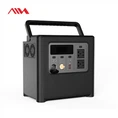
One example of a wireless charging solution for power tools is the 1000W Solar Portable Power Station. This portable power station not only provides a high-capacity power source but also features wireless charging capabilities, allowing you to charge your power tool batteries wirelessly. With its solar charging function, you can even recharge the power station using renewable energy, making it an environmentally friendly option for outdoor use.
Another innovative solution is the 600W Portable Generator For Outdoor Camping. This portable generator can be used to power a variety of devices, including power tools, and also offers wireless charging functionality. Its compact design and high power output make it a convenient and versatile option for both indoor and outdoor use.
In addition to these products, there are also ongoing research and development efforts to improve the efficiency and performance of wireless charging technology for power tools. Some researchers are exploring the use of new materials and designs to reduce energy losses and increase the power transfer capabilities of wireless charging systems. Others are working on developing resonant charging solutions that can provide more flexibility and convenience for power tool users.

Factors to Consider When Using Wireless Charging for Power Tools
If you're considering using a wireless charger for your power tool, there are several factors you should take into account.
First, you need to ensure that your power tool is compatible with the wireless charging system. Not all power tools are designed to support wireless charging, so you'll need to check the manufacturer's specifications or consult with a professional to determine if your power tool can be charged wirelessly.
Second, you should consider the power requirements of your power tool. Make sure that the wireless charging system you choose is capable of delivering enough power to charge your power tool battery efficiently. You may also want to consider the charging time, as wireless charging can sometimes take longer than traditional wired charging methods.
Third, you need to think about the safety and reliability of the wireless charging system. Look for a system that has built-in safety features, such as overcurrent protection, overvoltage protection, and short-circuit protection, to prevent damage to your power tool and battery. You should also choose a system that has been tested and certified by a reputable organization to ensure its quality and performance.
Finally, you should consider the cost and convenience of the wireless charging system. Wireless charging technology can be more expensive than traditional wired charging methods, so you'll need to weigh the benefits against the cost. You should also consider the portability and ease of use of the wireless charging system, especially if you plan to use your power tool in different locations.
Conclusion
In conclusion, while there are still some challenges to overcome, the use of wireless charging for power tools is becoming increasingly feasible and practical. With the development of new technologies and the introduction of innovative products, such as the 1000W Solar Portable Power Station and the 600W Portable Generator For Outdoor Camping, wireless charging is gradually making its way into the world of power tools.
If you're interested in exploring the possibilities of wireless charging for your power tools, I encourage you to contact us. As a leading Wireless Charge supplier, we have a wide range of wireless charging solutions to meet your needs. Our team of experts can provide you with detailed information and guidance on choosing the right wireless charging system for your power tools. Whether you're a professional contractor or a DIY enthusiast, we're here to help you make the most of this exciting technology.
References
- "Wireless Power Transfer: Principles and Applications" by John A. Rogers
- "Inductive Charging Technology: A Review" by David J. Griffiths
- "Resonant Wireless Power Transfer: Theory and Practice" by Maria J. Romero