



In the vast expanse of the Solar System, Mars stands as a captivating celestial neighbor, with its thin atmosphere and unique interactions with the solar wind. As a supplier for the Solar System Home, understanding these interactions is not only a matter of scientific curiosity but also has practical implications for future space habitation and energy utilization.
The Basics of the Solar Wind and Mars' Atmosphere
The solar wind is a continuous stream of charged particles, mainly protons and electrons, ejected from the Sun's upper atmosphere. It travels through the Solar System at high speeds, carrying with it the Sun's magnetic field. This energetic flow has a profound impact on the planets it encounters, shaping their magnetic environments and influencing their atmospheres.
Mars, unlike Earth, has a much thinner atmosphere. Composed primarily of carbon dioxide (about 95%), with small amounts of nitrogen, argon, and trace gases, Mars' atmosphere is only about 1% as dense as Earth's at the surface. This thin atmosphere is a result of several factors, including Mars' lower gravity and the loss of its global magnetic field over time.
Interaction Mechanisms
Atmospheric Stripping
One of the most significant ways the solar wind interacts with Mars' atmosphere is through a process known as atmospheric stripping. Without a strong global magnetic field to deflect the solar wind, charged particles from the Sun can directly interact with the Martian atmosphere. As the solar wind approaches Mars, it can pick up ions from the upper atmosphere and carry them away into space. This continuous loss of atmospheric particles over billions of years has contributed to the thinning of Mars' atmosphere.
Scientists have used data from various Mars missions, such as the Mars Atmosphere and Volatile Evolution (MAVEN) mission, to study this process in detail. MAVEN has provided valuable insights into how the solar wind strips away Mars' atmosphere, revealing that the rate of atmospheric loss is highly variable and depends on factors such as solar activity and the orientation of Mars' magnetic field remnants.
Magnetic Induction
Although Mars lacks a global magnetic field, it does have localized magnetic fields in certain regions of its crust. These magnetic "anomalies" can interact with the solar wind in a process called magnetic induction. When the solar wind encounters these magnetic fields, it can induce electric currents in the Martian ionosphere, creating a complex magnetic environment around the planet.
This interaction can have several effects on Mars' atmosphere. For example, it can cause the formation of plasma clouds and auroras, similar to those seen on Earth. Additionally, the induced magnetic fields can provide some protection to the atmosphere in the regions where they are present, reducing the rate of atmospheric stripping.
Energy Transfer
The solar wind also transfers energy to Mars' atmosphere through a variety of mechanisms. When charged particles from the solar wind collide with atmospheric molecules, they can transfer their kinetic energy, heating the upper atmosphere. This heating can cause the atmosphere to expand and become more susceptible to atmospheric stripping.
Furthermore, the solar wind can induce electromagnetic waves in the Martian ionosphere, which can also contribute to the heating and ionization of the atmosphere. These processes play a crucial role in shaping the structure and dynamics of Mars' atmosphere, influencing everything from weather patterns to the distribution of trace gases.

Implications for Solar System Home
As a supplier for the Solar System Home, understanding the interaction between Mars' atmosphere and the solar wind is essential for several reasons. Firstly, it can help us design more effective shielding and protection systems for future Martian habitats. By understanding how the solar wind strips away the atmosphere and how it can affect the local magnetic environment, we can develop technologies to mitigate these effects and ensure the safety and sustainability of human settlements on Mars.
Secondly, the interaction between the solar wind and Mars' atmosphere has implications for energy generation and storage on the Red Planet. Solar energy is a promising source of power for future Martian missions, but the variable nature of the solar wind and its impact on the atmosphere can affect the efficiency of solar panels. By studying these interactions, we can develop more resilient solar energy systems that can withstand the harsh Martian environment.
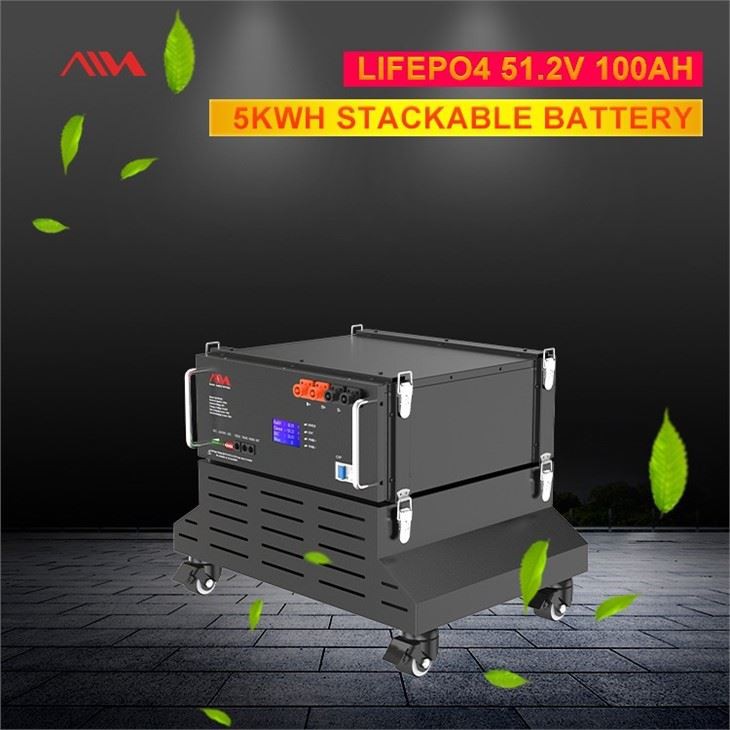
At our company, we offer a range of high-quality solar energy storage solutions that are suitable for use in the challenging conditions of Mars. Our 51.2v 300ah Lifepo4 15KWh Solar ESS is a powerful and reliable option for storing solar energy, providing a large capacity and long cycle life. The Stackable Household Lithium 51.2v 200ah is another great choice, offering a more compact and flexible solution for smaller-scale applications. And for those with more modest energy storage needs, our LiFePO4 51.2V 100Ah 5Kwh Stackable Battery provides a cost-effective and efficient option.
Conclusion
The interaction between Mars' atmosphere and the solar wind is a complex and fascinating process that has far-reaching implications for our understanding of the Solar System and the future of space exploration. By studying these interactions, we can gain valuable insights into the evolution of planets and the challenges and opportunities that lie ahead for human settlement on Mars.
As a leading supplier for the Solar System Home, we are committed to providing innovative solutions that address the unique needs of space exploration. Our solar energy storage products are designed to withstand the harsh conditions of the Martian environment and provide reliable power for future missions. If you are interested in learning more about our products or discussing your specific requirements, please do not hesitate to contact us for a procurement consultation.
References
- Jakosky, B. M., et al. "Mars Atmosphere and Volatile Evolution (MAVEN) Mission." Space Science Reviews, vol. 195, no. 1-4, 2015, pp. 3-29.
- Brain, D. A., et al. "The Global Structure of the Martian Induced Magnetosphere: Evidence for a Bow Shock, Magnetopause, and Plasma Sheet." Journal of Geophysical Research: Space Physics, vol. 114, no. A9, 2009.
- Luhmann, J. G., et al. "Solar Wind Interaction with Mars: A Review of Recent Results." Planetary and Space Science, vol. 58, no. 12, 2010, pp. 1607-1622.