




Hey there! As a supplier in the wireless charge technology field, I've witnessed firsthand how this amazing tech has evolved over the years. It's been a wild ride, and I'm super excited to share the journey with you.
Back in the day, wireless charging was a novelty. The first attempts at wireless power transfer were based on electromagnetic induction. This technology used two coils: a transmitter coil in the charging pad and a receiver coil in the device. When an alternating current passed through the transmitter coil, it created a magnetic field. The receiver coil in the device then picked up this magnetic field and converted it back into an electric current to charge the battery. It was like magic! But there were some major limitations.
The early wireless chargers were slow. I mean, really slow. Charging a phone could take ages compared to using a traditional wired charger. And the distance between the charging pad and the device was extremely limited. You had to place your phone perfectly on the pad, and even a slight misalignment could stop the charging process. Plus, the efficiency was pretty low. A lot of energy was wasted as heat, which not only made the charger and the device hot but also meant you weren't getting the most out of the power you were using.
But as time went on, researchers and engineers didn't give up. They kept working hard to improve this technology. One of the first big breakthroughs was in improving the efficiency of the electromagnetic - induction chargers. By using better materials for the coils and optimizing the circuit design, they were able to reduce the energy loss. This meant faster charging times and less heat generation. And the alignment issue started to get better too. Some smart folks came up with designs that allowed for a bit more flexibility in how you placed your device on the charging pad.
Then, a new type of wireless charging technology began to emerge: resonant inductive coupling. This was a game - changer. Unlike traditional electromagnetic induction, resonant inductive coupling allows for greater distance and more flexibility in device placement. It works by having the transmitter and receiver coils resonate at the same frequency. This resonance allows the magnetic field to transfer energy more efficiently over a longer range. With this technology, you could charge your device even if it was a few centimeters away from the charging pad, and you didn't need to be as precise with the placement.
As the years went by, the power output of wireless chargers also started to increase. In the beginning, most wireless chargers could only provide a few watts of power. But now, we're seeing chargers that can deliver 15 watts, 30 watts, and even more. This is a huge deal because it means that wireless charging is getting closer to the speed of wired charging. You can charge your phone almost as quickly as if you were using a cable, which is amazing.
Another area where wireless charge technology has improved is in compatibility. In the early days, wireless charging was only available on a handful of high - end devices. But now, it's becoming a standard feature on many smartphones, smartwatches, and other portable devices. This is thanks to the efforts of industry standards organizations. They've worked to create universal standards for wireless charging, such as the Qi standard. This ensures that different chargers and devices can work together seamlessly. So, if you have a Qi - enabled device, you can use any Qi - certified charger to charge it.
The application of wireless charge technology has also expanded beyond just charging phones and watches. You can now find wireless charging pads built into furniture like desks and tables. This is really convenient because you can just place your device on the table, and it starts charging automatically. And there are even wireless charging stations for multiple devices. You can charge your phone, smartwatch, and earbuds all at once on a single charging pad.
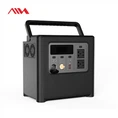
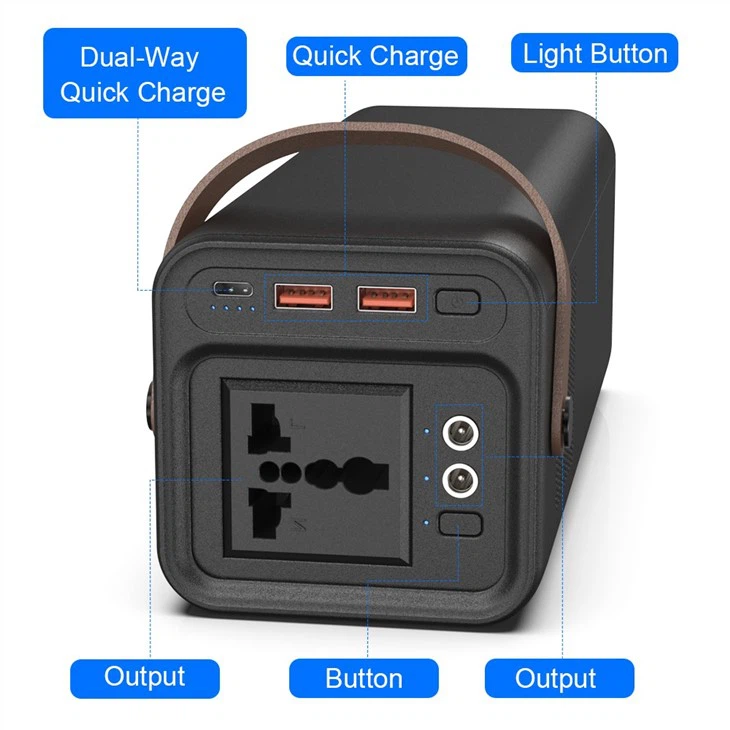
Now, let's talk about how this technology ties in with other power - related products. We also offer some really cool portable power stations, like the 500W Solar Portable Power Station. It's a great option for those who are on the go and need a reliable source of power. You can use it to charge your wireless - charging devices when you're out in the wild or during a power outage. And if you need even more power, check out the SNE1000W Portable Power Station. It's a beast and can handle multiple devices at once. There's also the Outdoor 200W 110V 220V Ac Qc3.0 Fast Charge Emergency Multi - Function Portable Lithium Power Station, which is perfect for outdoor activities.
Looking to the future, wireless charge technology is only going to get better. We're likely to see even higher power outputs, longer charging distances, and more efficient energy transfer. There are also exciting possibilities for wirelessly charging electric vehicles in the future. It could revolutionize the way we power our cars and make charging a lot more convenient.
If you're in the market for wireless chargers or any of our portable power stations, we're here to help. Whether you're a retailer looking to stock our products or an end - user in need of a reliable charging solution, we'd love to talk to you. Feel free to reach out and start a conversation about your purchasing needs. We're committed to providing high - quality products and excellent service.
Let's work together to embrace the future of wireless charging!
References:

- Various industry reports on wireless charging technology development
- Studies on electromagnetic induction and resonant inductive coupling in wireless power transfer