



Hey there! I'm an AGV battery supplier, and today I'm gonna share some tips on how to adjust the charging parameters for an AGV battery. It's super important to get these settings right to ensure the battery's performance, lifespan, and overall safety.
First off, let's understand the basics. AGV batteries come in different types, like lead - acid, lithium - ion, and lithium iron phosphate (LiFePO4). Each type has its own unique charging requirements.
Understanding Battery Types and Their Charging Needs
Lead - Acid Batteries
Lead - acid batteries are quite common in AGVs. They're relatively inexpensive but have some drawbacks. For lead - acid batteries, the charging process usually consists of three stages: bulk charging, absorption charging, and float charging.
During bulk charging, the charger pumps a high current into the battery to quickly bring it up to about 80% of its capacity. This stage is fast but needs to be carefully monitored. The absorption stage follows, where the charger maintains a constant voltage while the current gradually decreases as the battery charges further. Finally, the float charging stage keeps the battery at a fully - charged state with a low, steady current to prevent self - discharge.
The charging voltage for a 12V lead - acid battery is typically around 14.4 - 14.8V during the absorption stage. If you set the voltage too high, it can cause overcharging, which leads to water loss in the battery and can damage the plates. On the other hand, if the voltage is too low, the battery won't charge fully.
Lithium - Ion and LiFePO4 Batteries
Lithium - ion and LiFePO4 batteries are becoming more popular in AGVs because of their high energy density, long lifespan, and low self - discharge rate. For LiFePO4 batteries, the charging process is a bit different.
LiFePO4 batteries have a flat voltage curve during charging. The typical charging voltage for a 24V LiFePO4 battery is around 29.2 - 29.6V. These batteries also require a charger with a built - in battery management system (BMS) to ensure safe charging. The BMS monitors the battery's voltage, current, and temperature, and it can prevent overcharging, over - discharging, and short - circuits.
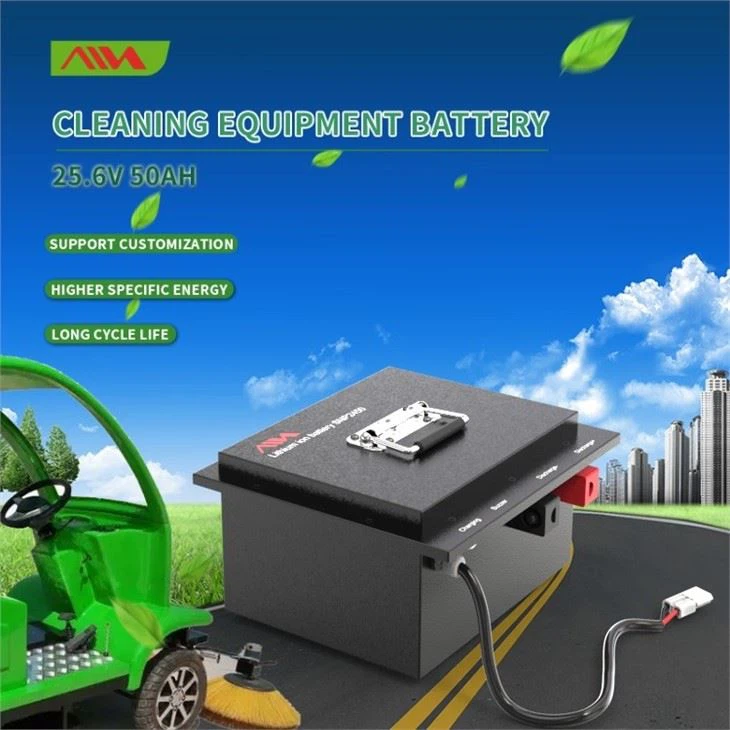
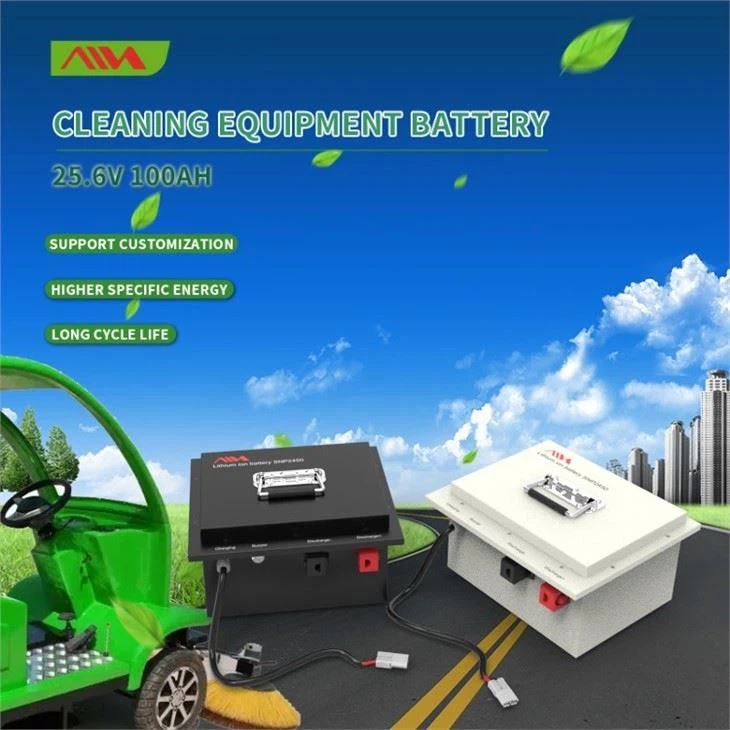
Now, if you're interested in LiFePO4 batteries for other applications, we have some great options like the Sweeper Robot 24V 100ah Lifepo4 Battery, Cleaning Equipment Battery Pack 24V 50ah, and Golf Cart EV Battery 24V 100Ah Rechargeable Deep Cycle Lithium Iron Phosphate LiFePO4 Batteries.
Factors Affecting Charging Parameters
Battery Capacity
The capacity of the battery, measured in ampere - hours (Ah), plays a big role in determining the charging current. As a general rule, the charging current should be a fraction of the battery's capacity. For example, for a lead - acid battery, a charging current of 0.1 - 0.2C (where C is the battery's capacity) is often recommended. So, for a 100Ah lead - acid battery, the charging current could be set between 10A and 20A.
For LiFePO4 batteries, a higher charging current can sometimes be used, but it still needs to be within the limits specified by the battery manufacturer. A common charging current for LiFePO4 batteries is around 0.5C.
Temperature
Temperature also has a significant impact on battery charging. Batteries charge best within a certain temperature range. For lead - acid batteries, the ideal charging temperature is between 20 - 25°C (68 - 77°F). If the temperature is too low, the battery's internal resistance increases, and the charging process becomes less efficient. If it's too high, overcharging can occur more easily.
LiFePO4 batteries are more tolerant of temperature variations, but extreme temperatures can still affect their performance. Some chargers have temperature compensation features that adjust the charging voltage based on the battery's temperature.
Adjusting the Charging Parameters
Using a Smart Charger
Most modern chargers are smart chargers that can be programmed to adjust the charging parameters automatically. These chargers can detect the battery type, capacity, and temperature and then adjust the charging current and voltage accordingly.
To set up a smart charger, you usually need to follow the manufacturer's instructions. First, you'll need to select the correct battery type (lead - acid, LiFePO4, etc.). Then, you can enter the battery's capacity. Some chargers also allow you to set the charging current and voltage manually if you want more control.
Manual Adjustment
If you're using an older charger or need to make some fine - tuning, you can manually adjust the charging parameters. However, this requires a good understanding of battery charging principles.
When adjusting the charging voltage, you can use a multimeter to measure the battery's voltage during charging. If the voltage is too high or too low, you can adjust the charger's voltage setting. Just make sure to make small adjustments and monitor the battery closely.
The charging current can also be adjusted, but this is a bit more complicated. You may need to use a current - limiting device or adjust the charger's internal circuitry. It's always a good idea to consult the battery manufacturer's guidelines before making any major adjustments.
Monitoring the Charging Process
Once you've set the charging parameters, it's crucial to monitor the charging process. You can use a battery monitor to keep track of the battery's voltage, current, and temperature. This will help you detect any problems early, such as overcharging or undercharging.
If you notice that the battery is getting too hot during charging, it could be a sign of a problem. Stop the charging process immediately and check the charging parameters and the battery itself. Overheating can damage the battery and pose a safety risk.
Conclusion
Adjusting the charging parameters for an AGV battery is a critical task that requires careful consideration of the battery type, capacity, and temperature. By getting these settings right, you can extend the battery's lifespan, improve its performance, and ensure its safety.
If you're in the market for high - quality AGV batteries or need more advice on charging parameters, feel free to reach out to us. We're here to help you make the best choice for your AGV application. Whether you need a battery for a sweeper robot, cleaning equipment, or a golf cart, we've got you covered. Check out our Sweeper Robot 24V 100ah Lifepo4 Battery, Cleaning Equipment Battery Pack 24V 50ah, and Golf Cart EV Battery 24V 100Ah Rechargeable Deep Cycle Lithium Iron Phosphate LiFePO4 Batteries.
Let's start a conversation and find the perfect battery solution for your needs!
References
- Battery University: A comprehensive resource for battery knowledge.
- Manufacturer's manuals for AGV batteries and chargers.