


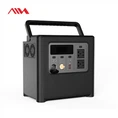
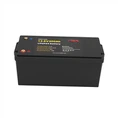

Balancing the cells in a cabinet battery is crucial for ensuring the longevity, efficiency, and safety of the battery system. As a cabinet battery supplier, I've seen firsthand the importance of proper cell balancing. In this blog, I'll share some tips on how to achieve this.
Why Cell Balancing Matters
Before we dive into how to balance cells, let's understand why it's so important. In a cabinet battery, multiple cells are connected in series or parallel to achieve the desired voltage and capacity. However, over time, these cells can develop differences in their state of charge (SOC) and capacity due to factors like manufacturing variations, temperature differences, and usage patterns.
When cells are unbalanced, the overall performance of the battery is affected. For example, if one cell in a series-connected battery pack is significantly undercharged or overcharged compared to the others, it can limit the charging and discharging capacity of the entire pack. This not only reduces the usable energy of the battery but also increases the risk of overcharging or over - discharging individual cells, which can lead to thermal runaway, reduced battery life, and even safety hazards.
Methods of Cell Balancing
Passive Balancing
Passive balancing is one of the most common methods used for cell balancing. It works by dissipating excess energy from the higher - charged cells as heat using resistors. When a cell reaches a certain voltage threshold, a switch connects a resistor across the cell, allowing the excess charge to be burned off.
The advantage of passive balancing is that it's relatively simple and inexpensive to implement. It's suitable for low - power applications where the rate of cell imbalance is not too high. However, the main drawback is that it wastes energy as heat, which can be inefficient, especially in high - power or large - capacity battery systems.
Active Balancing
Active balancing, on the other hand, transfers energy from the higher - charged cells to the lower - charged cells. There are several types of active balancing circuits, such as capacitor - based, inductor - based, and transformer - based circuits.
Capacitor - based active balancing uses capacitors to store and transfer energy between cells. When a cell is overcharged, the capacitor charges from that cell and then discharges into a lower - charged cell. Inductor - based and transformer - based circuits work on a similar principle but use inductors or transformers to transfer energy more efficiently.


Active balancing is more complex and expensive than passive balancing, but it offers several advantages. It can balance cells more quickly and efficiently, reducing energy waste. It's also better suited for high - power and large - capacity battery systems where cell imbalance can occur more rapidly.
Monitoring and Controlling Cell Balancing
To effectively balance the cells in a cabinet battery, it's essential to have a monitoring and control system in place. This system should be able to measure the voltage, temperature, and SOC of each cell accurately.
Modern battery management systems (BMS) are equipped with sensors and algorithms that can continuously monitor the cells and initiate the balancing process when necessary. For example, a BMS can detect when the voltage difference between cells exceeds a certain limit and then activate the balancing circuit.
Temperature also plays a crucial role in cell balance. Since temperature affects the chemical reactions inside the battery and the internal resistance of the cells, it's important to maintain a uniform temperature across the battery pack. Some cabinet batteries are equipped with cooling systems to regulate the temperature and minimize the impact of temperature differences on cell balance.
Practical Tips for Balancing Cells in a Cabinet Battery
Regular Maintenance
Regular maintenance is key to keeping the cells in a cabinet battery balanced. This includes performing periodic checks of the battery voltage, SOC, and temperature. You can use a battery tester or a BMS to gather this data. If you notice any significant imbalances, take corrective action immediately.
Use a High - Quality BMS
Investing in a high - quality BMS is essential for effective cell balancing. A good BMS should have accurate sensors, reliable algorithms, and the ability to communicate with other components of the battery system. It should also be able to handle the specific requirements of your cabinet battery, such as the number of cells, the charging and discharging rates, and the operating temperature range.
Proper Installation
Proper installation of the cabinet battery is also important for cell balancing. Make sure the battery is installed in a well - ventilated area to prevent temperature build - up. Ensure that all the connections between the cells and the BMS are secure and free from corrosion. Loose or corroded connections can cause resistance variations, which can lead to cell imbalance.
Products We Offer
As a cabinet battery supplier, we offer a range of high - quality battery products that are designed with cell balancing in mind. For example, our LiFePO4 Battery LFP Lithium Iron Phosphate Pack Solar Energy Storage System 48V 100AH 5kwh is equipped with an advanced BMS that provides efficient cell balancing. This battery is suitable for solar energy storage applications, offering high energy density, long cycle life, and enhanced safety.
Another product is our Solar Power Energy Storage System 48V 150Ah Lifepo4 Battery Pack. It's designed to handle high - power charging and discharging, and the BMS ensures that the cells remain balanced even under heavy usage.
We also have the Stacked Solar Energy Storage Battery 48v 100ah Server Rack Battery 5kwh Cabinet Energy Storage Lifepo4 Battery, which is ideal for server rack applications. The modular design of this battery allows for easy installation and maintenance, and the built - in cell balancing system ensures reliable performance.
Conclusion
Balancing the cells in a cabinet battery is a critical aspect of battery management. By understanding the importance of cell balancing, choosing the right balancing method, and implementing proper monitoring and control systems, you can ensure the optimal performance, longevity, and safety of your battery system.
If you're interested in our cabinet battery products or have any questions about cell balancing, feel free to contact us for a detailed discussion. We're here to help you find the best battery solution for your needs.
References
- Linden, D., & Reddy, T. B. (2002). Handbook of Batteries. McGraw - Hill.
- Timmons, R. (2017). Battery Management Systems: Design by Principles. Artech House.