



Selecting the appropriate 12V battery for your specific application is a crucial decision that can significantly impact the performance and longevity of your equipment. As a trusted 12V battery supplier, I understand the complexities involved in this process and am here to guide you through the key considerations to ensure you make the right choice.
Understanding Your Application Requirements
The first step in choosing the right 12V battery is to thoroughly understand the requirements of your application. Different applications have varying power demands, discharge rates, and operating conditions. For instance, a solar power system may require a battery that can handle deep discharges and provide a steady supply of power over an extended period. On the other hand, a marine application might need a battery that can withstand vibrations, shocks, and harsh environmental conditions.

Consider the following factors when assessing your application requirements:
- Power Consumption: Determine the total power consumption of your equipment. This can be calculated by multiplying the voltage (12V in this case) by the current draw in amperes. Make sure to account for both continuous and peak power requirements.
- Discharge Rate: Some applications, such as electric vehicles or high - power audio systems, may require a battery that can deliver a high current in a short period. Check the battery's discharge rate specifications to ensure it can meet your needs.
- Operating Temperature: Extreme temperatures can affect a battery's performance and lifespan. If your application will be operating in very hot or cold environments, choose a battery that is designed to perform well under those conditions.
- Cycle Life: If your application involves frequent charging and discharging cycles, like in a renewable energy storage system, look for a battery with a high cycle life. A battery with a longer cycle life will last longer and save you money in the long run.
Types of 12V Batteries
There are several types of 12V batteries available in the market, each with its own set of advantages and disadvantages. The most common types include lead - acid batteries, lithium - ion batteries, and nickel - metal hydride (NiMH) batteries.
Lead - Acid Batteries
Lead - acid batteries are one of the oldest and most widely used types of batteries. They are relatively inexpensive and come in two main subtypes: flooded lead - acid (FLA) and valve - regulated lead - acid (VRLA). VRLA batteries, in turn, can be further divided into absorbed glass mat (AGM) and gel batteries.
- Flooded Lead - Acid (FLA): These batteries are the most basic type of lead - acid batteries. They require regular maintenance, including checking and topping up the electrolyte levels. FLA batteries are often used in applications where cost is a major factor, such as in some backup power systems.
- Absorbed Glass Mat (AGM): AGM batteries are sealed and maintenance - free. They have a lower internal resistance, which allows for faster charging and discharging. AGM batteries are commonly used in automotive, marine, and off - grid solar applications.
- Gel Batteries: Gel batteries use a silica - based gel electrolyte, which makes them more resistant to vibration and shock. They are suitable for applications where the battery may be subject to rough handling, such as in mobile equipment.
Lithium - Ion Batteries
Lithium - ion batteries, especially lithium iron phosphate (LiFePO4) batteries, have gained popularity in recent years due to their high energy density, long cycle life, and low self - discharge rate.
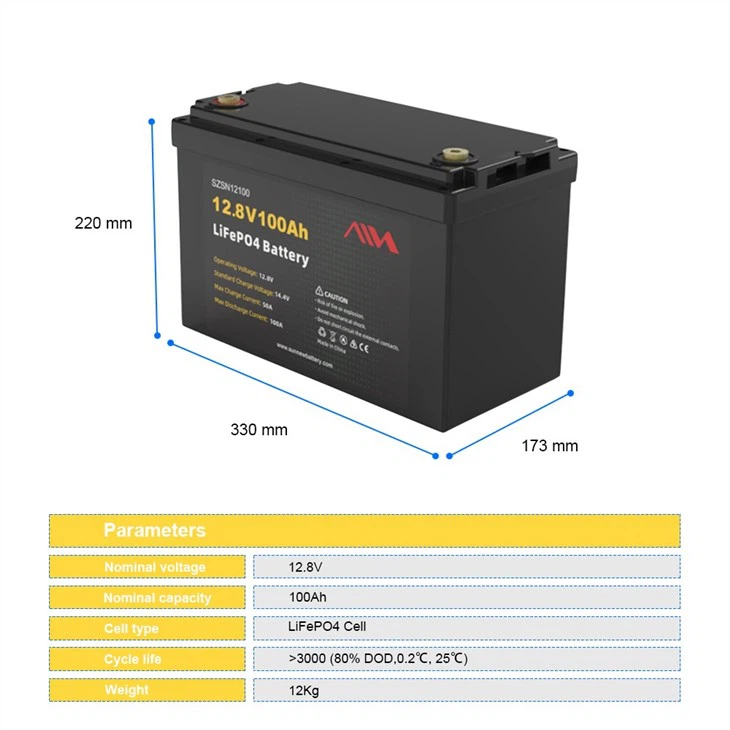
- LiFePO4 Batteries: These batteries offer several advantages over lead - acid batteries. They are lighter, have a higher charge and discharge efficiency, and can operate over a wider temperature range. LiFePO4 batteries are ideal for applications such as solar energy storage, electric vehicles, and portable power stations. For example, our 12v 150ah Lifepo4 Solar Battery is specifically designed for solar applications, providing reliable and long - lasting power. Our Deep Cycle 12V 200ah Lifepo4 BMS Inside is also a great option for applications that require deep cycling capabilities. And our LiFePO4 Battery 12v 24v 36v 48v 50ah 100ah 150ah 200ah 300ah Deep Cycle Lithium Ion Battery 12V offers a wide range of capacities to meet different needs.
Nickel - Metal Hydride (NiMH) Batteries
NiMH batteries are a good alternative to lead - acid and lithium - ion batteries in some applications. They have a higher energy density than lead - acid batteries and are more environmentally friendly than nickel - cadmium (NiCd) batteries. However, they have a higher self - discharge rate and are more expensive than lead - acid batteries.
Battery Capacity and Voltage
Battery capacity is measured in ampere - hours (Ah) and indicates the amount of charge a battery can store. A higher Ah rating means the battery can provide more power over a longer period. When choosing a 12V battery, make sure the capacity is sufficient to meet your application's power requirements.
It's also important to note that the actual voltage of a battery can vary depending on its state of charge. A fully charged 12V lead - acid battery typically has a voltage of around 12.6 - 12.8V, while a fully charged 12V LiFePO4 battery has a voltage of around 13.2 - 13.4V. When selecting a battery, consider the voltage requirements of your equipment and choose a battery that can provide the appropriate voltage throughout its discharge cycle.
Battery Maintenance
Different types of batteries require different levels of maintenance. Lead - acid batteries, especially flooded lead - acid batteries, require regular maintenance, including checking the electrolyte levels, cleaning the terminals, and equalizing the cells. On the other hand, lithium - ion batteries are generally maintenance - free.
When choosing a battery, consider the amount of time and effort you are willing to spend on maintenance. If you prefer a hassle - free option, a lithium - ion battery may be the better choice. However, if you are on a tight budget and don't mind performing some maintenance tasks, a lead - acid battery could be a suitable option.
Cost Considerations
Cost is an important factor when choosing a 12V battery. Lead - acid batteries are generally less expensive upfront than lithium - ion batteries. However, when considering the total cost of ownership, including the cost of replacement and maintenance, lithium - ion batteries may be more cost - effective in the long run.
A lithium - ion battery may have a higher initial purchase price, but it has a longer cycle life, lower self - discharge rate, and higher charge and discharge efficiency. This means you will need to replace the battery less frequently, and it will consume less energy during charging and discharging.
Conclusion
Choosing the right 12V battery for your application requires careful consideration of your application requirements, battery types, capacity, voltage, maintenance needs, and cost. As a 12V battery supplier, we offer a wide range of high - quality batteries to meet your diverse needs. Whether you need a battery for a solar power system, a marine application, or an automotive use, we can help you find the perfect solution.
If you are still unsure which 12V battery is right for your application, our team of experts is here to assist you. We can provide you with detailed product information, technical support, and guidance to ensure you make an informed decision. Contact us today to start the procurement process and find the ideal 12V battery for your project.
References
- Linden, D., & Reddy, T. B. (2002). Handbook of Batteries. McGraw - Hill.
- Batzel, T. (2019). Lithium - Ion Batteries: A Guide to Understanding the Basics. Battery University.
- Trofast, J. (2018). Lead - Acid Batteries: Technology, Applications, and Performance. Battery Council International.