



When it comes to Automated Guided Vehicles (AGVs), one of the most critical components is the battery. The battery capacity of an AGV plays a pivotal role in determining the vehicle's performance, operational efficiency, and overall productivity. As an AGV battery supplier, I have witnessed firsthand the importance of understanding battery capacity and its implications for AGV users. In this blog post, I will delve into the concept of AGV battery capacity, its significance, and how it impacts the operation of AGVs.
Understanding Battery Capacity
Battery capacity refers to the amount of electrical energy a battery can store and deliver over a specific period. It is typically measured in ampere - hours (Ah) or watt - hours (Wh). Ampere - hours represent the amount of current a battery can supply over one hour. For example, a battery with a capacity of 100Ah can theoretically supply a current of 100 amperes for one hour, or 1 ampere for 100 hours. Watt - hours, on the other hand, take into account the voltage of the battery. The relationship between watt - hours and ampere - hours is given by the formula Wh = Ah × V, where V is the voltage of the battery.
In the context of AGVs, battery capacity is a crucial factor as it directly affects the vehicle's runtime. An AGV with a higher battery capacity can operate for a longer period without needing to be recharged. This is particularly important in industrial settings where AGVs are used for continuous material handling tasks.
Factors Affecting AGV Battery Capacity
Several factors can influence the effective capacity of an AGV battery:
-
Battery Chemistry: Different battery chemistries have different energy densities and charge - discharge characteristics. For instance, lithium - ion batteries, especially Lithium Iron Phosphate (LiFePO4) batteries, are known for their high energy density, long cycle life, and low self - discharge rate compared to traditional lead - acid batteries. Our Golf Cart EV Battery 24V 100Ah Rechargeable Deep Cycle Lithium Iron Phosphate LiFePO4 Batteries are a prime example of high - performance LiFePO4 batteries suitable for AGV applications.
-
Temperature: Battery capacity is highly temperature - dependent. Extreme temperatures, both hot and cold, can reduce the effective capacity of a battery. In cold temperatures, the chemical reactions within the battery slow down, resulting in a decrease in available capacity. Conversely, high temperatures can accelerate the degradation of the battery and also affect its performance.
-
Discharge Rate: The rate at which a battery is discharged also impacts its capacity. High - discharge rates can cause a reduction in the available capacity of the battery. AGVs that require high - power bursts during acceleration or when carrying heavy loads may experience a lower effective battery capacity compared to those with more consistent power demands.
-
Age and Usage: As a battery ages and goes through multiple charge - discharge cycles, its capacity gradually decreases. This is due to the physical and chemical changes that occur within the battery over time. Regular maintenance and proper charging practices can help extend the lifespan of the battery and maintain its capacity.
Importance of Appropriate Battery Capacity for AGVs
Selecting the right battery capacity for an AGV is essential for several reasons:
-
Operational Efficiency: An AGV with an appropriate battery capacity can operate for the required duration without frequent recharging. This reduces downtime and increases the overall productivity of the material handling system. For example, in a large - scale warehouse, AGVs need to be able to move goods continuously throughout the day. A battery with insufficient capacity would require the AGV to stop frequently for recharging, disrupting the workflow.
-
Cost - Effectiveness: While higher - capacity batteries may have a higher upfront cost, they can offer long - term cost savings. A well - sized battery reduces the need for multiple battery replacements and minimizes the energy consumption associated with frequent recharging.
-
Safety: Overloading a battery by using an AGV with high power demands and an undersized battery can lead to overheating and potentially dangerous situations. On the other hand, an oversized battery may add unnecessary weight and cost to the AGV.
Matching Battery Capacity to AGV Requirements
To determine the appropriate battery capacity for an AGV, several factors need to be considered:
-
Operating Time: Calculate the total operating time required for the AGV in a single shift. This includes the time for movement, loading, and unloading. Based on this, estimate the energy consumption of the AGV during this period.
-
Power Requirements: Consider the power demands of the AGV, including the motor power, control systems, and any additional equipment such as sensors or communication devices. AGVs with higher power requirements will need batteries with larger capacities.
-
Charging Infrastructure: Evaluate the available charging infrastructure. If the AGV can be charged during breaks or in a short period, a smaller - capacity battery may be sufficient. However, if charging opportunities are limited, a higher - capacity battery is necessary.
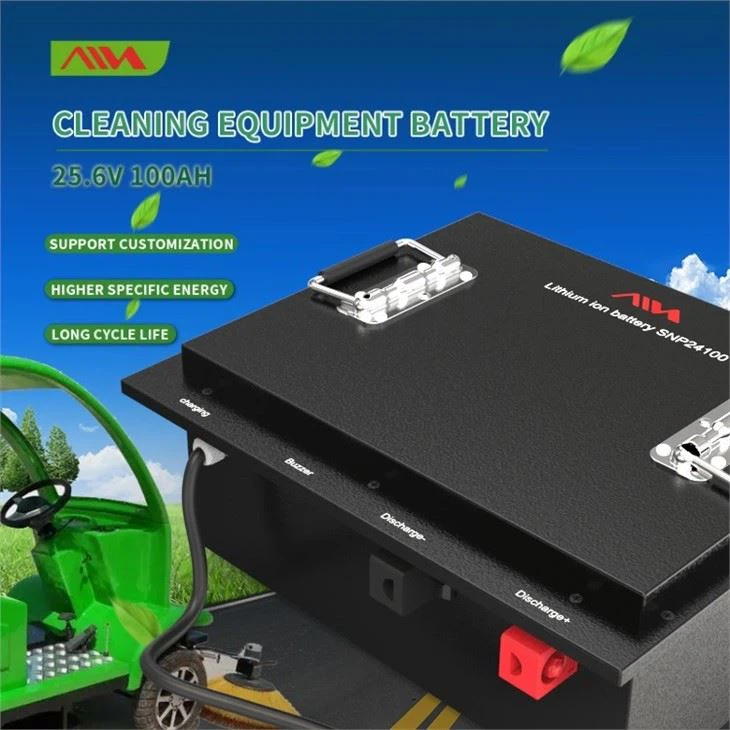
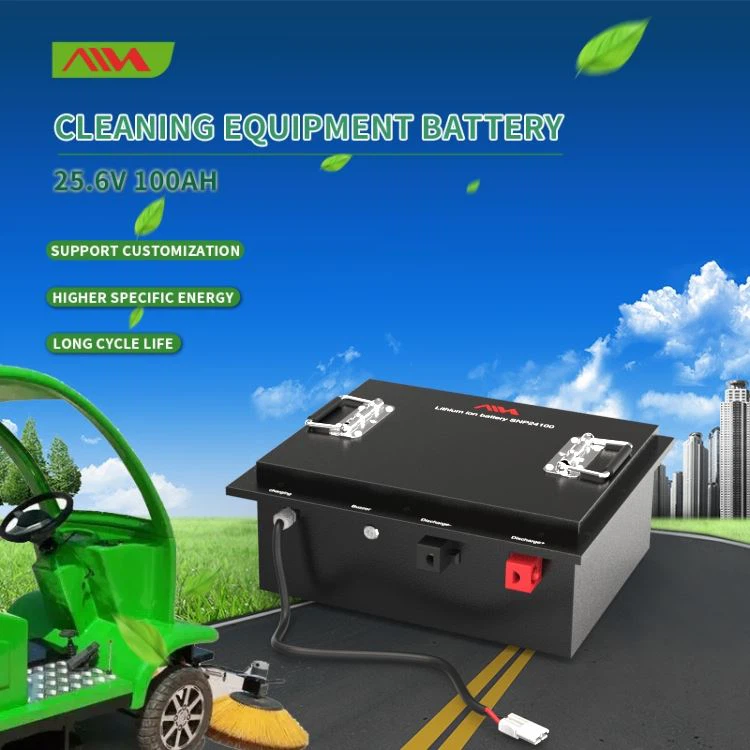
We offer a range of AGV batteries with different capacities to meet various customer needs. Our Customized LiFePO4 24V 50Ah 100Ah Floor Cleaning Machine Battery Operated Floor Sweeper Battery and Sweeper Robot 24V 100ah Lifepo4 Battery are designed to provide reliable power for specific AGV applications.
Conclusion
The capacity of an AGV battery is a critical parameter that significantly impacts the performance and efficiency of the vehicle. As an AGV battery supplier, we understand the importance of providing batteries with the right capacity for different AGV applications. By considering factors such as battery chemistry, temperature, discharge rate, and the specific requirements of the AGV, we can help our customers select the most suitable battery for their needs.
If you are in the market for AGV batteries and need assistance in determining the appropriate battery capacity for your AGV fleet, we are here to help. Our team of experts can provide you with detailed information and guidance to ensure that you make the best choice for your material handling operations. Contact us today to start a discussion about your AGV battery requirements and explore our range of high - quality batteries.
References
- Linden, D., & Reddy, T. B. (2002). Handbook of Batteries (3rd ed.). McGraw - Hill.
- Chen, Z., & Evans, D. J. (2012). Electrochemical Power Sources: Fundamentals, Systems, and Applications. John Wiley & Sons.
- Tarascon, J. M., & Armand, M. (2001). Issues and challenges facing rechargeable lithium batteries. Nature, 414(6861), 359 - 367.