


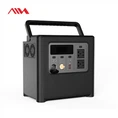
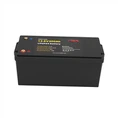

The charge cycle life of an outdoor battery is a crucial factor for anyone relying on these power sources during their outdoor adventures. As an outdoor battery supplier, I've witnessed firsthand the importance of understanding this concept. In this blog, I'll delve into what charge cycle life means, factors that affect it, and how it impacts your choice of outdoor battery.
What is a Charge Cycle?
A charge cycle refers to the process of charging a battery from 0% to 100% and then discharging it back to 0%. It's important to note that a charge cycle doesn't necessarily mean a full discharge in one go. For example, if you charge your battery from 20% to 80% and then discharge it back to 20%, that counts as 0.6 of a charge cycle.
The charge cycle life of a battery is the number of charge cycles it can undergo before its capacity drops to a certain percentage of its original capacity, typically 80%. For instance, if a battery has a charge cycle life of 500 cycles, it means that after 500 full charge-discharge cycles, its capacity will be reduced to 80% of what it was when it was new.
Factors Affecting Charge Cycle Life
Battery Chemistry
Different battery chemistries have different charge cycle lives. Lithium-ion batteries, which are commonly used in outdoor batteries, generally have a longer charge cycle life compared to lead-acid batteries. Lithium-ion batteries can typically withstand 500 - 1000 charge cycles, while lead-acid batteries may only last for 200 - 300 cycles.
Depth of Discharge (DoD)
The depth of discharge is the percentage of the battery's capacity that is discharged during each use. A higher DoD generally leads to a shorter charge cycle life. For example, if you regularly discharge your battery to 100% before recharging it, the battery will experience more stress and wear, reducing its overall lifespan. On the other hand, if you keep the DoD low, say around 20 - 30%, the battery will last longer.
Charging Rate
The rate at which you charge your battery can also affect its charge cycle life. Fast charging can generate more heat, which can damage the battery's internal components over time. It's generally recommended to charge your battery at a moderate rate to extend its lifespan.
Temperature
Temperature plays a significant role in the charge cycle life of a battery. Extreme temperatures, both hot and cold, can reduce the battery's performance and lifespan. High temperatures can accelerate the chemical reactions inside the battery, leading to faster degradation. Cold temperatures, on the other hand, can reduce the battery's capacity and make it more difficult to charge.


Impact on Your Choice of Outdoor Battery
When choosing an outdoor battery, the charge cycle life should be one of the key considerations. If you plan to use your battery frequently, you'll want to choose a battery with a longer charge cycle life. This will ensure that your battery lasts longer and provides reliable power over time.
For example, if you're an avid camper or hiker, you may need a battery that can withstand multiple charge cycles. Our 500W Portable Generator For Outdoor Camping is equipped with high-quality lithium-ion batteries that offer a long charge cycle life, making it a great choice for extended outdoor use.
If you're looking for a more powerful option, our 600W Solar Portable Power Station and 800W Solar Portable Power Station are also excellent choices. These power stations are designed to provide reliable power for a variety of outdoor activities, and their long charge cycle lives ensure that they'll last for many years to come.
Maximizing the Charge Cycle Life of Your Outdoor Battery
To get the most out of your outdoor battery, there are several steps you can take to maximize its charge cycle life:
Avoid Deep Discharges
Try to keep the depth of discharge as low as possible. If your battery has a low battery indicator, recharge it before it reaches a critically low level.
Charge at a Moderate Rate
Avoid using fast chargers unless necessary. Charging your battery at a moderate rate will help reduce heat generation and extend its lifespan.
Store Your Battery Properly
If you're not using your battery for an extended period, store it in a cool, dry place. Make sure the battery is charged to around 50% before storing it.
Monitor the Temperature
Try to keep your battery at a moderate temperature. If you're using your battery in extreme temperatures, take steps to protect it, such as using a battery insulation kit.
Conclusion
The charge cycle life of an outdoor battery is an important factor to consider when choosing a battery for your outdoor activities. By understanding what charge cycle life means, the factors that affect it, and how to maximize it, you can choose the right battery for your needs and ensure that it lasts for many years to come.
If you're interested in learning more about our outdoor batteries or have any questions about charge cycle life, please feel free to contact us. We're here to help you find the perfect battery solution for your outdoor adventures.
References
- Battery University. (n.d.). Understanding Charge Cycles. Retrieved from https://batteryuniversity.com/learn/article/understanding_cycle_life
- National Renewable Energy Laboratory. (n.d.). Battery Storage Basics. Retrieved from https://www.nrel.gov/energy-storage/battery-basics.html