



The discharge rate of a forklift battery is a critical parameter that significantly influences the performance and efficiency of forklifts. As a reputable forklift battery supplier, we understand the importance of this concept and are here to provide you with in - depth insights.
Understanding the Discharge Rate
The discharge rate of a forklift battery refers to the speed at which the battery releases its stored energy. It is typically measured in amperes (A) or as a multiple of the battery's rated capacity, denoted as C - rate. For example, a 1C discharge rate means the battery is discharging at a rate equal to its rated capacity per hour. If a forklift battery has a rated capacity of 100 amp - hours (Ah), a 1C discharge rate would be 100A.
A higher discharge rate implies that the battery can deliver a large amount of current in a short period. This is crucial for forklifts as they often require sudden bursts of power, such as when lifting heavy loads or accelerating quickly. However, a very high discharge rate can also lead to a shorter battery life and reduced overall capacity.

Factors Affecting the Discharge Rate
Battery Chemistry
Different battery chemistries have different inherent discharge rate capabilities. For instance, lead - acid batteries, which have been traditionally used in forklifts, generally have a lower discharge rate compared to lithium - ion batteries. Lead - acid batteries are more suitable for applications where a steady, moderate amount of power is required over a longer period. On the other hand, lithium - ion batteries, especially those based on lithium iron phosphate (LiFePO4) chemistry, can handle higher discharge rates. Our [Rechargeable Smart BMS Bluetooth Lithium Ion Battery 48v 100ah Lithium Battery Lifepo4 Battery](/lead - acid - replacement/48v - battery/rechargeable - smart - bms - bluetooth - lithium - ion.html) is a prime example of a high - performance lithium - ion battery with an excellent discharge rate. It can provide the necessary power for forklifts to operate efficiently even under heavy - duty conditions.
Battery Capacity
The capacity of the battery also plays a role in determining the discharge rate. Larger capacity batteries can generally handle higher discharge rates without significant voltage drops. A [Deep Cycle 200ah 48v Lithium Iron Phosphate Rechargeable Lifepo4 Lithium Battery Pack](/lead - acid - replacement/48v - battery/deep - cycle - 200ah - 48v - lithium - iron - phosphate.html) with a higher capacity can deliver more power over a longer time compared to a lower - capacity battery. This is because a larger battery has more active material available to participate in the electrochemical reactions that generate electricity.
Temperature
Temperature has a profound impact on the discharge rate of a forklift battery. In cold temperatures, the chemical reactions within the battery slow down, reducing the battery's ability to deliver high currents. Conversely, in high temperatures, the battery may experience increased self - discharge and potential damage to the battery components. Therefore, it is essential to operate forklift batteries within the recommended temperature range to ensure optimal discharge rate performance.
Importance of Discharge Rate in Forklift Applications
Load Handling
Forklifts are used to lift and move heavy loads. When a forklift is lifting a heavy pallet, it requires a large amount of power to operate the hydraulic system. A battery with a high discharge rate can quickly supply the necessary current to the hydraulic pump, allowing the forklift to lift the load smoothly and efficiently. Our [Deep Cycle 48V 200ah EV Battery](/lead - acid - replacement/48v - battery/deep - cycle - 48v - 200ah - ev - battery.html) is designed to meet the high - power demands of forklift load - handling operations.
Operational Efficiency
A battery with an appropriate discharge rate can improve the overall operational efficiency of a forklift fleet. Forklifts can operate for longer periods without experiencing significant power losses, reducing the need for frequent battery changes. This leads to increased productivity and lower downtime, which is crucial for businesses that rely on forklifts for their daily operations.
Battery Life
Proper management of the discharge rate can also extend the battery life. If a battery is constantly discharged at a very high rate, it can cause irreversible damage to the battery cells, leading to a shorter lifespan. By selecting a battery with a discharge rate that matches the forklift's power requirements, you can ensure that the battery is used within its optimal operating range, thus prolonging its service life.
Measuring and Monitoring the Discharge Rate
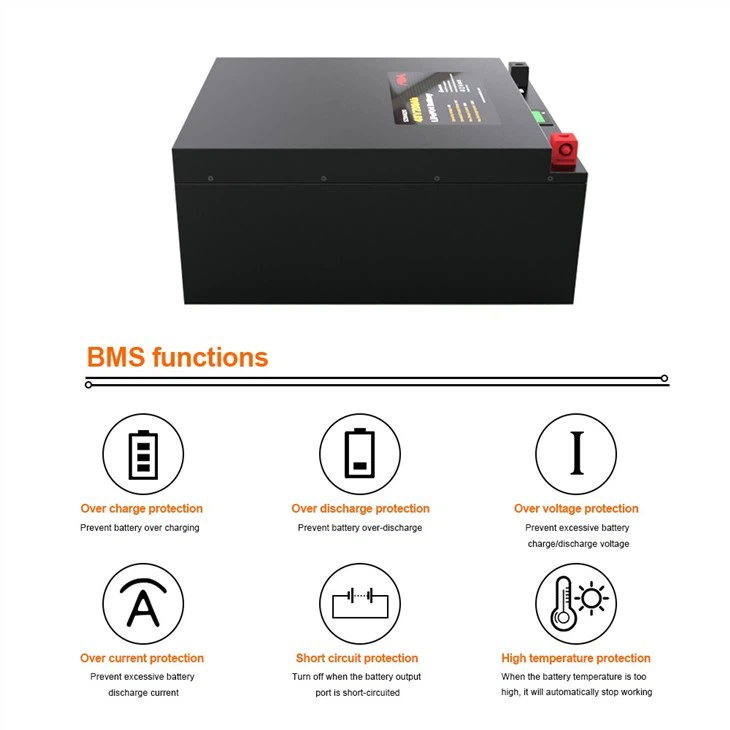
To ensure that the forklift battery is operating at the appropriate discharge rate, it is necessary to measure and monitor the current flowing out of the battery. This can be done using a current meter or a battery management system (BMS). A BMS can not only measure the discharge rate but also protect the battery from over - discharge, over - charge, and short - circuits. Our rechargeable lithium - ion batteries come equipped with a smart BMS that provides real - time monitoring of the battery's performance, including the discharge rate.
Selecting the Right Forklift Battery Based on Discharge Rate
When choosing a forklift battery, it is essential to consider the specific power requirements of your forklift. Factors such as the load capacity, operating cycle, and frequency of use should be taken into account. If your forklift is used for heavy - duty applications with frequent lifting and accelerating, a battery with a higher discharge rate would be more suitable. On the other hand, if the forklift is used for light - duty tasks with a more continuous, steady power demand, a battery with a moderate discharge rate may be sufficient.
Conclusion
The discharge rate of a forklift battery is a vital factor that affects the performance, efficiency, and lifespan of forklifts. As a forklift battery supplier, we offer a wide range of high - quality batteries with different discharge rate capabilities to meet the diverse needs of our customers. Whether you are looking for a battery for light - duty or heavy - duty forklift applications, we have the right solution for you.
If you are interested in learning more about our forklift batteries or would like to discuss your specific requirements, we encourage you to contact us for procurement and negotiation. Our team of experts is ready to assist you in finding the perfect battery solution for your forklift fleet.
References
- Battery University: A comprehensive resource on battery technology and management.
- Forklift Industry Publications: Provide insights into the latest trends and requirements in the forklift industry.