


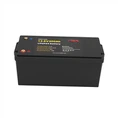

Over-discharging a backup battery is a topic that demands our attention, especially for those in the industry of backup battery supply, like myself. Backup batteries play a crucial role in various applications, from providing emergency power to electronic devices to supporting outdoor activities. Understanding the effects of over-discharging is essential for ensuring the longevity and performance of these batteries.
What is Over - Discharging?
Before delving into the effects, it's important to define what over-discharging means. A battery operates within a specific voltage range. When the battery's voltage drops below the recommended minimum level, it is considered over-discharged. For example, in a lithium-ion battery, the normal discharge voltage range is typically between 3.0V and 4.2V per cell. If the voltage drops below 3.0V per cell, the battery is over-discharged.
Chemical and Physical Changes in the Battery
Over-discharging triggers a series of chemical and physical changes within the battery. In a lead-acid battery, over-discharging can cause the sulfate crystals on the battery plates to harden. These hard sulfate crystals reduce the surface area available for chemical reactions, which in turn decreases the battery's capacity to store and deliver electrical energy. As a result, the battery's overall performance deteriorates, and it may not be able to provide the required power when needed.
In lithium-ion batteries, over-discharging can lead to irreversible damage to the anode and cathode materials. The lithium ions that move between the anode and cathode during charging and discharging may become trapped or react with the electrolyte in an unwanted way. This can cause a decrease in the number of available lithium ions for the electrochemical reactions, reducing the battery's capacity and lifespan.
Impact on Battery Lifespan
One of the most significant effects of over-discharging is its impact on the battery's lifespan. Every battery has a limited number of charge-discharge cycles. Over-discharging can significantly reduce this number. For instance, a well-maintained lithium-ion battery can typically endure around 500 - 1000 charge-discharge cycles. However, if the battery is frequently over-discharged, this number can be reduced by half or even more.
The reduced lifespan means that the battery will need to be replaced more frequently, which can be costly for the end - user. As a backup battery supplier, this is a concern because it can lead to customer dissatisfaction and a negative impact on our reputation. We strive to provide high - quality batteries with long lifespans, and over-discharging undermines these efforts.
Safety Risks
Over-discharging also poses safety risks. In some cases, over-discharged batteries can become unstable. For example, a severely over-discharged lithium-ion battery may experience thermal runaway. Thermal runaway is a self - sustaining reaction that can cause the battery to heat up rapidly, leading to swelling, leakage, or even explosion.
These safety risks are not only a threat to the end - user but also to the entire supply chain. As a supplier, we are responsible for ensuring the safety of our products. Any safety incidents related to over-discharging can result in legal issues, product recalls, and damage to our brand image.
Performance Degradation
In addition to reduced lifespan and safety risks, over-discharging causes performance degradation. An over-discharged battery may not be able to deliver the rated voltage and current. This can lead to problems such as slow charging, reduced power output, and inconsistent performance.
For example, if a backup battery is used to power a critical electronic device, the performance degradation due to over-discharging can cause the device to malfunction or shut down unexpectedly. This is particularly problematic in applications where continuous power supply is essential, such as in medical equipment or data centers.
Preventive Measures
As a backup battery supplier, we understand the importance of educating our customers about the effects of over-discharging and providing solutions to prevent it. One of the most effective ways to prevent over-discharging is to use a battery management system (BMS). A BMS monitors the battery's voltage, current, and temperature and automatically disconnects the battery when it reaches the minimum safe voltage level.
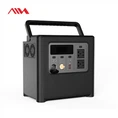
We also offer a range of high - quality backup batteries that are designed to be more resistant to over-discharging. For example, our Sunnew Portable Outdoor Solar Energy System Power Station 700w Lithium Ion Portable Power Station is equipped with advanced protection circuits to prevent over-discharging. This power station is suitable for outdoor activities such as camping, where a reliable backup power source is crucial.
Another product in our portfolio is the 700W Portable Generator For Outdoor Camping. This generator provides a stable power supply and is designed to work in conjunction with backup batteries to ensure that the batteries are not over-discharged.
Our 700W Solar Portable Power Station is also a great option. It uses solar energy to charge the battery, which can help maintain the battery's charge level and reduce the risk of over-discharging.


Importance of Customer Education
Customer education is key to preventing over-discharging. We provide detailed user manuals and guidelines with our products, explaining how to properly charge and use the batteries to avoid over-discharging. We also offer training sessions and online resources to help our customers understand the importance of battery maintenance.
By educating our customers, we can ensure that they get the most out of our products and reduce the likelihood of problems related to over-discharging. This not only benefits the customers but also helps us build long - term relationships and a positive brand image.
Conclusion
In conclusion, over-discharging a backup battery has a multitude of negative effects, including reduced lifespan, safety risks, performance degradation, and chemical and physical damage. As a backup battery supplier, we are committed to providing high - quality products and solutions to prevent over-discharging.
We offer a range of products such as the Sunnew Portable Outdoor Solar Energy System Power Station 700w Lithium Ion Portable Power Station, 700W Portable Generator For Outdoor Camping, and 700W Solar Portable Power Station that are designed to be reliable and resistant to over-discharging.
If you are interested in purchasing our backup batteries or have any questions about over-discharging and battery maintenance, please feel free to contact us for procurement and further discussions. We are always ready to provide you with the best solutions and support.
References
- Linden, D., & Reddy, T. B. (2002). Handbook of Batteries. McGraw - Hill.
- Tarascon, J. M., & Armand, M. (2001). Issues and challenges facing rechargeable lithium batteries. Nature, 414(6861), 359 - 367.
- Gregory, D. P., Offer, G. J., & Howey, D. A. (2017). Lithium-ion battery degradation: how to model it. Journal of The Electrochemical Society, 164(13), A2770 - A2781.