



Over the years, as a leading AGV battery supplier, I've witnessed firsthand the profound impact of battery technology on the evolution of Automated Guided Vehicles (AGVs). One of the most critical aspects that businesses and operators often inquire about is the energy storage capacity of AGV batteries over time. This topic is not just about numbers and technical specifications; it's about understanding how the battery's performance can change and what it means for the long - term efficiency and productivity of AGV operations.
Initial Energy Storage Capacity
When a brand - new AGV battery is introduced, it comes with a specified energy storage capacity. This capacity, usually measured in ampere - hours (Ah) or watt - hours (Wh), represents the amount of electrical energy the battery can store and deliver under specific conditions. For instance, a common AGV battery might have an initial capacity of 100Ah at a nominal voltage of 24V, which means it can theoretically supply a current of 1 ampere for 100 hours, or 10 amperes for 10 hours.
The initial energy storage capacity is a crucial factor in determining the AGV's operational range. A higher capacity battery allows the AGV to travel longer distances or perform more tasks before needing a recharge. This is especially important in large warehouses or industrial facilities where AGVs are required to cover extensive areas.
Factors Affecting Energy Storage Capacity Over Time
1. Charge - Discharge Cycles
One of the primary factors that influence the energy storage capacity of an AGV battery over time is the number of charge - discharge cycles. Each time a battery is charged and then discharged, it undergoes a chemical reaction within the cells. Over repeated cycles, these chemical reactions can cause physical and chemical changes in the battery's electrodes and electrolyte.
For example, in a lithium - ion battery, the lithium ions move between the cathode and anode during charge and discharge. With each cycle, some of the lithium ions may become trapped or form unwanted deposits on the electrodes. This reduces the available lithium ions for the charge - discharge process, leading to a gradual decrease in the battery's energy storage capacity.
2. Temperature
Temperature also plays a significant role in the degradation of battery capacity. High temperatures can accelerate the chemical reactions within the battery, causing the electrolyte to break down more quickly and the electrodes to corrode. On the other hand, low temperatures can increase the internal resistance of the battery, making it more difficult for the battery to deliver its stored energy efficiently.
In a warehouse environment, if the AGV operates in an area with poor temperature control, the battery's performance can be severely affected. For instance, if the temperature is consistently above 40°C, the battery may lose its capacity at a much faster rate compared to operating at a more moderate temperature of around 25°C.
3. Depth of Discharge (DoD)
The depth of discharge refers to the percentage of the battery's capacity that is used during each discharge cycle. A higher depth of discharge can have a more significant impact on the battery's long - term capacity. For example, if a battery is regularly discharged to 80% of its capacity (80% DoD) compared to 20% DoD, the former will experience a faster decline in capacity over time.
This is because deeper discharges can cause more stress on the battery's internal components. When the battery is discharged to a low level, the chemical reactions become more extreme, which can lead to more significant damage to the electrodes and electrolyte.
Monitoring and Predicting Capacity Changes
As an AGV battery supplier, we understand the importance of helping our customers monitor and predict the changes in battery capacity over time. We offer advanced battery management systems (BMS) that can track various parameters such as voltage, current, temperature, and state of charge (SOC).
The BMS can provide real - time data on the battery's performance, allowing operators to detect any early signs of capacity degradation. For example, if the BMS shows that the battery is taking longer to charge or discharging more quickly than normal, it may indicate a decrease in capacity.
In addition to real - time monitoring, we also use predictive analytics to estimate how the battery's capacity will change over its lifespan. By analyzing historical data from similar batteries and considering factors such as charge - discharge cycles, temperature, and DoD, we can provide our customers with an accurate prediction of when the battery's capacity will reach a critical level.


Impact on AGV Operations
The change in energy storage capacity over time can have a significant impact on AGV operations. As the battery's capacity decreases, the AGV's operational range and runtime will be reduced. This means that the AGV may need to be recharged more frequently, which can lead to increased downtime and reduced productivity.
For example, in a busy distribution center, an AGV that used to be able to complete a full shift of tasks with a single charge may now need to be recharged halfway through the shift. This disruption can cause delays in the order fulfillment process and ultimately affect the bottom line of the business.
Our Battery Solutions
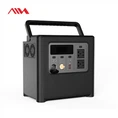
At our company, we are committed to providing high - quality AGV batteries with excellent long - term capacity retention. Our Cleaning Equipment Battery Pack 24V 50ah is designed with advanced lithium - ion technology to minimize the impact of charge - discharge cycles and temperature on capacity. It offers a stable energy supply over a long period, making it suitable for various cleaning AGV applications.
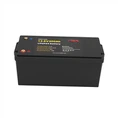
For larger - scale operations, our Golf Cart EV Battery 24V 100Ah Rechargeable Deep Cycle Lithium Iron Phosphate LiFePO4 Batteries are an ideal choice. These batteries have a high initial capacity and are engineered to withstand deep discharges without significant capacity loss. They are also more resistant to temperature variations, ensuring reliable performance in different environments.
In addition, our Sweeper Robot 24V 100ah Lifepo4 Battery is specifically designed for sweeper robots. It provides consistent power output, allowing the robot to clean large areas efficiently without frequent recharging.
Conclusion
Understanding the energy storage capacity of an AGV battery over time is crucial for optimizing AGV operations. By considering factors such as charge - discharge cycles, temperature, and depth of discharge, businesses can take proactive measures to extend the battery's lifespan and maintain its performance.
At our company, we are dedicated to providing the best battery solutions for your AGV needs. Whether you are looking to upgrade your existing AGV batteries or need a new battery for a new AGV project, we are here to assist you. Contact us to discuss your specific requirements and let's find the perfect battery solution together.
References
- Linden, D., & Reddy, T. B. (2001). Handbook of batteries. McGraw - Hill.
- Tarascon, J. M., & Armand, M. (2001). Issues and challenges facing rechargeable lithium batteries. Nature, 414(6861), 359 - 367.
- Ragone, D. V. (1968). Batteries and fuel cells for electric cars. Journal of Power Sources, 1(1 - 2), 139 - 155.