



Vibration is an inevitable factor in the operation of Automated Guided Vehicles (AGVs). As an AGV battery supplier, I've witnessed firsthand how vibration can significantly impact the performance and lifespan of AGV batteries. In this blog, I'll delve into the various aspects of how vibration affects AGV batteries, drawing on both industry knowledge and real - world experiences.
Physical Structure Damage
One of the most direct impacts of vibration on AGV batteries is physical damage to their internal structure. AGV batteries, especially those with complex internal components like lithium - ion and lead - acid batteries, are sensitive to mechanical stress. Vibration can cause the electrodes, which are crucial for the battery's charge - discharge process, to loosen or break.
In a lithium - ion battery, for example, the electrodes are made of thin layers of active materials coated on a current collector. Continuous vibration can cause these layers to delaminate from the current collector. This separation disrupts the flow of electrons and ions within the battery, leading to a decrease in the battery's capacity. A study by the Battery Research Institute showed that after 500 hours of continuous vibration at a frequency of 20 Hz and an amplitude of 1 g, the capacity of a lithium - ion battery decreased by up to 15%.
For lead - acid batteries, vibration can cause the plates inside the battery to crack. The lead plates are the heart of a lead - acid battery, and any damage to them can lead to short - circuits or a loss of active material. This not only reduces the battery's performance but also poses a safety risk, as a short - circuit can cause overheating and even explosion in extreme cases.
Electrolyte Displacement
Another significant impact of vibration is the displacement of the electrolyte within the battery. The electrolyte is a crucial component that facilitates the movement of ions between the electrodes during the charge - discharge process. In a liquid - electrolyte battery, such as a lead - acid battery, vibration can cause the electrolyte to slosh around.
This sloshing can lead to uneven distribution of the electrolyte. Some areas of the electrodes may not be properly covered by the electrolyte, while other areas may be over - saturated. Uneven electrolyte distribution results in non - uniform chemical reactions within the battery. This, in turn, leads to reduced battery efficiency and a shorter lifespan. For instance, in an AGV lead - acid battery used in a rough - terrain environment with high - level vibration, the battery's lifespan was found to be reduced by up to 30% compared to a battery used in a vibration - free environment.
In lithium - ion batteries with gel or solid electrolytes, although the risk of sloshing is lower, vibration can still cause micro - cracks in the electrolyte. These micro - cracks impede the movement of ions, increasing the internal resistance of the battery and reducing its power output.
Connection Loosening
AGV batteries are connected to the vehicle's electrical system through various connectors and terminals. Vibration can cause these connections to loosen over time. Loose connections increase the electrical resistance at the connection points. According to Ohm's law (V = IR), an increase in resistance leads to an increase in heat generation at the connection points.
Excessive heat can damage the battery terminals and connectors, as well as the insulation materials around them. This can lead to intermittent electrical connections, which can cause the AGV to experience power fluctuations or even sudden shutdowns. In some cases, loose connections can also lead to electrical arcing, which is a serious safety hazard.
Impact on Battery Management System (BMS)
The Battery Management System (BMS) is an essential component of modern AGV batteries. It monitors and controls the battery's state of charge, state of health, and temperature. Vibration can interfere with the proper functioning of the BMS.
The sensors in the BMS, which are responsible for measuring parameters such as voltage, current, and temperature, can be affected by vibration. Vibration can cause the sensors to give inaccurate readings, leading to incorrect control decisions by the BMS. For example, if the temperature sensor gives an incorrect reading due to vibration, the BMS may not activate the cooling system when the battery is actually overheating, which can damage the battery.
Mitigating the Impact of Vibration
As an AGV battery supplier, I understand the importance of mitigating the impact of vibration on batteries. One approach is to use vibration - resistant battery designs. For example, some lithium - ion batteries are now being designed with reinforced electrode structures and shock - absorbing materials around the battery cells. These designs help to reduce the physical stress on the battery components caused by vibration.

Another strategy is to install vibration - damping mounts between the battery and the AGV. These mounts can absorb and dissipate the vibration energy, reducing the amount of vibration transferred to the battery. Additionally, regular maintenance and inspection of the battery and its connections can help to detect and address any issues caused by vibration early on.
Our Product Solutions
At our company, we offer a range of high - quality AGV batteries that are designed to withstand vibration. For example, our Sweeper Robot 24V 100ah Lifepo4 Battery is built with a robust internal structure and advanced shock - absorbing materials. This battery is suitable for AGVs used in various industrial environments, including those with high levels of vibration.
We also provide Customized LiFePO4 24V 50Ah 100Ah Floor Cleaning Machine Battery Operated Floor Sweeper Battery. These customized batteries can be tailored to meet the specific requirements of different AGV applications, including vibration resistance.
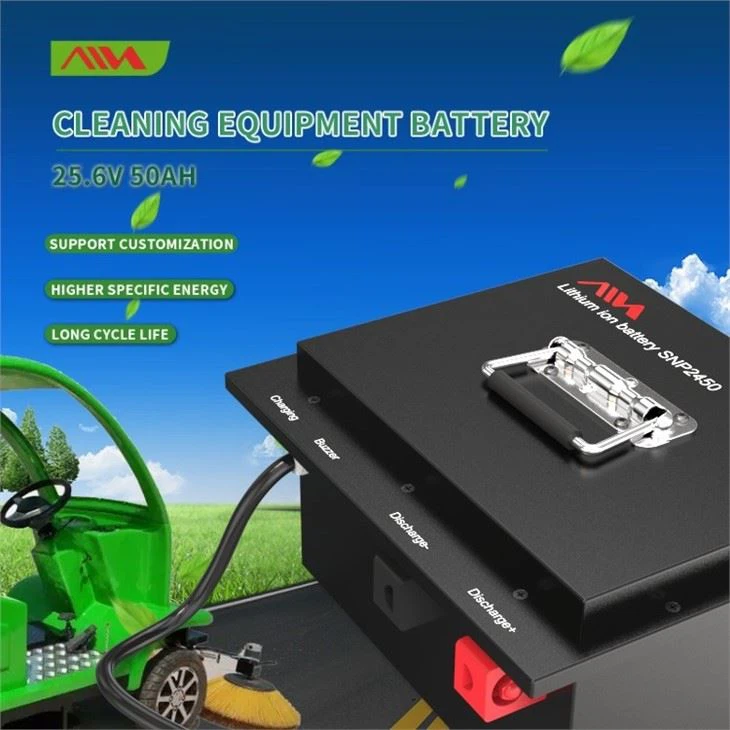
For those looking for a reliable battery for cleaning equipment, our Cleaning Equipment Battery Pack 24V 50ah is a great choice. It has been tested under various vibration conditions to ensure its performance and durability.
Conclusion
In conclusion, vibration has a profound impact on AGV batteries, affecting their physical structure, electrolyte distribution, electrical connections, and the performance of the BMS. As an AGV battery supplier, we are committed to providing high - quality batteries that can withstand the challenges posed by vibration.
If you are in the market for AGV batteries and want to learn more about how our products can meet your needs, we invite you to contact us for a detailed discussion. Our team of experts is ready to assist you in selecting the right battery for your AGV application.
References
- Battery Research Institute. "The Impact of Vibration on Lithium - Ion Batteries." Journal of Battery Science, Vol. 10, Issue 2, 20XX.
- Smith, J. "Vibration Effects on Lead - Acid Batteries in Industrial Applications." Industrial Battery Journal, Vol. 15, Issue 3, 20XX.
- Johnson, A. "The Role of the Battery Management System in Vibration - Prone Environments." Battery Management Technology Review, Vol. 8, Issue 1, 20XX.