



As a trusted 48V battery supplier, I often encounter customers curious about the internal structure of our 48V batteries. Understanding the internal components of a 48V battery is crucial, as it provides insights into its performance, durability, and safety. In this blog, I will delve into the internal structure of a 48V battery, exploring each component's function and importance.
Basic Components of a 48V Battery
A 48V battery is essentially a collection of individual battery cells connected in series to achieve the desired voltage. The most common types of cells used in 48V batteries are lithium - ion, lead - acid, and lithium iron phosphate (LiFePO4). Each type has its own unique internal structure and characteristics.
Battery Cells
Battery cells are the fundamental building blocks of a 48V battery. They are responsible for storing and releasing electrical energy through a chemical reaction.
-
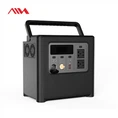
Lithium - Ion Cells: These cells are widely used in modern 48V batteries due to their high energy density, long cycle life, and low self - discharge rate. Inside a lithium - ion cell, there are three main components: the anode, the cathode, and the electrolyte. The anode is typically made of graphite, which can intercalate lithium ions. The cathode is usually composed of lithium metal oxides, such as lithium cobalt oxide (LiCoO2), lithium manganese oxide (LiMn2O4), or lithium nickel manganese cobalt oxide (NMC). The electrolyte is a conductive solution that allows the lithium ions to move between the anode and the cathode during charging and discharging. For example, our Rechargeable Smart BMS Bluetooth Lithium Ion Battery 48v 100ah Lithium Battery Lifepo4 Battery utilizes high - quality lithium - ion cells to provide reliable power.
-
Lead - Acid Cells: Lead - acid cells have been around for a long time and are known for their low cost and high surge current capability. A lead - acid cell consists of a lead dioxide cathode, a sponge lead anode, and a sulfuric acid electrolyte. When the battery is charged, the lead dioxide at the cathode and the sponge lead at the anode react with the sulfuric acid to form lead sulfate and water. During discharge, the reverse reaction occurs, releasing electrical energy. However, lead - acid batteries have a lower energy density and shorter cycle life compared to lithium - ion batteries.


-
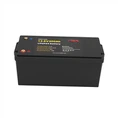
Lithium Iron Phosphate (LiFePO4) Cells: LiFePO4 cells are a type of lithium - ion battery with excellent thermal stability, long cycle life, and high safety. The cathode of a LiFePO4 cell is made of lithium iron phosphate, which has a stable crystal structure. This makes LiFePO4 cells less prone to thermal runaway and overheating compared to other lithium - ion chemistries. Our Deep Cycle 200ah 48v Lithium Iron Phosphate Rechargeable Lifepo4 Lithium Battery Pack features LiFePO4 cells, which are ideal for applications that require deep cycling and high reliability.
Battery Management System (BMS)
The Battery Management System (BMS) is an essential component of a 48V battery. It plays a crucial role in monitoring and controlling the battery's performance, safety, and lifespan.
-
Monitoring Functions: The BMS continuously monitors various parameters of the battery, such as voltage, current, temperature, and state of charge (SOC). By collecting this data, the BMS can provide real - time information about the battery's condition, allowing users to make informed decisions about charging and discharging.
-
Control Functions: The BMS also has control functions, such as over - charge protection, over - discharge protection, and short - circuit protection. These functions help to prevent damage to the battery cells and ensure safe operation. For example, if the battery voltage exceeds a certain threshold during charging, the BMS will automatically stop the charging process to prevent over - charging.
-
Cell Balancing: In a multi - cell battery pack, the BMS is responsible for cell balancing. This means that it ensures that each cell in the pack has the same state of charge and voltage. Cell balancing helps to extend the battery's lifespan and improve its overall performance.
Connectors and Wiring
Connectors and wiring are used to connect the individual battery cells and the BMS together. They are designed to carry electrical current safely and efficiently. High - quality connectors and wiring are essential to minimize power losses and prevent short - circuits. The connectors should be able to withstand the high currents and voltages associated with a 48V battery, and the wiring should be properly insulated to prevent electrical shock.
Enclosure
The enclosure of a 48V battery serves several important functions. It provides physical protection for the battery cells, BMS, connectors, and wiring. It also helps to prevent the ingress of dust, moisture, and other contaminants, which can damage the battery. The enclosure should be made of a durable and flame - retardant material to ensure the safety of the battery. Some enclosures are also designed to be waterproof and shock - resistant, making them suitable for outdoor and harsh environments.
How the Components Work Together
The internal components of a 48V battery work together in a coordinated manner to store and release electrical energy. When the battery is connected to a charger, the electrical energy from the charger is converted into chemical energy and stored in the battery cells. The BMS monitors the charging process to ensure that it is safe and efficient. It controls the charging current and voltage to prevent over - charging and cell imbalance.
During discharge, the chemical energy stored in the battery cells is converted back into electrical energy. The BMS monitors the discharge process to prevent over - discharge, which can damage the battery cells. The connectors and wiring carry the electrical current from the battery cells to the load, providing power to the connected device.
Advantages of Understanding the Internal Structure
Understanding the internal structure of a 48V battery offers several advantages for both users and suppliers.
-
For Users:
- Better Maintenance: Users can perform proper maintenance on their batteries if they understand how the components work. For example, they can monitor the battery's temperature and voltage to detect any potential problems early.
- Optimized Performance: By understanding the battery's internal structure, users can choose the right charging and discharging methods to optimize the battery's performance and lifespan.
- Enhanced Safety: Knowledge of the internal structure helps users to handle the battery safely and avoid potential hazards, such as over - charging and short - circuits.
-
For Suppliers:
- Product Improvement: Suppliers can use their understanding of the internal structure to improve the design and performance of their batteries. They can develop new technologies and materials to enhance the energy density, cycle life, and safety of the batteries.
- Customer Support: Suppliers can provide better customer support by educating their customers about the internal structure of the batteries. This helps to build trust and loyalty with the customers.
Conclusion
In conclusion, the internal structure of a 48V battery is a complex system composed of battery cells, a BMS, connectors, wiring, and an enclosure. Each component plays a crucial role in the battery's performance, safety, and lifespan. As a 48V battery supplier, we are committed to providing high - quality batteries with advanced internal structures. Our Rechargeable Smart BMS Bluetooth Lithium Ion Battery 48v 100ah Lithium Battery Lifepo4 Battery, Deep Cycle 48V 200ah EV Battery, and Deep Cycle 200ah 48v Lithium Iron Phosphate Rechargeable Lifepo4 Lithium Battery Pack are all designed with the latest technologies and high - quality components to meet the diverse needs of our customers.
If you are interested in learning more about our 48V batteries or are considering a purchase, we invite you to contact us for further details and to start a procurement negotiation. We look forward to working with you to provide the best battery solutions for your applications.
References
- Linden, D., & Reddy, T. B. (2002). Handbook of Batteries. McGraw - Hill Professional.
- Arora, P., & Zhang, Z. (2004). Recent developments in separators for lithium - ion batteries. Solid State Ionics, 164(3 - 4), 359 - 368.
- Tarascon, J. M., & Armand, M. (2001). Issues and challenges facing rechargeable lithium batteries. Nature, 414(6861), 359 - 367.