



The solar system is a vast and mysterious expanse, filled with celestial bodies that each possess unique characteristics. Among these, Jupiter stands out not only for its colossal size but also for its remarkable magnetic field. As a supplier of products for the Solar System Home, understanding the magnetic field of Jupiter can offer valuable insights into the broader context of space exploration and the potential applications of our products.
The Basics of Jupiter's Magnetic Field
Jupiter's magnetic field is one of the most powerful in the solar system. It is approximately 20,000 times stronger than Earth's magnetic field at its surface. This immense magnetic field is generated by a dynamo effect within Jupiter's interior. Unlike Earth, where the dynamo is driven by the motion of molten iron in the outer core, Jupiter's dynamo is thought to be powered by the convective motion of metallic hydrogen. Metallic hydrogen is a state of hydrogen where it behaves like a metal, conducting electricity and generating a magnetic field as it moves.
The magnetic field of Jupiter extends far into space, forming a region known as the magnetosphere. The Jovian magnetosphere is the largest continuous structure in the solar system, stretching up to 7 million kilometers towards the Sun and billions of kilometers in the opposite direction. This vast magnetosphere traps charged particles, mainly electrons and protons, creating intense radiation belts similar to Earth's Van Allen belts but much more energetic.
The Structure of Jupiter's Magnetosphere
The Jovian magnetosphere can be divided into several distinct regions. The innermost region is the magnetodisk, which is a flat, disk - shaped region where the magnetic field lines are stretched out due to the rotation of Jupiter. The charged particles in the magnetodisk are concentrated in a relatively thin layer, and their motion is strongly influenced by Jupiter's rotation.
Surrounding the magnetodisk is the outer magnetosphere, which is more complex and dynamic. Here, the magnetic field interacts with the solar wind, a stream of charged particles emitted by the Sun. The boundary between the magnetosphere and the solar wind is called the magnetopause. When the solar wind hits the magnetopause, it can cause the magnetosphere to compress on the side facing the Sun and stretch out into a long tail on the opposite side.
Another important feature of Jupiter's magnetosphere is the presence of Io's plasma torus. Io, one of Jupiter's four large moons, is the most volcanically active body in the solar system. Volcanic eruptions on Io eject large amounts of sulfur, oxygen, and sodium ions into space. These ions are then picked up by Jupiter's magnetic field and form a torus - shaped region of plasma around Jupiter. The interaction between the plasma torus and Jupiter's magnetic field is a major source of energy and activity within the magnetosphere.
The Impact of Jupiter's Magnetic Field on Its Moons
Jupiter's powerful magnetic field has a profound impact on its moons. The magnetic field can induce electrical currents in the conductive interiors of the moons, which in turn can generate secondary magnetic fields. For example, Ganymede, the largest moon in the solar system, has its own intrinsic magnetic field, which interacts with Jupiter's magnetic field. This interaction can cause auroras to form on Ganymede, similar to the auroras on Earth but driven by different processes.
The magnetic field also affects the surface and atmosphere of the moons. The charged particles in the magnetosphere can bombard the surfaces of the moons, causing sputtering and altering the chemical composition of the surface materials. On Europa, another of Jupiter's moons, the interaction between the magnetic field and the moon's subsurface ocean is thought to play a role in the formation of surface features such as cracks and ridges.


Relevance to the Solar System Home
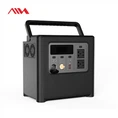
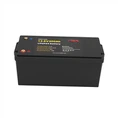
As a supplier for the Solar System Home, the knowledge of Jupiter's magnetic field can be applied in several ways. Firstly, understanding the radiation environment created by Jupiter's magnetic field is crucial for designing spacecraft and habitats that can withstand the high - energy particles. Our products, such as the Stackable Household Lithium 51.2v 200ah and LiFePO4 51.2V 100Ah 5Kwh Stackable Battery, need to be able to operate in such harsh radiation environments. These batteries are designed to store energy for use in space habitats, and their durability and performance can be enhanced by taking into account the radiation shielding requirements based on the characteristics of Jupiter's magnetic field.
Secondly, the energy sources within Jupiter's magnetosphere, such as the charged particles in the radiation belts, could potentially be harnessed in the future. Our Stackable 30KWh Lifepo4 Home ESS could be part of a system that stores energy generated from these charged particles. For example, in - space power generation technologies could be developed to capture the energy of the charged particles and convert it into electrical energy, which can then be stored in our stackable batteries for later use.
Future Research and Exploration
There is still much to learn about Jupiter's magnetic field. Future space missions, such as the Europa Clipper mission, will provide more detailed information about the interaction between Jupiter's magnetic field and its moons. These missions will use a variety of instruments, including magnetometers and plasma detectors, to study the magnetic field and the charged particle environment in the Jovian system.
In addition, theoretical models of Jupiter's magnetic field are constantly being refined. Scientists are working to better understand the processes that generate and maintain the magnetic field, as well as the complex interactions between the magnetosphere, the solar wind, and the moons. This research will not only deepen our understanding of Jupiter but also have implications for our understanding of other planets and astrophysical objects with magnetic fields.
Contact for Procurement
If you are interested in our products for the Solar System Home, such as the Stackable Household Lithium 51.2v 200ah, LiFePO4 51.2V 100Ah 5Kwh Stackable Battery, and Stackable 30KWh Lifepo4 Home ESS, please feel free to contact us for procurement and further discussions. We are committed to providing high - quality products and solutions for your space - related needs.
References
- Bagenal, F., & Dowling, T. E. (2005). Jupiter: The Planet, Satellites and Magnetosphere. Cambridge University Press.
- Kivelson, M. G., & Bagenal, F. (2007). The Jovian Magnetosphere. Springer.
- Porco, C. C., et al. (2003). Imaging of Io by the Galileo spacecraft. Science, 299(5605), 1541 - 1547.