



Hey there, space enthusiasts and eco - friendly homeowners! As a supplier of the Solar System Home, I've been getting a ton of questions lately about the planets in our solar system, especially the size of the smallest one. So, let's take a little cosmic journey and dig into this fascinating topic.
First off, when we talk about the solar system, we're looking at a vast expanse that includes the sun, eight planets, numerous moons, asteroids, and comets. But today, we're zeroing in on the planets, and specifically, the smallest one. That would be Mercury.
Mercury is like the little sibling in our planetary family. It's super close to the sun, which makes it a pretty extreme place. With a diameter of about 4,880 kilometers (3,032 miles), it's significantly smaller than Earth, which has a diameter of about 12,742 kilometers (7,918 miles). To put it in perspective, if Earth were a basketball, Mercury would be more like a tennis ball.
The small size of Mercury has a big impact on its characteristics. For one thing, its gravitational pull is much weaker compared to Earth. This means that if you were to stand on Mercury, you'd weigh a lot less than you do here on our home planet. In fact, your weight on Mercury would be only about 38% of what it is on Earth. So, if you weigh 100 pounds on Earth, you'd only weigh 38 pounds on Mercury.
Another consequence of its small size is its thin atmosphere. Mercury doesn't have a thick, protective atmosphere like Earth. This is mainly because its weak gravity can't hold onto gases very well. Without a proper atmosphere, Mercury is exposed to the full force of the sun's radiation and solar winds. During the day, the surface temperature on Mercury can soar up to a blistering 427°C (801°F), hot enough to melt lead. And at night, with no atmosphere to trap the heat, the temperature can plummet to a frigid - 173°C (- 280°F).
Now, you might be wondering, what does all this have to do with the Solar System Home I'm supplying? Well, the study of planets like Mercury gives us insights into the extreme conditions that exist in space. These insights are crucial when we're designing and developing solar energy systems for homes.
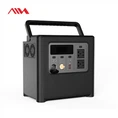
Our products, like the Stackable 30KWh Lifepo4 Home ESS, are built to withstand a wide range of environmental conditions. Just like Mercury has to deal with extreme temperatures, our solar energy storage systems are engineered to perform reliably in hot summers and cold winters.
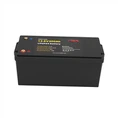
The 51.2v 300ah Lifepo4 15KWh Solar ESS is another great example. It's designed to store energy efficiently, just like how a planet stores its resources. Whether it's a sunny day or a cloudy one, this system can help you make the most of the solar energy you collect.
And let's not forget about the Stackable 51.2v 400ah Lifepo4 20KWh Battery. This stackable battery is like a modular planet in our solar energy system. You can add more units as your energy needs grow, just like how planets can accrete more matter over time.
When we look at the solar system, we see a beautiful and complex interplay of forces and elements. Our goal as a Solar System Home supplier is to bring some of that cosmic efficiency and resilience into your homes. By using our solar energy storage systems, you can reduce your reliance on traditional energy sources and contribute to a more sustainable future.


If you're interested in learning more about our products or have any questions about how they can fit into your home, don't hesitate to reach out. We're here to help you make the switch to clean, renewable energy. Whether you're a space - loving homeowner or just someone looking to save on energy costs, our solar energy solutions are designed with you in mind.
Let's work together to create a home that's as efficient and amazing as our solar system. Contact us today to start the conversation about how we can power your home with the energy of the sun.
References
- NASA's official website for information on planetary data.
- Astronomy textbooks and research papers on the solar system.