



Hey there! As a supplier of 48V batteries, I often get asked about all sorts of technical details. One question that pops up quite a bit is, "What is the temperature coefficient of a 48V battery?" Let's dig into this topic and break it down in a way that's easy to understand.
First off, let's talk about what a temperature coefficient actually is. In simple terms, it's a measure of how a battery's performance changes with temperature. Batteries are like people in a way - they don't perform their best in extreme conditions. Just as we might slow down in the scorching heat or freezing cold, batteries also experience changes in their voltage, capacity, and overall efficiency when the temperature fluctuates.
For a 48V battery, the temperature coefficient can have a significant impact on its operation. Different types of 48V batteries, such as lead - acid, lithium - ion, and lithium iron phosphate (LiFePO4), have different temperature coefficients.
Let's start with lead - acid batteries. These are the old - school batteries that have been around for a long time. They're commonly used in applications like backup power systems and some older electric vehicles. Lead - acid batteries have a negative temperature coefficient for voltage. This means that as the temperature goes up, the battery's open - circuit voltage decreases. On average, the voltage of a lead - acid battery drops by about 0.003V per cell per degree Celsius increase in temperature. Since a 48V lead - acid battery typically consists of 24 cells (each cell having a nominal voltage of 2V), a temperature increase of 10 degrees Celsius could result in a voltage drop of around 0.72V. This might not seem like a huge deal at first glance, but it can affect the performance of the equipment that the battery is powering.
Now, let's move on to lithium - ion batteries. Lithium - ion batteries are known for their high energy density and long cycle life. They're widely used in modern electric vehicles, portable electronics, and renewable energy storage systems. The temperature coefficient of lithium - ion batteries is more complex. Generally, the capacity of a lithium - ion battery decreases at low temperatures and increases slightly at moderate high temperatures up to a certain point. However, if the temperature gets too high, it can cause irreversible damage to the battery, such as electrolyte decomposition and electrode degradation.
One of the most popular types of lithium - ion batteries for 48V applications is the lithium iron phosphate (LiFePO4) battery. LiFePO4 batteries have several advantages over other types of batteries, including better thermal stability, longer cycle life, and higher safety. The temperature coefficient of a LiFePO4 battery is relatively stable compared to lead - acid and other lithium - ion batteries. The voltage of a LiFePO4 battery has a small positive temperature coefficient. This means that as the temperature increases, the voltage of the battery also increases slightly. The capacity of a LiFePO4 battery also shows less degradation at high temperatures compared to other battery chemistries.


So, why does all this matter? Well, understanding the temperature coefficient of a 48V battery is crucial for proper battery management and system design. If you're using a 48V battery in an application where the temperature varies widely, you need to take the temperature coefficient into account. For example, in a solar power storage system located in a desert area, the battery will be exposed to high temperatures during the day. If the battery is a lead - acid battery, the voltage drop due to the high temperature could cause the charging system to overcharge the battery, leading to premature failure. On the other hand, a LiFePO4 battery with its better thermal stability might be a more suitable choice in such an environment.
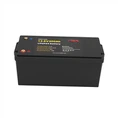
At our company, we offer a range of high - quality 48V batteries to meet different customer needs. For instance, we have the Deep Cycle 200ah 48v Lithium Iron Phosphate Rechargeable Lifepo4 Lithium Battery Pack. This battery is designed for deep - cycle applications, which means it can be discharged and recharged multiple times without significant loss of capacity. It has a relatively stable temperature coefficient, making it suitable for use in various temperature conditions.
Another great option is the Deep Cycle 48V 200ah EV Battery. This battery is specifically designed for electric vehicles. It offers high energy density and excellent performance, even in challenging temperature environments. The advanced battery management system (BMS) in this battery helps to regulate the temperature and ensure safe and efficient operation.
We also have the Rechargeable Smart BMS Bluetooth Lithium Ion Battery 48v 100ah Lithium Battery Lifepo4 Battery. This battery comes with a smart BMS that can be connected via Bluetooth. The BMS monitors the battery's temperature, voltage, and current in real - time and can adjust the charging and discharging parameters accordingly. This helps to optimize the battery's performance and extend its lifespan, especially when dealing with temperature variations.
In conclusion, the temperature coefficient of a 48V battery is an important factor that can affect its performance, safety, and lifespan. Whether you're using a lead - acid, lithium - ion, or LiFePO4 battery, it's essential to understand how the temperature will impact the battery and take appropriate measures to manage it.
If you're in the market for a 48V battery and want to learn more about our products or have any questions regarding the temperature coefficient or other technical aspects, don't hesitate to reach out. We're here to help you find the best battery solution for your specific needs. Contact us to start a conversation about your battery requirements and let's work together to get you the perfect 48V battery.
References:
- Linden, D., & Reddy, T. B. (2002). Handbook of Batteries. McGraw - Hill.
- Koksbang, R., & Berg, R. W. (2012). Battery Management Systems: Design by Modelling. Springer.
- Tarascon, J. M., & Armand, M. (2001). Issues and challenges facing rechargeable lithium batteries. Nature, 414(6861), 359 - 367.