



Hey there! As a solar battery supplier, I get this question all the time: "What size solar battery do I need?" It's a crucial question because getting the right size can make all the difference in your solar energy system's performance. In this blog, I'll break down the factors you need to consider to figure out the perfect solar battery size for your needs.
Understanding Your Energy Consumption
The first step in determining the size of the solar battery you need is to understand your energy consumption. You've got to know how much electricity you use on a daily basis. This will give you a baseline for how much energy your battery should be able to store.


To find out your daily energy consumption, you can look at your electricity bills. Most bills will show your total energy usage over a month. Divide that monthly usage by the number of days in the month to get your average daily consumption. For example, if you used 900 kilowatt - hours (kWh) in a 30 - day month, your average daily consumption is 30 kWh.
Keep in mind that your energy usage might vary throughout the year. In the summer, you might use more electricity for air conditioning, and in the winter, for heating. So, it's a good idea to look at your bills from different seasons to get a more accurate picture.
Solar Panel Output
Another important factor is the output of your solar panels. How much electricity your panels can generate depends on several things, like their size, efficiency, and how much sunlight they get.
Most solar panels are rated in watts. For instance, a typical solar panel might be rated at 300 watts. If you have 10 of these panels, your total panel capacity is 3000 watts or 3 kilowatts (kW). But the actual amount of electricity they produce will be less than this rating because of factors like shading, dirt on the panels, and the angle of the sun.
On a sunny day, a 3 - kW solar panel system might produce around 12 - 15 kWh of electricity. However, on a cloudy day, that output could drop significantly. You need to know the average daily output of your solar panels so you can match it with the right battery size.
Backup Needs
Do you want your solar battery to provide backup power during a blackout? If so, you'll need to consider how long you want the backup to last and what appliances you want to run during that time.
Let's say you want to keep your fridge, a few lights, and your Wi - Fi router running during a power outage. The fridge might use around 1 - 2 kWh per day, the lights might use 0.5 kWh, and the Wi - Fi router might use 0.1 kWh. So, in total, you'd need about 2.6 kWh per day to keep these essential appliances running.
If you want the backup to last for 3 days, you'll need a battery that can store at least 7.8 kWh of energy.
Types of Solar Batteries and Their Capacities
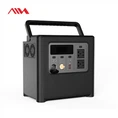
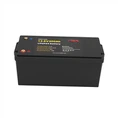
There are different types of solar batteries available in the market, and they come in various sizes. One popular option is the Solar Battery Powerwall 2.56Kwh Lifepo4 Pack. This battery has a capacity of 2.56 kWh, which might be suitable for small - scale residential applications or as an addition to an existing battery system.
If you have a larger energy demand, you might consider the Sunnew 10kwh Lifepo4 Battery 48V 200ah Power Energy Wall For Home Energy Storage System. With a 10 - kWh capacity, it can store more energy and is better for homes with higher energy consumption or those that want more extensive backup power.
For even larger solar power systems, the Sunnew Powerwall Home Battery 5Kw 10Kw 20Kwh 48V Lithium Lron Phosphate Battery Pack For Solar Power System offers multiple capacity options. You can choose a 5 - kWh, 10 - kWh, or 20 - kWh battery depending on your specific needs.
Calculating the Right Size
Once you've gathered all the information about your energy consumption, solar panel output, and backup needs, you can start calculating the right battery size.
Let's say your average daily energy consumption is 30 kWh, and your solar panels produce an average of 15 kWh per day. You want to store the excess energy for use at night or during cloudy days. So, you'd need a battery that can store at least 15 kWh of energy.
If you also want 3 days of backup power for essential appliances that use 2.6 kWh per day, you'll need an additional 7.8 kWh. In total, you'd need a battery with a capacity of around 22.8 kWh.
Other Considerations
There are a few other things to keep in mind when choosing a solar battery size. First, the depth of discharge (DoD) of the battery. This is the percentage of the battery's capacity that you can use without damaging it. For example, if a battery has a 80% DoD and a 10 - kWh capacity, you can only use 8 kWh of its energy safely.
Also, consider the battery's efficiency. No battery is 100% efficient, and some energy will be lost during the charging and discharging process. A battery with a higher efficiency will waste less energy.
Conclusion
Figuring out the right size solar battery for your needs isn't always easy, but it's definitely worth the effort. By considering your energy consumption, solar panel output, backup needs, and other factors, you can make an informed decision.
If you're still not sure what size solar battery is right for you, don't worry! We're here to help. As a solar battery supplier, we have the expertise and a wide range of products to meet your specific requirements. Whether you need a small battery for a simple setup or a large one for a complex solar power system, we've got you covered.
If you're interested in purchasing a solar battery or want to discuss your options further, feel free to reach out. We can provide you with detailed information, pricing, and help you choose the perfect battery for your home or business. Let's work together to make your solar energy system more efficient and reliable!
References
- Solar Energy Industries Association (SEIA). "Solar Energy Basics."
- National Renewable Energy Laboratory (NREL). "Solar Photovoltaic System Performance."