



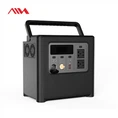
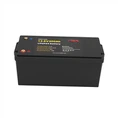

Hey there! As a 12V battery supplier, I often get asked a bunch of questions, and one that pops up quite a bit is, "Can a 12V battery power a rice cooker?" Well, let's dig into this topic and find out.
First off, we need to understand a bit about how both 12V batteries and rice cookers work. A 12V battery, as the name suggests, provides a direct current (DC) voltage of 12 volts. These batteries come in various types, like lead - acid, lithium - ion, and LiFePO4. For example, we have the Deep Cycle 12V 100Ah Rechargeable Lifepo4 Battery Pack With Build - in Bluetooth BMS, Rechargeable 12v Batterie Lithium Ion Lifepo4 Battery Pack 12.8v 300ah Lithium Battery, and 12v 150ah Lifepo4 Solar Battery. Each type has its own characteristics in terms of capacity, charge - discharge efficiency, and lifespan.
On the other hand, a rice cooker is an electrical appliance that usually runs on alternating current (AC) and has a power rating. The power rating of a rice cooker can vary widely, typically ranging from around 300 watts to 1000 watts or more, depending on its size and features.
Now, the main issue here is the difference between DC and AC power. Most rice cookers are designed to work with the AC power from your household electrical outlet, which in many countries is around 110V or 220V. A 12V battery, however, provides DC power. So, right off the bat, we have a mismatch in both voltage and the type of current.
To use a 12V battery to power a rice cooker, we need to address these two issues. First, we need to convert the DC power from the battery to AC power. This is where an inverter comes in. An inverter is a device that can convert DC power to AC power. But just having an inverter isn't enough. We also need to make sure that the inverter can handle the power requirements of the rice cooker.
Let's say we have a small rice cooker with a power rating of 300 watts. To calculate the current that the battery needs to supply, we can use the formula P = VI (where P is power in watts, V is voltage in volts, and I is current in amperes). Rearranging the formula to solve for I, we get I = P/V. For a 300 - watt rice cooker running on 12V, the current would be I = 300/12 = 25 amperes.
Now, not all 12V batteries can supply such a high current continuously. For example, a small 12V lead - acid battery used in a motorcycle might not be able to handle 25 amperes for an extended period without getting damaged. That's why we often recommend using high - capacity batteries like the LiFePO4 ones we offer.
LiFePO4 batteries have several advantages when it comes to powering high - load devices. They have a high charge - discharge efficiency, which means less energy is wasted during the charging and discharging process. They also have a long lifespan compared to other battery types. Our Deep Cycle 12V 100Ah Rechargeable Lifepo4 Battery Pack With Build - in Bluetooth BMS is a great option. With a capacity of 100Ah, it can supply a relatively high current for a certain period.
But even with a suitable battery, there are still some practical considerations. Powering a rice cooker with a 12V battery is not very energy - efficient. The inverter itself has some power losses during the DC - to - AC conversion process. And if you're using the battery for other purposes as well, it can quickly drain the battery.
Let's talk about the time it takes to cook rice. A typical rice - cooking cycle in a rice cooker can take around 20 - 30 minutes. If we assume a 300 - watt rice cooker and a 12V 100Ah battery, we can estimate the battery life. The energy stored in the battery is given by E = V × Ah. So, for a 12V 100Ah battery, the energy is E = 12 × 100 = 1200 watt - hours. But considering the inverter losses, let's say the efficiency is around 80%. So, the available energy is 0.8 × 1200 = 960 watt - hours.
If the rice cooker consumes 300 watts for 30 minutes (or 0.5 hours), the energy consumed by the rice cooker is 300 × 0.5 = 150 watt - hours. So, theoretically, the battery could power the rice cooker a few times before it needs to be recharged.
In some off - grid or emergency situations, using a 12V battery to power a rice cooker can be a viable option. For example, if you're camping and don't have access to a regular power source, you can set up a system with a 12V battery, an inverter, and a small rice cooker. However, it's important to note that this setup might not be as convenient as using a regular AC - powered rice cooker.
So, to answer the question "Can a 12V battery power a rice cooker?" The answer is yes, but it's not a straightforward process. You need to have a suitable battery, an appropriate inverter, and you need to be aware of the power requirements and limitations.


If you're interested in exploring the possibility of using a 12V battery to power your appliances or have any questions about our 12V batteries, feel free to reach out for a purchase negotiation. We're here to help you find the best solution for your power needs.
References:
- Electrical Engineering textbooks for basic power and battery concepts
- Manufacturer specifications of rice cookers and 12V batteries.