


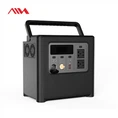
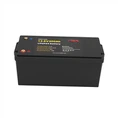

Hey there! As a backup battery supplier, I often get asked a bunch of questions about what our batteries can and can't do. One question that pops up quite a bit is, "Can a backup battery be used to charge a security camera?" Well, let's dig into this topic and find out.
First off, let's talk about why you might want to use a backup battery to charge a security camera. Security cameras are super important for keeping an eye on your home, business, or any other place you care about. But what happens when the power goes out? That's where a backup battery comes in handy. With a backup battery, your security camera can keep running even when there's no electricity from the grid.
Now, the big question is whether it's actually possible. The short answer is yes, in most cases, a backup battery can be used to charge a security camera. But there are a few things you need to consider.
Compatibility
The first thing you need to check is the compatibility between the backup battery and the security camera. Different security cameras have different power requirements, including voltage and current. You need to make sure that the backup battery can provide the right amount of power for your camera. For example, if your security camera requires 12 volts to operate, you need a backup battery that can output 12 volts.
Most modern backup batteries come with multiple output ports, such as USB ports, DC ports, and even AC outlets. This gives you a lot of flexibility when it comes to charging different devices, including security cameras. However, you still need to double - check the specifications to ensure a proper match.
Capacity
Another important factor is the capacity of the backup battery. The capacity is usually measured in watt - hours (Wh). It tells you how much energy the battery can store. The higher the capacity, the longer the battery can power your security camera.
Let's say you have a security camera that consumes 10 watts of power. If you have a backup battery with a capacity of 100 Wh, in theory, it can power the camera for about 10 hours (100 Wh / 10 W = 10 hours). But keep in mind that this is just a rough estimate. There are always some energy losses during the charging and discharging process, so the actual runtime might be a bit shorter.
Charging Time
You also need to think about the charging time of the backup battery. If you rely on the backup battery to keep your security camera running during power outages, you want to make sure that it can be recharged quickly once the power is back on.
Some backup batteries support fast - charging technology, which can significantly reduce the charging time. For example, the Sunnew 1229Wh Big Capacity Multi - function Emergency Power Supply Quick Charge Solar Charging 1000W Portable Power Station is designed with quick - charge capabilities. It not only has a large capacity but can also be charged relatively fast, either through a wall outlet or solar panels.


Types of Backup Batteries
There are different types of backup batteries available in the market. The most common ones are lead - acid batteries and lithium - ion batteries.
Lead - acid batteries are relatively inexpensive and have been around for a long time. They are quite reliable but are also heavier and bulkier compared to lithium - ion batteries. They also require more maintenance, such as checking the electrolyte levels.
Lithium - ion batteries, on the other hand, are lighter, more compact, and have a longer lifespan. They also have a higher energy density, which means they can store more energy in a smaller space. For example, the 600W Solar Portable Power Station uses lithium - ion batteries, making it a great choice for portable and long - term use.
Solar Charging
If you're looking for a more sustainable and independent way to charge your backup battery, solar charging is a great option. Many backup batteries, like the 307Wh Big Capacity Quick Charge Pure Sine Wave Power Station Solar Panel Charging Portable Outdoor Generator, come with built - in solar charging capabilities.
Solar charging allows you to charge the backup battery using sunlight, which is free and renewable. This is especially useful if you live in an area with a lot of sunlight or if you want to have an off - grid power solution for your security camera.
Real - World Scenarios
Let's look at a couple of real - world scenarios to see how using a backup battery to charge a security camera can be beneficial.
Home Security
Imagine you're at home, and there's a sudden power outage due to a storm. Without a backup battery, your security camera would stop working, leaving your home vulnerable. But if you have a backup battery connected to your camera, it can keep recording, giving you peace of mind knowing that you can still monitor your property.
Business Security
For businesses, security cameras are crucial for protecting assets and ensuring the safety of employees and customers. A power outage could disrupt the surveillance system, potentially leading to security risks. By using a backup battery, you can ensure that your security cameras keep running during power outages, helping you maintain a secure environment.
Conclusion
In conclusion, a backup battery can definitely be used to charge a security camera. It offers a reliable solution for keeping your camera running during power outages. However, you need to consider factors like compatibility, capacity, charging time, and the type of battery.
If you're interested in finding the right backup battery for your security camera or have any other questions, feel free to reach out. We're here to help you make the best choice for your needs. Whether it's a small - scale home security setup or a large - scale business surveillance system, we've got a wide range of backup batteries to meet your requirements. Let's start a conversation and find the perfect solution together!
References
- General knowledge about backup batteries and security cameras from industry experience.
- Product specifications of the mentioned backup batteries from the manufacturer's official documentation.