



Hey there! I'm an eager supplier for Solar System Home. I've been thinking a lot lately about a super cool question: Can we grow plants on other planets in the Solar System? It's a mind - boggler, right? And as someone in the solar energy game, I see how our tech could play a huge role in making this a reality.


Let's start with the basics. Earth is like a plant paradise. We've got the right temperature range, a protective atmosphere, and a whole bunch of water. But when we look at other planets in our solar system, things get a bit tricky.
Take Mars, for example. It's probably the most talked - about planet when it comes to space exploration and potential plant growth. Mars has a thin atmosphere mostly made of carbon dioxide. That might sound good for plants since they use CO2 for photosynthesis. But there are some major problems. The temperature on Mars can drop to a freezing - 195°F (-125°C) at the poles, and even at the equator, it can get as cold as -81°F (-63°C) at night. Also, the soil on Mars contains perchlorates, which are toxic to most plants.
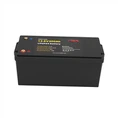
However, don't lose hope just yet. With the right technology, we might be able to make Mars a bit more plant - friendly. That's where solar energy storage systems come in. Our 51.2v 300ah Lifepo4 15KWh Solar ESS can store energy collected during the day on Mars. This stored energy can be used to power heaters to keep the plant growing environment at a more suitable temperature. We could also use it to run purification systems to clean the Martian soil and remove those pesky perchlorates.
Another planet in our solar system that has some interesting features is Venus. Venus has a thick atmosphere that traps heat, making it the hottest planet in our solar system with surface temperatures reaching up to 864°F (462°C). The pressure on Venus is also about 92 times that of Earth's, which is like being under a kilometer of water. It's not exactly a plant - friendly place at first glance. But in the upper atmosphere of Venus, at an altitude of about 50 - 60 kilometers, the temperature and pressure are more similar to Earth's.
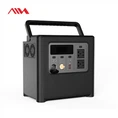
We could potentially build floating habitats in Venus's upper atmosphere. And guess what? Our Stackable 30KWh Lifepo4 Home ESS could be a key part of these habitats. The energy stored in these systems could power the life - support systems, lighting for the plants, and even systems to control the humidity inside the habitat.
Now, let's talk about the Moon. The Moon has no atmosphere to speak of, which means it has extreme temperature variations. During the day, it can get as hot as 260°F (127°C), and at night, it drops to -280°F (-173°C). Also, the lunar soil, or regolith, lacks many of the nutrients that plants need to grow. But we could build enclosed greenhouses on the Moon. Our Stackable Household Lithium 51.2v 200ah can provide the energy needed to maintain a stable environment inside these greenhouses. We could use the stored energy to regulate the temperature, provide artificial light, and circulate air.
When it comes to actually growing plants, we'd need to bring some Earth - based soil or create a synthetic growing medium. We'd also have to carefully select plant species that can tolerate the harsh conditions. Some plants that are known for their resilience, like certain types of mosses and lichens, could be good candidates.
In addition to the technical challenges, there are also some ethical and ecological questions. If we start growing plants on other planets, what impact will it have on the native environments? Will it contaminate these planets with Earth - based organisms? These are important questions that we need to think about as we move forward.
But the potential benefits are huge. Growing plants on other planets could be a step towards establishing permanent human settlements. Plants can produce oxygen, which is essential for human survival. They can also be used as a food source. And from a scientific perspective, it would give us a better understanding of how life can adapt to different environments.
As a Solar System Home supplier, I'm really excited about the possibilities. Our solar energy storage systems are designed to be reliable and efficient, even in the most extreme conditions. Whether it's the cold of Mars, the heat of Venus, or the vacuum of the Moon, our products can help make plant growth on other planets a reality.
If you're as passionate about space exploration and the future of plant growth on other planets as I am, or if you're interested in our solar energy storage solutions for any other application, I'd love to hear from you. Let's start a conversation about how we can work together to make these amazing ideas come to life. We can explore different options, customize solutions to fit your needs, and take the first steps towards a new era of space - based agriculture.
References
- NASA. (2023). Planetary Fact Sheet.
- Scientific American. (2022). "The Future of Space Agriculture".
- Nature. (2021). "Challenges and Opportunities in Extraterrestrial Plant Growth".