



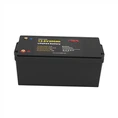
Can a Brick Battery be overcharged?
As a supplier of brick batteries, I often get asked whether our brick batteries can be overcharged. It's a crucial question, especially for those who rely on these batteries for their energy storage needs, whether it's for residential solar power systems or other applications. In this blog post, I'll delve into the science behind brick battery overcharging, explain how our products are designed to prevent it, and share some insights on maintaining the longevity of your battery.
Understanding Overcharging
Before we discuss whether a brick battery can be overcharged, let's first understand what overcharging means. Overcharging occurs when a battery is continuously charged beyond its recommended state of charge (SOC). When this happens, several things can go wrong. For lithium - iron - phosphate (LiFePO4) batteries, which are commonly used in our brick battery products, overcharging can lead to the breakdown of the electrolyte, the formation of dendrites on the electrodes, and an increase in internal pressure and temperature.
These issues can have serious consequences. Dendrites can grow through the separator between the battery's electrodes, causing a short - circuit. A short - circuit can lead to a rapid release of energy, resulting in overheating, swelling, and in extreme cases, even fire or explosion. The breakdown of the electrolyte can also reduce the battery's capacity over time, shortening its lifespan.
Our Brick Battery Technology
Our company offers a range of high - quality brick batteries, such as the Solar Home 15KWh Brick 51.2v 300ah Lifepo4 ESS, Brick 30KWh Battery For Home ESS, and Brick 20KWh Battery For Home ESS. These batteries are designed with advanced protection mechanisms to prevent overcharging.
One of the key components in our brick batteries is the battery management system (BMS). The BMS is like the brain of the battery. It continuously monitors the battery's voltage, current, temperature, and SOC. When the battery approaches its maximum SOC, the BMS will automatically reduce or cut off the charging current. This ensures that the battery never exceeds its safe charging limit.

In addition to the BMS, our batteries also use high - quality LiFePO4 cells. LiFePO4 is known for its excellent thermal stability and safety characteristics compared to other lithium - ion chemistries. It has a higher overcharge tolerance, meaning it can withstand a certain degree of overcharging without significant damage. However, this does not mean that we rely solely on the chemistry of the cells. The combination of the BMS and the LiFePO4 cells provides a double - layer of protection against overcharging.
Testing and Quality Assurance
We take the safety and performance of our brick batteries very seriously. Before any product leaves our factory, it undergoes rigorous testing. We simulate various charging scenarios, including overcharging conditions, to ensure that the BMS functions correctly and that the battery can withstand abnormal charging situations without compromising safety.
Our testing procedures include both laboratory tests and real - world simulations. In the laboratory, we use specialized equipment to precisely control the charging parameters and monitor the battery's response. In real - world simulations, we install the batteries in test systems and expose them to different environmental conditions and charging patterns. This comprehensive testing approach allows us to identify and address any potential issues before the batteries reach our customers.
Maintaining Battery Health
While our brick batteries are designed to prevent overcharging, proper maintenance is still essential for ensuring their long - term performance and safety. Here are some tips for maintaining your brick battery:
- Use a Compatible Charger: Always use a charger that is specifically designed for your brick battery. Using an incompatible charger can lead to improper charging and increase the risk of overcharging.
- Follow the Manufacturer's Instructions: Read and follow the user manual provided with your battery. The manual contains important information about charging, discharging, and maintenance.
- Monitor the Battery's Performance: Regularly check the battery's voltage, temperature, and SOC. If you notice any abnormal readings, such as a sudden increase in temperature or a significant drop in voltage, contact our technical support team immediately.
- Avoid Extreme Temperatures: High temperatures can accelerate the aging process of the battery and increase the risk of overheating. Try to install the battery in a cool, well - ventilated area.
Contact Us for Procurement
If you're interested in our brick battery products, whether it's for a residential solar energy storage system or other applications, we'd love to hear from you. Our team of experts can provide you with detailed product information, help you choose the right battery for your needs, and assist you with the procurement process.
Don't hesitate to reach out to us to start a conversation about how our brick batteries can meet your energy storage requirements. We're committed to providing high - quality products and excellent customer service.

References
- "Lithium - Ion Batteries: Science and Technologies" by Yoshio Nishi, Akihiro Ueda, and Naoki Kamiya.
- "Battery Management Systems: Design by Modelling" by Andrew J. Fleischer and Patrick T. McKeever.
- Industry reports on lithium - ion battery safety and performance.