


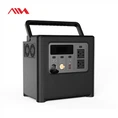
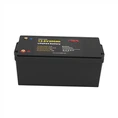
As a seasoned cabinet battery supplier, I've witnessed the growing curiosity around how these essential power storage units operate. Cabinet batteries are pivotal in various applications, from residential solar energy systems to large - scale industrial setups. In this blog, I'll delve into the inner workings of cabinet batteries, exploring their components, charging and discharging processes, and the technologies that make them reliable power sources.
Components of a Cabinet Battery
To understand how a cabinet battery works, we first need to familiarize ourselves with its key components. A typical cabinet battery consists of battery cells, a battery management system (BMS), a cooling system, and a cabinet enclosure.
Battery Cells
Battery cells are the heart of the cabinet battery. They are responsible for storing and releasing electrical energy. There are different types of battery cells used in cabinet batteries, with lithium - ion cells being the most popular due to their high energy density, long cycle life, and low self - discharge rate. For instance, the Solar Battery 48v 150ah High Quality Deep Cycle Lithium Ion Batteries Lifepo4 Battery Pack utilizes high - quality lithium iron phosphate (LiFePO4) cells. These cells have a stable chemical structure, which enhances their safety and performance.
The chemistry within a lithium - ion cell involves the movement of lithium ions between the anode and the cathode during charging and discharging. When the battery is being charged, lithium ions are extracted from the cathode and move through the electrolyte to the anode, where they are stored. During discharging, the process is reversed, and the lithium ions move back to the cathode, releasing electrical energy in the process.
Battery Management System (BMS)
The BMS is like the brain of the cabinet battery. It monitors and manages the battery cells to ensure their safe and efficient operation. The BMS performs several crucial functions, such as cell balancing, over - charge and over - discharge protection, and temperature monitoring.
Cell balancing is essential to equalize the state of charge (SOC) of each battery cell in the battery pack. Over time, individual cells may charge and discharge at different rates, leading to an imbalance. The BMS detects these imbalances and redistributes the charge among the cells to ensure that all cells have the same SOC. This helps to extend the overall lifespan of the battery pack.
Over - charge and over - discharge protection are also critical functions of the BMS. If a battery cell is over - charged, it can lead to thermal runaway, which is a dangerous condition that can cause the battery to catch fire or explode. Similarly, over - discharging a cell can damage its structure and reduce its capacity. The BMS continuously monitors the voltage of each cell and disconnects the battery from the charging or discharging circuit if the voltage reaches unsafe levels.
Cooling System
A cooling system is necessary to maintain the optimal operating temperature of the battery cells. Lithium - ion batteries perform best within a certain temperature range. If the temperature is too high, the battery's performance and lifespan can be significantly reduced. On the other hand, if the temperature is too low, the battery's capacity and power output may also be affected.
The cooling system can be either passive or active. Passive cooling systems use heat sinks and natural convection to dissipate heat from the battery cells. Active cooling systems, such as fans or liquid cooling systems, are more efficient in removing heat, especially in high - power applications.
Cabinet Enclosure
The cabinet enclosure provides physical protection for the battery cells, BMS, and cooling system. It also helps to isolate the battery from the external environment, protecting it from dust, moisture, and other contaminants. The cabinet is usually made of durable materials, such as steel or aluminum, and is designed to be fire - resistant and waterproof.
Charging Process
The charging process of a cabinet battery is a carefully controlled operation that involves multiple stages. When a cabinet battery is connected to a power source, such as a solar panel or a grid - connected charger, the charging process begins.
Constant - Current Charging
The first stage of the charging process is the constant - current (CC) charging stage. During this stage, the charger supplies a constant current to the battery cells. The current is typically set at a rate that is safe for the battery cells and allows them to charge efficiently. As the battery cells charge, their voltage gradually increases.
Constant - Voltage Charging
Once the battery cells reach a certain voltage, the charging process switches to the constant - voltage (CV) charging stage. In this stage, the charger maintains a constant voltage across the battery cells while the current gradually decreases. This is done to prevent over - charging of the battery cells. The CV charging stage continues until the current drops below a certain threshold, indicating that the battery is fully charged.
Trickle Charging
After the battery is fully charged, a trickle charging stage may be applied to maintain the battery's charge level. Trickle charging supplies a small amount of current to the battery to compensate for self - discharge. This helps to keep the battery ready for use at all times.


Discharging Process
The discharging process of a cabinet battery is the reverse of the charging process. When a load, such as a household appliance or an industrial machine, is connected to the battery, the stored electrical energy is released.
As the battery discharges, the lithium ions move from the anode to the cathode through the electrolyte, creating an electric current. The voltage of the battery gradually decreases as the discharge progresses. The BMS continuously monitors the battery's voltage and SOC during the discharging process. If the voltage drops below a certain level, indicating that the battery is nearly depleted, the BMS may disconnect the battery from the load to prevent over - discharge.
Applications of Cabinet Batteries
Cabinet batteries have a wide range of applications, thanks to their high energy density and reliability.
Residential Solar Energy Systems
In residential solar energy systems, cabinet batteries are used to store the excess electricity generated by solar panels during the day. This stored energy can then be used at night or during periods of low sunlight. For example, the Sunnew 48V 50Ah Lithium Ion Energy Storage Battery Pack is a popular choice for residential solar energy storage. It can provide a reliable power supply for households, reducing their dependence on the grid and lowering their electricity bills.
Industrial Applications
In industrial applications, cabinet batteries are used for backup power, peak shaving, and load leveling. Backup power ensures that critical equipment can continue to operate in the event of a power outage. Peak shaving involves using the battery to reduce the peak demand for electricity from the grid, which can help to lower electricity costs. Load leveling helps to balance the electricity demand over time, improving the overall efficiency of the power system. The Sunnew 51.2v Solar Battery 5kwh 100ah Lifepo4 Battery Cabinet Server Rack Mount Lithium Ion Phosphate Battery is suitable for industrial applications due to its high capacity and long cycle life.
Contact for Procurement
If you're interested in learning more about our cabinet batteries or are looking to make a purchase, we'd love to hear from you. Our team of experts can provide you with detailed information about our products, help you choose the right battery for your application, and assist you with the procurement process. Whether you're a homeowner looking to install a solar energy storage system or an industrial business in need of reliable backup power, we have the solutions for you.
References
- Linden, D., & Reddy, T. B. (2002). Handbook of Batteries. McGraw - Hill.
- Chen, Z., & Evans, B. R. (2012). Principles of Electric Vehicles. Wiley.
- Kintner - Meyer, M. C. W., Pratt, R. G., & Milligan, M. (2013). Energy Storage for the Electricity Grid: Benefits and Market Potential Assessment Guide. Pacific Northwest National Laboratory.