


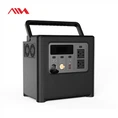
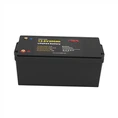
As a reputable home battery supplier, I've witnessed firsthand the growing interest in home battery systems. One of the most common questions I encounter is, "How does a home battery charge from the grid?" In this blog post, I'll delve into the technical details of this process, exploring the components involved, the charging mechanisms, and the benefits of grid charging for home batteries.
Understanding the Basics of Home Battery Systems
Before we dive into the grid charging process, let's first understand the basic components of a home battery system. A typical home battery system consists of three main parts: the battery pack, the inverter, and the charge controller.
The battery pack is the heart of the system, storing electrical energy for later use. It is usually made up of multiple lithium-ion battery cells connected in series and parallel to achieve the desired voltage and capacity. Lithium-ion batteries are preferred for home battery systems due to their high energy density, long cycle life, and low self-discharge rate.
The inverter is responsible for converting the direct current (DC) electricity stored in the battery pack into alternating current (AC) electricity, which is the type of electricity used in most household appliances. The inverter also plays a crucial role in regulating the flow of electricity between the battery pack, the grid, and the home's electrical system.
The charge controller is used to manage the charging process of the battery pack. It ensures that the battery pack is charged safely and efficiently, preventing overcharging and overheating. The charge controller also monitors the state of charge (SOC) of the battery pack and adjusts the charging rate accordingly.
The Grid Charging Process
Now that we have a basic understanding of the components of a home battery system, let's explore how a home battery charges from the grid. The grid charging process can be divided into three main stages: connection, communication, and charging.
Connection
The first step in the grid charging process is to connect the home battery system to the grid. This is typically done through a dedicated electrical connection, such as a breaker box or a meter socket. The connection must comply with local electrical codes and regulations to ensure safety.
Once the home battery system is connected to the grid, the inverter and the charge controller communicate with the grid to establish a connection and exchange information. This communication is essential for ensuring that the charging process is carried out safely and efficiently.
Communication
During the communication stage, the inverter and the charge controller exchange information with the grid, such as the available grid voltage, frequency, and power. This information is used to determine the optimal charging rate and the maximum amount of power that can be drawn from the grid.


The inverter and the charge controller also communicate with each other to ensure that the battery pack is charged safely and efficiently. For example, the charge controller may send a signal to the inverter to reduce the charging rate if the battery pack is approaching its maximum SOC.
Charging
Once the connection and communication stages are complete, the charging process begins. The inverter draws AC electricity from the grid and converts it into DC electricity, which is then sent to the charge controller. The charge controller regulates the flow of DC electricity to the battery pack, ensuring that it is charged safely and efficiently.
The charging rate of the battery pack depends on several factors, such as the capacity of the battery pack, the available grid power, and the state of charge of the battery pack. In general, the charging rate can range from a few hundred watts to several kilowatts.
Benefits of Grid Charging for Home Batteries
There are several benefits of grid charging for home batteries, including:
- Convenience: Grid charging allows homeowners to charge their home batteries at any time, regardless of the weather conditions or the availability of sunlight. This makes it a convenient option for homeowners who rely on their home batteries for backup power or to reduce their electricity bills.
- Cost savings: Grid charging can help homeowners save money on their electricity bills by allowing them to charge their home batteries during off-peak hours, when electricity rates are typically lower. This can result in significant cost savings over time.
- Increased reliability: Grid charging can help increase the reliability of home battery systems by ensuring that the battery pack is always fully charged and ready to provide backup power in the event of a power outage.
- Environmental benefits: Grid charging can help reduce the environmental impact of home battery systems by allowing homeowners to use electricity from the grid, which is often generated from renewable energy sources such as solar, wind, and hydro power.
Related Products
If you're interested in learning more about home battery systems and related products, I recommend checking out the following links:
- 900W Portable Generator For Outdoor Camping: This portable generator is perfect for outdoor camping and other outdoor activities. It provides up to 900 watts of power and can be used to charge your home battery or other electronic devices.
- Sunnew Portable Outdoor Solar Energy System Power Station 700w Lithium Ion Portable Power Station: This portable solar energy system is a great option for homeowners who want to charge their home batteries using solar power. It provides up to 700 watts of power and can be used to charge your home battery or other electronic devices.
- 700W Solar Portable Power Station: This solar portable power station is another great option for homeowners who want to charge their home batteries using solar power. It provides up to 700 watts of power and can be used to charge your home battery or other electronic devices.
Contact Us for Procurement
If you're interested in purchasing a home battery system or have any questions about grid charging for home batteries, please feel free to contact us. Our team of experts is available to provide you with more information and help you choose the right home battery system for your needs.
References
- Kempton, W., & Tomić, J. (2005). Vehicle-to-grid power fundamentals: Calculating capacity and net revenue. Journal of Power Sources, 144(1), 268-279.
- Lu, L., Han, X., Li, J., Hua, J., & Ouyang, M. (2013). A review on the key issues for lithium-ion battery management in electric vehicles. Journal of Power Sources, 226, 272-288.
- Pukrushpan, J. T., Stefanopoulou, A. G., & Peng, H. (2004). Modeling and control of a fuel-cell/supercapacitor hybrid power source for vehicle applications. IEEE Transactions on Control Systems Technology, 12(6), 839-849.