



As a home battery supplier, I've witnessed firsthand the growing demand for reliable energy storage solutions in residential settings. One of the most critical aspects of ensuring the longevity and safety of home batteries is protecting them against overcharging. In this blog post, I'll delve into the mechanisms and technologies that enable home batteries to safeguard against overcharging, offering you a comprehensive understanding of this vital process.
The Dangers of Overcharging
Before we explore the protective measures, it's essential to understand why overcharging is such a concern. When a battery is overcharged, it can lead to a series of detrimental effects. Firstly, overcharging can cause the battery to heat up excessively. This heat can accelerate the degradation of the battery's internal components, reducing its overall lifespan. In extreme cases, the excessive heat can even lead to thermal runaway, a dangerous condition where the battery's temperature rises uncontrollably, potentially resulting in a fire or explosion.
Secondly, overcharging can cause chemical imbalances within the battery. This can lead to the formation of dendrites, tiny metallic fibers that can grow inside the battery and pierce the separator between the electrodes. Once the separator is breached, it can cause a short circuit, further damaging the battery and posing a significant safety risk.
How Home Batteries Protect Against Overcharging
Home batteries employ several sophisticated mechanisms to prevent overcharging. These mechanisms can be broadly categorized into hardware-based and software-based protections.
Hardware-Based Protections
- Charge Controllers
Charge controllers are one of the most fundamental hardware components used to protect home batteries from overcharging. They regulate the flow of electricity from the power source, such as solar panels or a grid connection, to the battery. A charge controller continuously monitors the battery's state of charge (SOC) and adjusts the charging current accordingly. Once the battery reaches its full charge, the charge controller reduces the charging current to a trickle or completely stops the charging process.
For example, in a solar power system, a charge controller ensures that the energy harvested from the solar panels is efficiently and safely transferred to the battery. It prevents the battery from being overcharged by the excess energy generated by the panels during peak sunlight hours.
- Battery Management Systems (BMS)
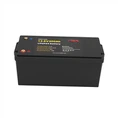
A Battery Management System is an intelligent electronic system that manages and monitors the battery's performance. It plays a crucial role in protecting the battery from overcharging, as well as other potential issues such as over-discharging and overheating.
The BMS consists of multiple sensors that measure various parameters of the battery, including voltage, current, temperature, and SOC. Based on these measurements, the BMS can accurately determine the battery's state and take appropriate actions to prevent overcharging. For instance, if the BMS detects that the battery voltage is approaching its maximum safe level, it can reduce the charging current or disconnect the battery from the power source.
In addition to overcharging protection, the BMS also balances the charge across individual battery cells. In a battery pack composed of multiple cells, some cells may charge faster or discharge slower than others. The BMS ensures that each cell receives an equal amount of charge, preventing any single cell from being overcharged while others remain undercharged.
- Fuses and Circuit Breakers
Fuses and circuit breakers are essential safety devices that provide an additional layer of protection against overcharging. A fuse is a small, thin wire that melts when excessive current flows through it, breaking the electrical circuit and preventing further damage to the battery. Circuit breakers, on the other hand, are reusable devices that automatically trip when they detect an overcurrent condition.
These devices act as a last line of defense in case the charge controller or BMS fails to prevent overcharging. They protect the battery and other components of the electrical system from damage caused by excessive current, reducing the risk of fire or other safety hazards.
Software-Based Protections
- Smart Charging Algorithms
Many modern home batteries utilize smart charging algorithms to optimize the charging process and prevent overcharging. These algorithms take into account various factors, such as the battery's chemistry, temperature, and SOC, to determine the optimal charging profile.
For example, a lithium-ion battery may require a different charging profile than a lead-acid battery. Smart charging algorithms adjust the charging current and voltage based on the specific requirements of the battery, ensuring that it is charged safely and efficiently. Additionally, these algorithms can adapt to changing environmental conditions, such as temperature fluctuations, to further enhance the battery's performance and longevity.
- Remote Monitoring and Control
With the advancement of technology, many home battery systems now offer remote monitoring and control capabilities. This allows users to monitor the battery's status, including its SOC, charging rate, and temperature, from anywhere using a smartphone app or a web interface.
Remote monitoring and control also enable users to set charging limits and schedules, providing an additional layer of protection against overcharging. For example, users can set a maximum SOC limit for the battery, and the system will automatically stop charging once the battery reaches this limit. This feature is particularly useful for users who want to ensure that their battery is not overcharged during periods of high energy production, such as on sunny days in a solar power system.
Our Home Battery Products and Overcharging Protection
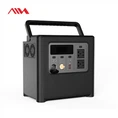
At our company, we offer a range of high-quality home battery products that are equipped with advanced overcharging protection mechanisms. Our 700W Solar Portable Power Station and 1000W Solar Portable Power Station are designed to provide reliable and safe energy storage for various applications, from powering small appliances during a power outage to supporting off-grid living.


These portable power stations feature built-in charge controllers and BMS to ensure that the battery is charged safely and efficiently. The smart charging algorithms in our products optimize the charging process based on the battery's state and environmental conditions, preventing overcharging and extending the battery's lifespan.
In addition, our SNE1000W Portable Power Station offers remote monitoring and control capabilities, allowing users to manage the charging process and protect their battery from overcharging with ease.
Conclusion
Protecting home batteries against overcharging is crucial for ensuring their safety, performance, and longevity. Through a combination of hardware-based and software-based protections, modern home batteries are able to prevent overcharging and provide reliable energy storage solutions for residential applications.
As a leading home battery supplier, we are committed to providing our customers with high-quality products that are equipped with the latest overcharging protection technologies. If you're interested in learning more about our home battery products or have any questions about overcharging protection, please don't hesitate to contact us for a procurement discussion. We look forward to helping you find the perfect energy storage solution for your home.
References
- Linden, D., & Reddy, T. B. (2002). Handbook of Batteries. McGraw-Hill Professional.
- Dunlop, E. D., & Reilly, D. J. (2017). Battery Management Systems: Design by Modelling. Springer.