


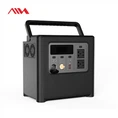


In the vast expanse of the Solar System, each planet holds unique characteristics that contribute to the overall cosmic tapestry. As a supplier of the Solar System Home, I'm often intrigued by the fascinating differences and similarities between planets, especially when it comes to their axial tilts. Today, I'd like to delve into a comparison of the axial tilt of Uranus and Earth, exploring how these tilts shape their respective environments and what implications they might have for our understanding of the Solar System and our Solar System Home products.


Axial Tilt: A Key Planetary Feature
The axial tilt, also known as obliquity, is the angle between a planet's rotational axis and its orbital plane. This tilt plays a crucial role in determining a planet's climate, seasons, and even its magnetic field. On Earth, our axial tilt is approximately 23.5 degrees. This tilt is the primary reason we experience the four seasons - spring, summer, autumn, and winter. As Earth orbits the Sun, different parts of the planet receive varying amounts of sunlight throughout the year, leading to these seasonal changes.
Uranus, on the other hand, has an extremely unusual axial tilt. With a tilt of about 97.77 degrees, Uranus essentially rotates on its side. This extreme tilt sets Uranus apart from all the other planets in the Solar System and has profound effects on its climate and environment.
Earth's Axial Tilt and Its Consequences
Earth's 23.5-degree tilt creates a relatively moderate climate system. During summer in the Northern Hemisphere, the North Pole is tilted towards the Sun, resulting in longer days and more direct sunlight. This leads to warmer temperatures and the growth of vegetation. Conversely, in winter, the North Pole is tilted away from the Sun, causing shorter days and less sunlight, which results in colder temperatures. The Southern Hemisphere experiences the opposite seasons at the same time.
This seasonal cycle is essential for life on Earth. It allows for the growth of crops, the migration of animals, and the overall balance of ecosystems. Our Solar System Home products, such as the 51.2v 300ah Lifepo4 15KWh Solar ESS, are designed to harness the energy from the Sun, which varies throughout the seasons. During the summer months, when there is more sunlight, these solar energy storage systems can collect and store excess energy, which can then be used during the winter when sunlight is scarce.
Uranus's Extreme Axial Tilt
Uranus's 97.77-degree tilt means that its poles experience extreme seasonal variations. For about a quarter of its 84-year orbit around the Sun, one pole is pointed directly at the Sun, while the other is in complete darkness. This results in long periods of continuous sunlight or darkness at the poles, lasting for decades.
During these long seasons, the temperature differences between the poles and the equator are much more extreme than on Earth. The atmosphere of Uranus is also affected by this tilt, leading to strong winds and unusual cloud patterns. The extreme climate on Uranus makes it a very different place from Earth, and it's difficult to imagine what life, if any, could exist in such an environment.
Implications for Our Solar System Home
As a supplier of Solar System Home products, understanding the differences in axial tilts between planets like Earth and Uranus can provide valuable insights. Our products are designed to work in Earth's specific climate and solar conditions. However, the extreme conditions on Uranus can inspire us to develop more robust and adaptable energy storage systems.
For example, the Stackable Household Lithium 51.2v 200ah is a flexible and scalable energy storage solution. While it's optimized for Earth's seasons, the challenges presented by Uranus's climate could lead us to explore new materials and technologies that can withstand more extreme temperature variations and longer periods of sunlight or darkness.
Similarly, the 20kWh Residential Energy Storage System is designed to meet the energy needs of a typical household on Earth. By studying the unique conditions on Uranus, we can potentially improve the efficiency and reliability of these systems, making them better suited for a wider range of environments.
Conclusion and Call to Action
In conclusion, the axial tilt of a planet is a fundamental characteristic that shapes its climate, seasons, and overall environment. Earth's moderate tilt has allowed for the development of diverse ecosystems and the evolution of life, while Uranus's extreme tilt has created a unique and challenging world.
As a Solar System Home supplier, we are constantly looking for ways to improve our products and make them more adaptable to different conditions. Whether you're a homeowner looking to reduce your energy costs or a researcher interested in exploring new energy solutions, our products offer reliable and efficient energy storage options.
If you're interested in learning more about our Solar System Home products or discussing potential procurement opportunities, we invite you to reach out to us. Our team of experts is ready to assist you in finding the best energy storage solution for your needs.
References
- NASA - Planetary Fact Sheets
- Astronomy textbooks on the Solar System
- Scientific research papers on planetary axial tilts and climates