



Hey there! As a 48V battery supplier, I often get asked about how to check if a 48V battery is fully charged. It's a crucial question, especially for those who rely on these batteries for various applications, whether it's powering an electric vehicle or running a backup power system. In this blog, I'll share some practical ways to determine if your 48V battery has reached its full charge.
1. Using a Multimeter
One of the most common and reliable methods is using a multimeter. A multimeter is a handy tool that can measure voltage, current, and resistance. Here's how you can use it to check the charge of your 48V battery:
- Set the Multimeter: First, turn on your multimeter and set it to measure DC voltage. Make sure the range is set to a value higher than 48V, like 60V or 100V. This prevents the multimeter from getting damaged if the battery voltage is higher than expected.
- Connect the Probes: Next, connect the red probe to the positive terminal of the battery and the black probe to the negative terminal. Ensure a good connection to get an accurate reading.
- Read the Voltage: Once the probes are connected, the multimeter will display the battery's voltage. A fully charged 48V lead - acid battery typically has a voltage between 52.2V and 54.6V. For a 48V lithium - ion battery, the fully charged voltage can range from 53.2V to 54.4V, depending on the specific chemistry. If the voltage is close to these values, your battery is likely fully charged.
If you're in the market for a high - quality 48V battery, take a look at our Deep Cycle 48V 200ah EV Battery. It's designed to provide reliable power for your electric vehicles.
2. Battery Charge Indicators
Many modern 48V batteries come with built - in charge indicators. These can be simple LED lights or more advanced digital displays.
- LED Indicators: Some batteries have a series of LED lights that change color to indicate the charge level. For example, green lights might mean the battery is fully charged, yellow could indicate a partial charge, and red might signal a low charge. Check the battery's manual to understand what each color means.
- Digital Displays: More sophisticated batteries feature digital displays that show the exact charge percentage. This is a very convenient way to know the battery's status at a glance.
Our Deep Cycle 200ah 48v Lithium Iron Phosphate Rechargeable Lifepo4 Lithium Battery Pack comes with advanced charge indicators, making it easy for you to monitor the charge level.
3. Monitoring the Charging Time
Another way to estimate if a 48V battery is fully charged is by monitoring the charging time. However, this method is less accurate as it can be affected by various factors such as the charger's output current, the battery's state of health, and the initial charge level.
- Know the Charger's Output: First, find out the output current of your charger. For example, if your charger has an output current of 10A, and your battery has a capacity of 200Ah, in theory, it should take about 20 hours to fully charge the battery (200Ah / 10A = 20h). But in reality, charging is not 100% efficient, so it might take a bit longer.
- Account for the Initial Charge: If the battery was not completely discharged before charging, the charging time will be shorter. For instance, if the battery was 50% charged initially, it would take approximately half the time to reach a full charge.
4. Using a Battery Management System (BMS)
A Battery Management System is an essential component in modern 48V lithium - ion batteries. It helps manage the charging and discharging process, ensuring the battery's safety and longevity.

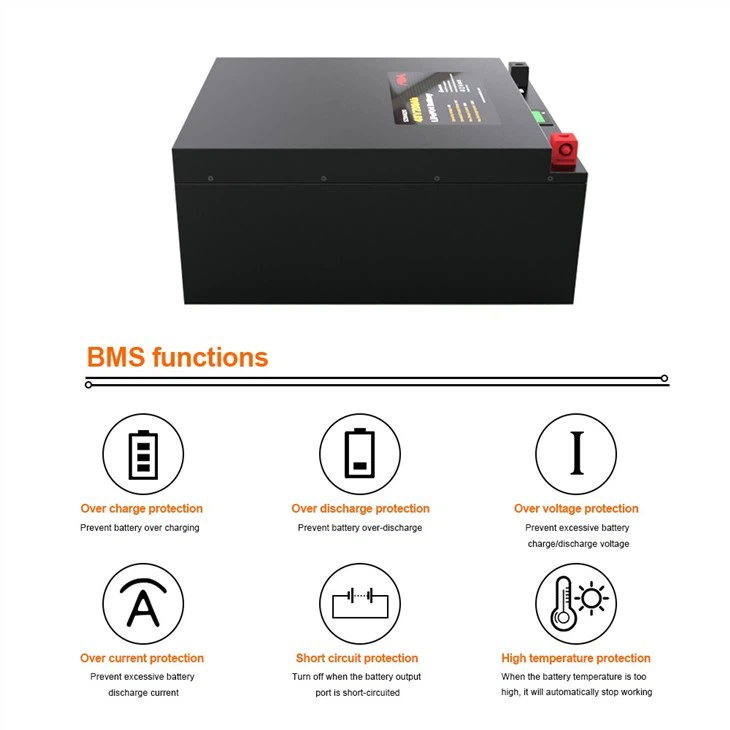
- Check the BMS Readings: Many BMSs come with a display or can be connected to a smartphone app via Bluetooth. You can use these interfaces to check the battery's charge level, voltage, and temperature. For example, our Rechargeable Smart BMS Bluetooth Lithium Ion Battery 48v 100ah Lithium Battery Lifepo4 Battery has a smart BMS that allows you to monitor the battery's status in real - time.
- BMS Alerts: The BMS can also send alerts when the battery is fully charged, over - charged, or under - charged. This provides an extra layer of protection and makes it easier to manage your battery.
5. Load Testing
Load testing involves applying a load to the battery and measuring its voltage under load. This method can give you a better idea of the battery's actual capacity and whether it's fully charged.
- Apply a Load: You can use a load tester or a resistive load to apply a known load to the battery. For example, you can connect a set of resistors to the battery terminals to draw a specific amount of current.
- Measure the Voltage: While the load is applied, measure the battery's voltage using a multimeter. If the voltage drops significantly under load, it could indicate that the battery is not fully charged or that it has a problem. A fully charged battery should maintain a relatively stable voltage under load.
Conclusion
Checking if a 48V battery is fully charged is essential for ensuring its proper performance and longevity. You can use a combination of methods, such as using a multimeter, monitoring the charging time, and relying on built - in charge indicators or a BMS.
If you're interested in purchasing high - quality 48V batteries for your applications, feel free to reach out to us. We're always ready to assist you with your battery needs and answer any questions you might have. Let's start a conversation about how our batteries can power your projects!
References
- Battery University: A comprehensive resource for battery knowledge.
- Manufacturer's manuals for 48V batteries.