


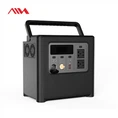
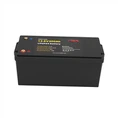

Hey there! As a solar battery supplier, I've seen firsthand how crucial it is to ensure the quality of these batteries. After all, a high - quality solar battery can make a huge difference in the performance of a solar power system. In this blog, I'll share with you some practical ways to test the quality of a solar battery.
1. Capacity Testing
The capacity of a solar battery is like the fuel tank of a car - it tells you how much energy the battery can store. To test the capacity, you'll need a battery charger and a load tester.
First, fully charge the battery using a compatible charger. Once it's fully charged, connect the battery to a load tester. The load tester will simulate the real - world conditions where the battery is supplying power to a device. You can set the load tester to draw a specific current from the battery, and then measure the time it takes for the battery voltage to drop to a certain level.
For example, if you have a Solar Battery Powerwall 2.56Kwh Lifepo4 Pack, you can set the load tester to draw a constant current of say, 10 amps. Then, time how long it takes for the battery voltage to drop from its fully - charged state to around 80% of its rated voltage. Based on the time and the current draw, you can calculate the actual capacity of the battery. If the calculated capacity is close to the rated capacity of the battery, then it's a good sign that the battery has a decent capacity.
2. Voltage Testing
Voltage is another important parameter when it comes to solar batteries. A healthy battery should have a stable voltage within a certain range. You can use a multimeter to measure the voltage of the battery.
When the battery is fully charged, check its open - circuit voltage. This is the voltage of the battery when it's not connected to any load. For most lithium - ion batteries, like the ones in Sunnew Power Wall 48v Lifepo4 Lithium Ion Battery 150Ah Solar Energy Storage Powerwall Battery, the fully - charged open - circuit voltage should be close to its rated voltage. For a 48V battery, it might be around 52 - 54V.
During discharge, keep an eye on the voltage as well. As the battery discharges, the voltage will gradually drop. A sudden and significant drop in voltage could indicate a problem with the battery, such as a short - circuit or a damaged cell.
3. Internal Resistance Testing
Internal resistance is a measure of how much the battery resists the flow of current within itself. A low internal resistance is generally better because it means less energy is wasted as heat when the battery is charging or discharging.
To measure the internal resistance, you can use a battery internal resistance tester. This device works by applying a small current pulse to the battery and then measuring the change in voltage. The internal resistance can be calculated using Ohm's law (R = ΔV/ΔI).
A high internal resistance can cause the battery to heat up quickly during charging and discharging, which can shorten its lifespan. If you're testing a Sunnew Powerwall Home Battery 5Kw 10Kw 20Kwh 48V Lithium Lron Phosphate Battery Pack For Solar Power System, a high internal resistance might lead to reduced power output and efficiency.
4. Cycle Life Testing
Cycle life refers to the number of charge - discharge cycles a battery can go through before its capacity drops to a certain level (usually 80% of its original capacity). This is an important test because it gives you an idea of how long the battery will last in real - world use.
To conduct a cycle life test, you'll need to set up a charging and discharging system. You can use a battery charger and a load to repeatedly charge and discharge the battery. Keep track of the number of cycles and the capacity of the battery after each cycle.
For example, if you start with a brand - new battery and after 500 cycles, its capacity drops to 85% of its original capacity, it's a good indication that the battery has a relatively long cycle life. However, if the capacity drops significantly after just a few cycles, then there might be an issue with the battery's quality.
5. Self - Discharge Testing
Self - discharge is the phenomenon where a battery loses its charge even when it's not connected to any load. A low self - discharge rate is desirable because it means the battery can hold its charge for a longer time when it's not in use.
To test the self - discharge rate, fully charge the battery and then disconnect it from the charger. Measure the voltage of the battery immediately after charging. Then, store the battery in a cool and dry place for a certain period, say a month. After the storage period, measure the voltage again.
Calculate the percentage of voltage drop over the storage period. A high - quality solar battery should have a low self - discharge rate. For example, if a battery loses less than 5% of its charge over a month, it's considered to have a good self - discharge performance.
6. Temperature Testing
Temperature can have a significant impact on the performance and lifespan of a solar battery. Batteries generally perform best within a certain temperature range.
You can use a temperature sensor to monitor the temperature of the battery during charging and discharging. For most lithium - ion batteries, the optimal operating temperature is between 20°C and 40°C.
If the battery gets too hot during charging or discharging, it can cause damage to the battery cells and reduce its lifespan. On the other hand, if the temperature is too low, the battery's capacity and performance will also be affected.
Conclusion
Testing the quality of a solar battery is not a one - time thing. It requires a combination of different tests to get a comprehensive understanding of the battery's performance. By performing these tests, you can ensure that you're getting a high - quality solar battery that will serve you well in your solar power system.


If you're in the market for a solar battery, we've got a wide range of options available, including the ones I mentioned above. Whether you need a small - capacity battery for a residential solar system or a large - scale battery for a commercial application, we've got you covered.
If you're interested in learning more about our products or want to discuss your specific requirements, feel free to reach out. We're always happy to help you find the perfect solar battery for your needs. Let's work together to make your solar power system more efficient and reliable!
References
- Battery Testing Handbook, Battery University
- Solar Energy Storage Systems: Design and Installation Guide, National Renewable Energy Laboratory