


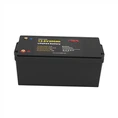
Hey there! As a supplier of Brick Batteries, I often get asked this question: "Is it possible to parallel multiple Brick Batteries?" Well, let's dive right into it and find out.
First off, let's talk about what parallel connection means in the context of batteries. When you connect batteries in parallel, you're essentially hooking them up side - by - side. The voltage of the battery bank remains the same as that of a single battery, but the capacity (amp - hours) adds up. For example, if you have two 12V, 100Ah batteries connected in parallel, you'll end up with a 12V, 200Ah battery bank.
Now, the good news is that, in most cases, it is possible to parallel multiple Brick Batteries. Our Solar Home 15KWh Brick 51.2v 300ah Lifepo4 ESS and Brick 30KWh Battery For Home ESS are designed with parallel connection in mind. These batteries are built to work together seamlessly, allowing you to increase your energy storage capacity as your needs grow.
One of the main advantages of paralleling Brick Batteries is flexibility. Let's say you start with a single Sunnew 15KWh 48V 300Ah Stackable LiFePO4 Battery Pack to power your small home or office. As your energy consumption increases, you can simply add more batteries in parallel. This way, you don't have to invest in a large - capacity battery right from the start. You can scale up gradually, which is great for your budget.
Another benefit is redundancy. If one of the batteries in the parallel bank fails, the others can still keep supplying power. This means you won't experience a complete power outage, which is crucial, especially for critical applications like hospitals or data centers.
However, there are some important things to keep in mind when paralleling Brick Batteries. First of all, the batteries should be of the same type, voltage, and capacity. Mixing different types of batteries can lead to uneven charging and discharging, which can reduce the overall lifespan of the battery bank. For example, if you try to parallel a 12V, 100Ah battery with a 24V, 200Ah battery, it's going to cause a lot of problems.
Secondly, proper wiring is essential. You need to use the right gauge of wire to ensure that the current is distributed evenly among the batteries. If the wires are too thin, they can overheat, which is a fire hazard. It's also a good idea to use fuses or circuit breakers to protect the batteries from over - current.
Temperature management is another crucial factor. Batteries generate heat during charging and discharging, and if the temperature gets too high, it can damage the batteries. When paralleling multiple batteries, make sure there is enough ventilation to keep the temperature in check. You might also want to consider using a battery management system (BMS) that can monitor the temperature and other parameters of each battery in the bank.
Let's take a look at some real - world scenarios where paralleling Brick Batteries makes sense. For residential solar energy storage, many homeowners start with a single battery to store the excess energy generated by their solar panels during the day. As they add more solar panels or their energy consumption increases, they can parallel additional batteries. This way, they can store more energy and rely less on the grid.
In commercial settings, such as factories or warehouses, paralleling Brick Batteries can provide a reliable backup power source. These facilities often have high energy demands, and a single battery might not be enough to meet their needs during a power outage. By paralleling multiple batteries, they can ensure that they have enough power to keep their operations running until the grid is restored.
Now, you might be wondering about the cost. Of course, adding more batteries means more upfront investment. But when you consider the long - term benefits, such as reduced reliance on the grid and increased energy independence, it's often worth it. Plus, as the technology improves and the cost of batteries decreases, paralleling multiple batteries is becoming more and more affordable.
In conclusion, yes, it is possible to parallel multiple Brick Batteries, and it offers many advantages in terms of flexibility, redundancy, and scalability. But you need to follow the proper guidelines to ensure that the battery bank operates safely and efficiently.
If you're interested in learning more about paralleling Brick Batteries or have any questions about our products, don't hesitate to reach out. We're here to help you find the best energy storage solution for your needs. Whether you're a homeowner looking to go off - grid or a business owner in need of a reliable backup power source, we've got you covered.
Let's work together to make your energy storage dreams a reality. Contact us today to start the conversation about your specific requirements and how our Brick Batteries can fit into your energy plan.


References
- Battery Technology Handbook
- Solar Energy Storage Best Practices Guide