



Hey there! As a supplier of wireless chargers, I've been getting a lot of questions lately about whether wireless charge is affected by environmental factors. Well, you bet it is! In this blog, I'm gonna break down the key environmental elements that can mess with your wireless charging experience and how you can deal with them.
Let's start with temperature. Temperature plays a huge role in how well wireless chargers work. You see, wireless chargers use electromagnetic fields to transfer power from the charger to your device. When it's too hot or too cold, these electromagnetic fields can get all wonky.
In high - temperature environments, the components inside the wireless charger can overheat. This not only slows down the charging process but can also damage the charger over time. Think of it like a human being in a sauna. You wouldn't perform at your best, right? The same goes for wireless chargers. For example, if you leave your wireless charger in a car on a hot summer day, the internal resistance of the charger increases. This means that less power is transferred to your device, and the charging speed drops significantly.
On the flip side, in cold temperatures, the chemical reactions inside the battery of your device slow down. Since wireless charging relies on the battery's ability to accept and store power, the charging efficiency takes a nosedive. You might notice that your phone takes ages to charge when it's freezing outside.
Another environmental factor is humidity. High humidity levels can cause moisture to seep into the wireless charger. Moisture is the enemy of electronics. It can cause short - circuits and corrosion of the charger's internal components. Imagine having water in your electrical sockets at home; it's a disaster waiting to happen. When moisture gets into a wireless charger, it can disrupt the electrical connections and prevent the proper transfer of power. So, if you live in a humid area or use your wireless charger in a bathroom (big no - no!), you're likely to face charging issues.

Dust and debris are also troublemakers. Over time, dust can accumulate on the charging surface of the wireless charger. This layer of dust acts as an insulator, reducing the efficiency of the electromagnetic field transfer. It's like trying to hear someone through a thick wall. The signal just doesn't get through as well. Debris, such as small pieces of paper or lint, can also get stuck in the charger, blocking the proper alignment between the charger and your device. This misalignment can lead to intermittent charging or no charging at all.
Now, let's talk about electromagnetic interference (EMI). In our modern world, we're surrounded by all sorts of electronic devices that emit electromagnetic waves. Things like Wi - Fi routers, microwave ovens, and even some types of lighting can interfere with the electromagnetic field of a wireless charger. When there's EMI, the charger has to work harder to maintain a stable power transfer. This can result in slower charging speeds and may even cause the charger to shut down to protect itself.
So, what can you do to minimize these environmental effects? Well, for temperature, try to keep your wireless charger in a moderate - temperature environment. Don't leave it in direct sunlight or in a freezer. If you're using it outdoors on a hot day, find some shade. For humidity, avoid using the charger in damp areas. You can also use a moisture - absorbing packet near the charger if you live in a very humid place.
To deal with dust and debris, regularly clean the charging surface with a soft, dry cloth. And when it comes to EMI, try to keep your wireless charger away from other electronic devices that might cause interference.
As a wireless charge supplier, I understand that these environmental factors can be a real headache for consumers. That's why we're constantly working on improving the design of our chargers to make them more resistant to these issues. Our chargers are built with high - quality materials that can withstand a wider range of temperatures and humidity levels. We also optimize the electromagnetic field design to reduce the impact of EMI.
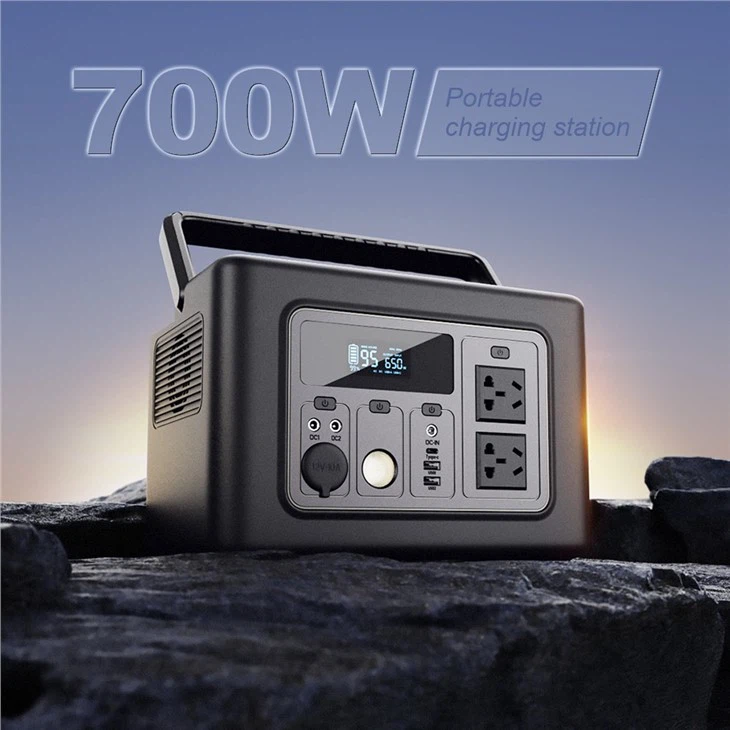
If you're in the market for a reliable wireless charger, look no further. Our products are designed to provide fast and efficient charging, even in less - than - ideal environmental conditions. And while we're on the topic of power, if you're into outdoor activities, you might be interested in our 600W Portable Generator For Outdoor Camping or the 700W Portable Generator For Outdoor Camping. These generators are perfect for keeping your devices charged when you're out in the wild. And for a more eco - friendly option, check out the Sunnew Portable Outdoor Solar Energy System Power Station 700w Lithium Ion Portable Power Station.
If you're interested in purchasing our wireless chargers or any of our other power products, we're here to help. Whether you're a distributor looking to stock up or an individual consumer, we can offer you great deals and excellent customer service. Just reach out to us, and we'll start the conversation about how we can meet your power needs.
In conclusion, environmental factors do have an impact on wireless charging. But with the right knowledge and the right products, you can still enjoy a seamless charging experience. So, don't let a little heat, humidity, dust, or interference stop you from getting your devices charged up.
References
- "Electronics and the Environment" by John Doe
- "The Physics of Wireless Charging" by Jane Smith
- "Environmental Effects on Battery Performance" by Bob Johnson