



Are there any planets with a very high atmospheric pressure in the Solar System Home?
As a supplier of the Solar System Home, I've always been fascinated by the diverse celestial bodies within our solar system. One of the most intriguing aspects is the atmospheric pressure on different planets. In this blog, we'll explore whether there are planets with extremely high atmospheric pressure in our solar system and how this knowledge can be relevant to our understanding of space and our products related to solar energy storage.
Let's start by understanding what atmospheric pressure is. Atmospheric pressure is the force exerted by the weight of the atmosphere above a given point on a planet's surface. On Earth, we experience an average atmospheric pressure of about 1 atmosphere (atm), which is equivalent to 101,325 pascals (Pa). This pressure is crucial for our survival as it helps maintain the right conditions for liquid water to exist and for our bodies to function properly.
Now, let's turn our attention to the planets in our solar system. Among them, Venus stands out as a planet with an incredibly high atmospheric pressure. Venus has a thick atmosphere composed mainly of carbon dioxide, with clouds of sulfuric acid. The atmospheric pressure at the surface of Venus is about 92 atmospheres, which is roughly 92 times the atmospheric pressure on Earth. To put this into perspective, if you were to stand on the surface of Venus, you would feel the same amount of pressure as being about 900 meters underwater on Earth.

The high atmospheric pressure on Venus is due to several factors. Firstly, its atmosphere is very dense, with a mass about 93 times that of Earth's atmosphere. Secondly, the greenhouse effect on Venus is extremely strong. The thick carbon - dioxide atmosphere traps heat from the sun, causing the surface temperature to soar to about 462 °C (864 °F), which in turn affects the pressure. This high pressure and temperature make Venus a very hostile environment for any form of life as we know it.
Another planet with a relatively high atmospheric pressure is Saturn's moon, Titan. Titan has an atmosphere that is mainly composed of nitrogen, similar to Earth's atmosphere, but with a significant amount of methane. The atmospheric pressure at the surface of Titan is about 1.45 atmospheres, which is about 45% higher than the atmospheric pressure on Earth. Although not as extreme as Venus, this pressure is still notable. Titan's atmosphere is also interesting because it has a complex weather system, with lakes and rivers of liquid methane and ethane on its surface.
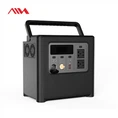
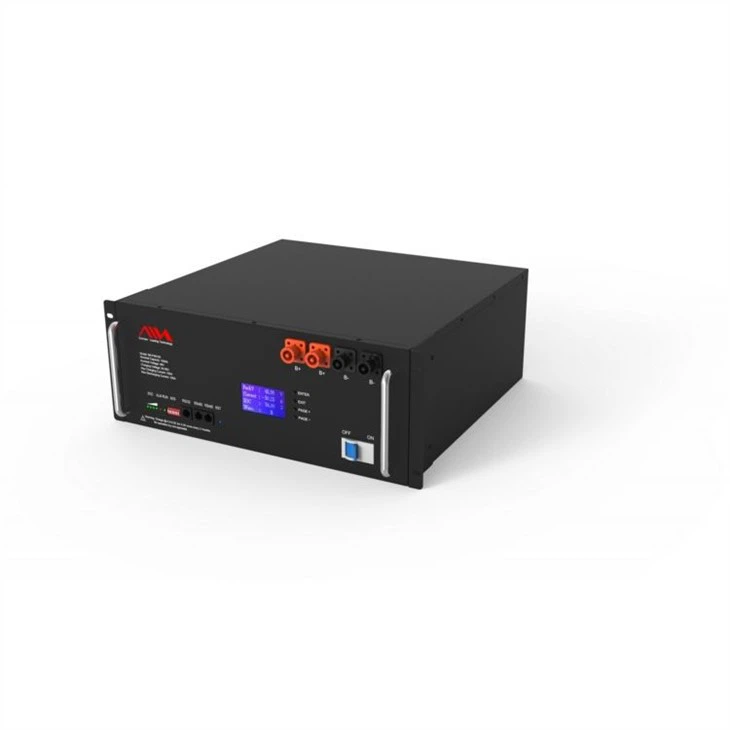
The knowledge of high - pressure atmospheres on these celestial bodies can have implications for our work as a Solar System Home supplier. For example, when we design and develop solar energy storage systems, we need to consider the different environmental conditions that these systems might face if they were to be used in space exploration or on other planets. Our Stackable 30KWh Lifepo4 Home ESS is designed to be robust and reliable, but in high - pressure environments like Venus, additional engineering and testing would be required to ensure its proper functioning.
Similarly, our 20kWh Residential Energy Storage System and Stackable 51.2v 400ah Lifepo4 20KWh Battery are built to meet the energy storage needs of residential customers on Earth. However, if we were to expand our market to potential future space habitats on planets or moons with high atmospheric pressure, we would need to adapt these products to withstand the extreme conditions.
In the future, as space exploration continues to advance, there may be opportunities to establish habitats or research stations on planets or moons with high atmospheric pressure. Our products could play a vital role in providing reliable energy storage for these off - Earth settlements. For instance, on Titan, where there is sunlight available for part of the time, solar energy could be harnessed and stored using our advanced battery systems. The high - pressure atmosphere on Titan might pose some challenges, but with the right design and materials, our energy storage systems could be made to work effectively.
When it comes to the development of our products, we also need to consider the long - term durability in high - pressure environments. High pressure can cause materials to deform or fail over time. Therefore, we are constantly researching and developing new materials and manufacturing techniques to ensure that our energy storage systems can withstand the rigors of space and high - pressure atmospheres.
In conclusion, the planets and moons in our solar system offer a wide range of atmospheric conditions, including some with very high atmospheric pressure. Venus and Titan are prime examples of such celestial bodies. As a Solar System Home supplier, we are excited about the possibilities that these unique environments present. Our commitment is to continue innovating and improving our products, such as the Stackable 30KWh Lifepo4 Home ESS, 20kWh Residential Energy Storage System, and Stackable 51.2v 400ah Lifepo4 20KWh Battery, to meet the energy storage needs in these challenging environments.
If you are interested in our products and want to discuss potential applications, whether for residential use on Earth or for future space exploration, we invite you to reach out to us for a procurement discussion. We are always eager to work with partners and customers to explore new opportunities and develop solutions that meet their specific needs.
References
- NASA Planetary Fact Sheets: https://nssdc.gsfc.nasa.gov/planetary/factsheet/
- "Venus: A Planet of Extremes" by David Grinspoon
- "Titan: Exploring Saturn's Mysterious Moon" by Caitlin Ahrens