


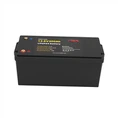

As a seasoned supplier of AGM GEL batteries, I've received numerous inquiries about the voltage drop during the discharge process. This phenomenon is crucial for understanding the performance and lifespan of these batteries, especially in applications where consistent power output is essential. In this blog post, I'll delve into the intricacies of voltage drop in AGM GEL batteries, exploring the factors that influence it and how it impacts battery usage.
Understanding AGM GEL Batteries
Before we dive into voltage drop, let's briefly review what AGM GEL batteries are. AGM (Absorbent Glass Mat) and GEL batteries are both types of valve-regulated lead-acid (VRLA) batteries. They are sealed, maintenance-free, and offer several advantages over traditional flooded lead-acid batteries, such as spill-proof design, deep cycling capabilities, and the ability to be mounted in various positions.
AGM batteries use a fiberglass mat to absorb the electrolyte, while GEL batteries use a silica-based gel to immobilize the electrolyte. Both technologies provide a stable environment for the chemical reactions that occur during charging and discharging, resulting in reliable power storage and delivery.
The Concept of Voltage Drop
Voltage drop refers to the decrease in voltage that occurs as a battery discharges. When a battery is fully charged, it has a specific open-circuit voltage (OCV), which is the voltage measured when the battery is not connected to a load. As the battery is discharged, the voltage gradually decreases due to the chemical reactions taking place inside the battery.
The rate of voltage drop depends on several factors, including the battery's state of charge (SOC), the discharge current, the temperature, and the battery's internal resistance. Understanding these factors is essential for predicting the battery's performance and ensuring that it meets the requirements of the application.
Factors Affecting Voltage Drop in AGM GEL Batteries
State of Charge (SOC)
The SOC is one of the most significant factors influencing voltage drop. As the battery discharges, the SOC decreases, and the voltage drops accordingly. The relationship between SOC and voltage is not linear; it varies depending on the battery's chemistry and design.
In general, AGM GEL batteries have a relatively flat voltage curve during the majority of the discharge cycle, which means that the voltage remains relatively stable until the battery is nearly depleted. This characteristic makes them suitable for applications that require a consistent power supply, such as solar energy storage systems and uninterruptible power supplies (UPS).
Discharge Current
The discharge current also plays a crucial role in voltage drop. The higher the discharge current, the faster the voltage drops. This is because a higher current draws more power from the battery, causing the chemical reactions to occur more rapidly and increasing the internal resistance of the battery.
For example, if a battery is discharged at a high current rate, such as during a sudden power surge, the voltage may drop significantly, even if the battery is not fully depleted. On the other hand, if the battery is discharged at a low current rate, the voltage drop will be more gradual, and the battery will be able to deliver power for a longer period.
Temperature
Temperature has a significant impact on the performance of AGM GEL batteries, including voltage drop. As the temperature decreases, the chemical reactions inside the battery slow down, increasing the internal resistance and causing the voltage to drop more rapidly.
Conversely, as the temperature increases, the chemical reactions speed up, reducing the internal resistance and allowing the battery to deliver more power. However, high temperatures can also cause the battery to degrade more quickly, reducing its lifespan and overall performance.
Internal Resistance
The internal resistance of a battery is a measure of its ability to conduct electricity. A battery with a high internal resistance will experience a greater voltage drop during discharge than a battery with a low internal resistance.
The internal resistance of AGM GEL batteries can increase over time due to factors such as aging, overcharging, and deep discharging. Regular maintenance and proper charging practices can help minimize the increase in internal resistance and extend the battery's lifespan.
Measuring Voltage Drop
To measure the voltage drop of an AGM GEL battery, you can use a multimeter. First, measure the open-circuit voltage (OCV) of the battery when it is fully charged. Then, connect the battery to a load and measure the voltage across the battery terminals while the load is drawing current. The difference between the OCV and the voltage under load is the voltage drop.
It's important to note that the voltage drop will vary depending on the discharge current and the battery's SOC. Therefore, it's recommended to measure the voltage drop at different discharge rates and SOCs to get a comprehensive understanding of the battery's performance.
Implications of Voltage Drop for Battery Applications
The voltage drop of AGM GEL batteries has several implications for their applications. In some cases, a significant voltage drop can cause the battery to fail to meet the requirements of the application, resulting in reduced performance or even system failure.


For example, in a solar energy storage system, a large voltage drop during discharge can cause the inverter to shut down, preventing the system from supplying power to the load. In a UPS, a sudden voltage drop can cause the connected equipment to experience a power outage, leading to data loss or equipment damage.
To mitigate the effects of voltage drop, it's important to select the right battery for the application and ensure that it is properly sized and installed. Additionally, regular maintenance and monitoring of the battery's performance can help detect and address any issues before they become serious.
Comparing AGM GEL Batteries with Other Battery Technologies
When considering the voltage drop of AGM GEL batteries, it's also important to compare them with other battery technologies, such as lithium-ion batteries. Lithium-ion batteries, such as the 12v 150ah Lifepo4 Solar Battery, Lifepo4 LFP Battery Pack 12v 300Ah Lithium Lon Battery Rechargeable Battery Pack For Home Energy Storage, and 12V 100Ah LFP Battery SNR12100, generally have a lower internal resistance and a flatter voltage curve than AGM GEL batteries.
This means that lithium-ion batteries experience less voltage drop during discharge, resulting in more consistent power output and longer runtime. However, lithium-ion batteries are also more expensive and have a shorter lifespan than AGM GEL batteries, making them less suitable for some applications.
Conclusion
In conclusion, voltage drop is an important consideration when using AGM GEL batteries. Understanding the factors that influence voltage drop and how it impacts battery performance is essential for selecting the right battery for the application and ensuring its reliable operation.
As a supplier of AGM GEL batteries, I'm committed to providing high-quality products and technical support to our customers. If you have any questions about voltage drop or need assistance in selecting the right battery for your application, please don't hesitate to contact us. We're here to help you make the best decision for your power storage needs.
References
- Battery University: A comprehensive resource for battery technology and information.
- IEEE Transactions on Industry Applications: A leading journal in the field of electrical engineering, with articles on battery performance and applications.
- Manufacturer's specifications and datasheets: Provide detailed information about the performance and characteristics of specific AGM GEL batteries.