


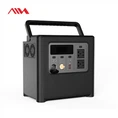

Hey there! I'm in the business of supplying stuff for the Solar System Home, and let me tell you, the seasons on other planets in our solar system are way different from what we experience here on Earth. It's like a whole new ballgame out there!

Let's start with Mercury, the closest planet to the Sun. Mercury doesn't really have what we'd call "seasons" in the traditional sense. It has an extremely thin atmosphere, which means there's no real way to trap heat or regulate temperature. One side of Mercury can get super hot, up to about 800 degrees Fahrenheit (427 degrees Celsius) during the day because it's so close to the Sun. And at night, it can drop to a frigid -290 degrees Fahrenheit (-180 degrees Celsius). This huge temperature swing is due to its lack of atmosphere and its slow rotation. Mercury takes about 59 Earth days to rotate on its axis, and it orbits the Sun in about 88 Earth days. So, it's not a place where you'd want to set up a Solar System Home anytime soon, but if you're into extreme temperature differences, it's pretty fascinating.
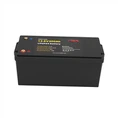
Now, Venus. Venus has a thick atmosphere made mostly of carbon dioxide, which creates a runaway greenhouse effect. The surface temperature on Venus is a scorching 900 degrees Fahrenheit (475 degrees Celsius) all the time. It doesn't matter if it's "day" or "night" on Venus; it's always that hot. Venus rotates very slowly and in the opposite direction compared to most planets in the solar system. A day on Venus (the time it takes to rotate once on its axis) is longer than its year (the time it takes to orbit the Sun). It takes about 243 Earth days to rotate and about 225 Earth days to orbit the Sun. So, there are no real seasons on Venus either. If you're thinking about powering a home on Venus, you'd need some seriously high - tech equipment to handle that kind of heat. Maybe our Stackable 51.2v 400ah Lifepo4 20KWh Battery could be a good start, but you'd still have a long way to go.
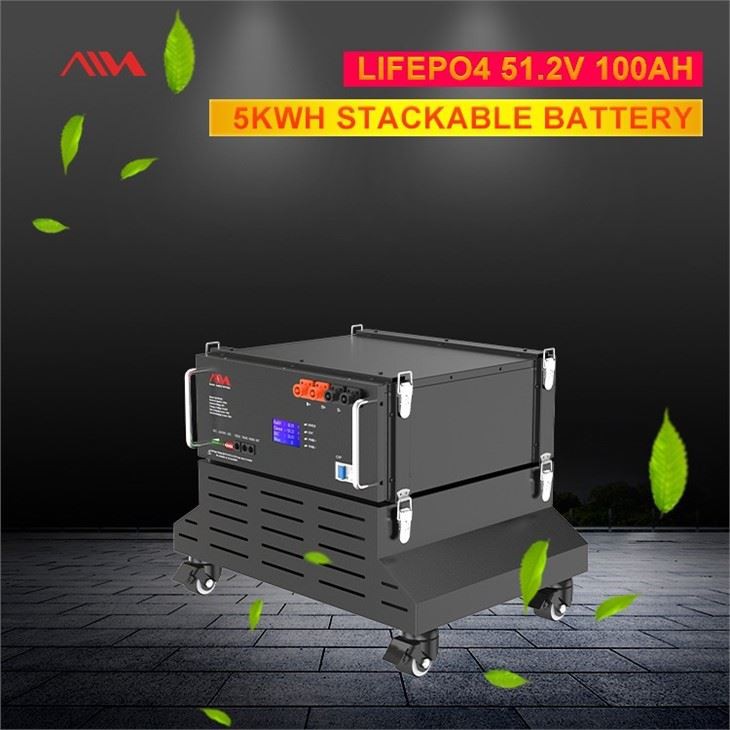
Moving on to Mars. Mars is a bit more interesting when it comes to seasons. Mars has an axial tilt similar to Earth's, about 25 degrees (Earth's is 23.5 degrees). This tilt causes the seasons on Mars. The Martian year is about 687 Earth days, so each season is much longer than on Earth. During the Martian winter, carbon dioxide freezes at the poles, forming ice caps. In the summer, these ice caps shrink. Mars also has huge dust storms that can cover the entire planet. These storms are more common during the spring and summer. The temperature on Mars can range from about -195 degrees Fahrenheit (-125 degrees Celsius) at the poles in winter to about 70 degrees Fahrenheit (20 degrees Celsius) at the equator during the summer. If you're planning to set up a Solar System Home on Mars, you'll need to deal with these extreme temperature changes and the dust storms. Our LiFePO4 51.2V 100Ah 5Kwh Stackable Battery could help store energy for those long, cold Martian nights.
Jupiter is a gas giant, so it doesn't have a solid surface like the inner planets. Jupiter has a very strong magnetic field and a complex atmosphere with lots of storms. The most famous storm on Jupiter is the Great Red Spot, which has been raging for hundreds of years. Jupiter rotates very quickly, completing one rotation in about 10 hours. Its year is about 12 Earth years. Because of its distance from the Sun and its composition, the concept of seasons as we know them doesn't really apply. The temperature in Jupiter's atmosphere varies depending on altitude, but it's generally very cold, around -234 degrees Fahrenheit (-148 degrees Celsius). If you were to build some kind of floating Solar System Home in Jupiter's atmosphere, you'd need to be able to withstand the strong winds and the cold. Our 51.2v 300ah Lifepo4 15KWh Solar ESS might be useful for powering equipment in such a harsh environment.
Saturn is another gas giant. It has beautiful rings made of ice and rock particles. Saturn has an axial tilt of about 27 degrees, which means it does have seasons. A Saturnian year is about 29.5 Earth years, so each season lasts for a long time, about 7 - 8 Earth years. The temperature on Saturn also varies with altitude, but it's generally cold, around -288 degrees Fahrenheit (-178 degrees Celsius). Saturn has some interesting weather patterns, including huge storms at its poles. These storms are different from the ones on Jupiter, but they're still very powerful. If you're thinking about building a Solar System Home around Saturn, you'd need to consider the long seasons and the cold temperatures.
Uranus is a bit of an oddball. It rotates on its side, with its axis tilted about 98 degrees. This means that for part of its 84 - year orbit around the Sun, one pole is pointed directly at the Sun, and the other is in complete darkness. So, the seasons on Uranus are extremely long and extreme. When a pole is facing the Sun, it experiences continuous sunlight for about 21 Earth years, and then it has 21 years of complete darkness. The temperature on Uranus is very cold, around -370 degrees Fahrenheit (-224 degrees Celsius). It's a very strange and inhospitable place, but it's definitely unique.
Neptune, the farthest planet from the Sun, also has seasons. Neptune has an axial tilt of about 28 degrees, and its year is about 165 Earth years. So, each season lasts for about 40 - 41 Earth years. Neptune has the strongest winds in the solar system, with speeds up to 1,200 miles per hour (1,931 kilometers per hour). The temperature on Neptune is extremely cold, around -392 degrees Fahrenheit (-236 degrees Celsius). It's a very harsh and remote place, but it's still part of our solar system.
As a Solar System Home supplier, I know that each planet presents unique challenges when it comes to setting up a home. Whether it's the extreme temperatures on Mercury and Venus, the long seasons on Mars, Jupiter, Saturn, Uranus, and Neptune, or the harsh weather conditions, we need to come up with innovative solutions. Our batteries, like the Stackable 51.2v 400ah Lifepo4 20KWh Battery, LiFePO4 51.2V 100Ah 5Kwh Stackable Battery, and 51.2v 300ah Lifepo4 15KWh Solar ESS, are designed to be reliable and efficient, but we're always looking for ways to improve.
If you're interested in learning more about how we can help you set up a Solar System Home on one of these amazing planets, or if you have any questions about our products, don't hesitate to reach out. We're here to work with you to make your interplanetary living dreams a reality.
References
- NASA's Planetary Fact Sheets
- Scientific articles on planetary science from academic journals