



As a 12V battery supplier, I've encountered numerous customers who've been frustrated by the premature death of their 12V batteries. A 12V battery is a common power source in various applications, from automotive to solar energy storage and golf trolleys. In this blog post, I'll explore the common causes of a 12V battery dying quickly and offer some practical solutions.
1. Over - Discharging
One of the most significant culprits behind a quickly dying 12V battery is over - discharging. When a battery is discharged beyond its recommended level, it can cause irreversible damage to the battery cells. For lead - acid batteries, deep discharges can lead to the formation of lead sulfate crystals on the battery plates. These crystals reduce the battery's capacity and can eventually render the battery useless.
Lithium - ion batteries, such as the 12v 50ah Lithium Ion Battery Supplier Charger Case Solar Lifepo4 Batteries Golf Trolley Lithium Phosphate Battery, are also sensitive to over - discharging. Although they are more resilient than lead - acid batteries in many aspects, continuous deep discharges can still damage the battery's internal structure and shorten its lifespan.
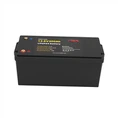
To prevent over - discharging, it's essential to use a battery management system (BMS). A BMS monitors the battery's state of charge and prevents it from being discharged below a safe level. For deep - cycle applications, like in a Deep Cycle 12V 200ah Lifepo4 BMS Inside, the built - in BMS plays a crucial role in protecting the battery from over - discharging.
2. Over - Charging
Just as over - discharging is harmful, over - charging can also cause a 12V battery to die quickly. Over - charging a lead - acid battery can lead to the generation of excessive heat and the breakdown of the electrolyte. This can cause the battery to lose water, leading to dry cells and reduced performance. In extreme cases, over - charging can cause the battery to overheat and even explode.
Lithium - ion batteries are also at risk of over - charging. Over - charging can cause the battery to overheat, which can damage the battery's cathode and anode materials. It can also lead to the formation of lithium metal dendrites, which can short - circuit the battery and cause a fire or explosion.
To avoid over - charging, it's important to use a charger that is specifically designed for the type of battery you have. Chargers for lithium - ion batteries, such as those used with the 12V 100Ah LFP Battery SNR12100, are equipped with charge control circuits that regulate the charging process and prevent over - charging.
3. High Temperatures
High temperatures can have a detrimental effect on the performance and lifespan of a 12V battery. For lead - acid batteries, high temperatures accelerate the chemical reactions inside the battery, which can lead to faster self - discharge and the breakdown of the electrolyte. This can cause the battery to lose capacity and die prematurely.
Lithium - ion batteries are also affected by high temperatures. Excessive heat can cause the battery's internal resistance to increase, reducing its efficiency. It can also lead to the degradation of the battery's electrolyte and electrodes, shortening its lifespan.


When installing a 12V battery, it's important to choose a location that is well - ventilated and away from sources of heat. For example, in a vehicle, the battery should be placed in a location where it is not exposed to direct sunlight or the heat generated by the engine.
4. Parasitic Drains
Parasitic drains occur when electrical devices in a system continue to draw power from the battery even when the system is turned off. This can be caused by faulty wiring, malfunctioning electrical components, or devices that are not designed to turn off completely.
In automotive applications, parasitic drains can quickly drain a 12V battery. For example, a faulty radio or a dome light that does not turn off can cause the battery to lose its charge over time. To identify and fix parasitic drains, it's necessary to use a multimeter to measure the current draw from the battery when the system is off. Once the source of the drain is identified, it can be repaired or replaced.
5. Age and Usage
Like all batteries, 12V batteries have a limited lifespan. The age and usage of a battery can significantly affect its performance. Over time, the chemical reactions inside the battery cause wear and tear on the battery cells. This can lead to a gradual decrease in the battery's capacity and performance.
The number of charge - discharge cycles a battery undergoes also plays a role in its lifespan. Batteries that are frequently cycled, such as those used in deep - cycle applications, will generally have a shorter lifespan than those used in less demanding applications.
When a battery reaches the end of its useful life, it's important to replace it with a new one. As a 12V battery supplier, I recommend choosing high - quality batteries that are designed for your specific application.
6. Poor Maintenance
Proper maintenance is crucial for the longevity of a 12V battery. For lead - acid batteries, this includes checking the electrolyte level regularly and adding distilled water if necessary. It also involves keeping the battery terminals clean and free of corrosion. Corroded terminals can increase the resistance in the electrical circuit, reducing the battery's performance.
Lithium - ion batteries require less maintenance than lead - acid batteries, but they still need to be cared for properly. This includes storing the battery at the appropriate temperature and charge level when not in use.
Solutions and Recommendations
- Proper Charging and Discharging: Use a charger that is compatible with your battery type and a BMS to prevent over - charging and over - discharging.
- Temperature Management: Ensure that the battery is installed in a well - ventilated area away from heat sources.
- Parasitic Drain Checks: Regularly check for parasitic drains in your system and fix any issues promptly.
- Battery Replacement: Replace your battery when it reaches the end of its useful life.
- Maintenance: Follow the manufacturer's maintenance guidelines for your battery.
If you're experiencing issues with your 12V battery or are looking for a high - quality 12V battery for your application, I encourage you to contact us. We offer a wide range of 12V batteries, including 12v 50ah Lithium Ion Battery Supplier Charger Case Solar Lifepo4 Batteries Golf Trolley Lithium Phosphate Battery, 12V 100Ah LFP Battery SNR12100, and Deep Cycle 12V 200ah Lifepo4 BMS Inside. Our team of experts can help you choose the right battery for your needs and provide you with the support and advice you need to ensure its proper use and maintenance.
References
- Linden, D., & Reddy, T. B. (2002). Handbook of Batteries. McGraw - Hill.
- Gregory, T. (2016). Battery Management Systems: Design by Modularization. Wiley.