


The amp - hour (Ah) rating of a 48V battery is a crucial parameter that determines its capacity and, ultimately, its suitability for various applications. As a 48V battery supplier, I'm often asked about what the amp - hour rating means, how it affects battery performance, and which rating is right for different needs. In this blog post, I'll dive deep into the concept of amp - hour ratings for 48V batteries, exploring its significance, factors influencing it, and how to choose the appropriate rating for your specific requirements.
Understanding Amp - Hour Rating
The amp - hour rating of a battery is a measure of its charge capacity. It represents the amount of electric charge a battery can deliver over a specified period at a constant current. For instance, a 48V battery with a 100Ah rating can theoretically supply a current of 100 amperes for one hour, 50 amperes for two hours, or 10 amperes for ten hours. However, in real - world scenarios, this relationship is not always linear due to factors such as battery efficiency, temperature, and discharge rate.
Mathematically, the amp - hour rating is calculated using the formula:
[Q = I\times t]
where (Q) is the charge in amp - hours (Ah), (I) is the current in amperes (A), and (t) is the time in hours (h).
Significance of Amp - Hour Rating for 48V Batteries
In the context of 48V batteries, the amp - hour rating plays a vital role in determining the battery's ability to power different devices and systems. Higher amp - hour ratings generally mean longer run - times for the equipment connected to the battery.
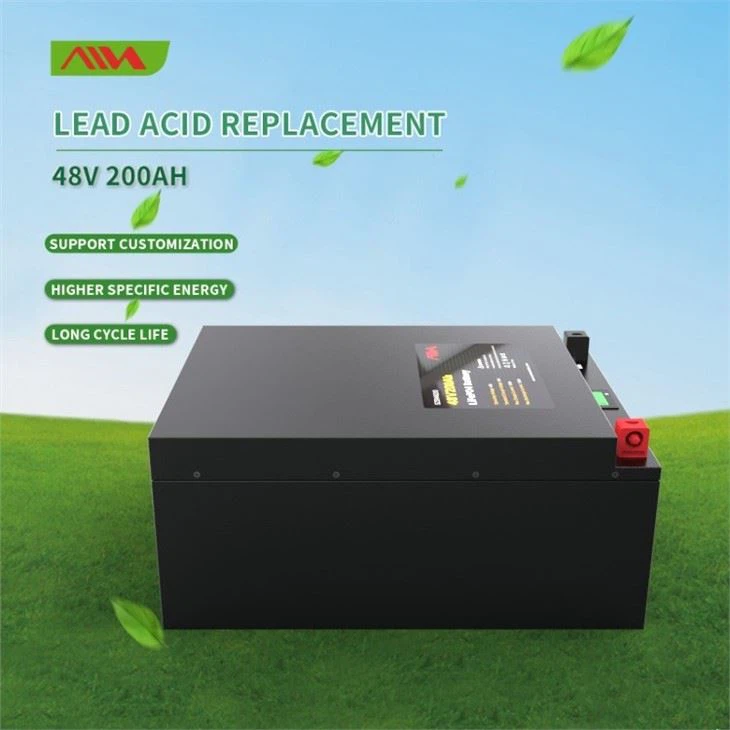
For example, in an electric vehicle (EV) application, a [Deep Cycle 48V 200ah EV Battery](/lead - acid - replacement/48v - battery/deep - cycle - 48v - 200ah - ev - battery.html) can provide more power and a longer driving range compared to a 48V battery with a lower amp - hour rating. Similarly, in a solar energy storage system, a battery with a higher amp - hour rating can store more energy generated by solar panels, allowing for longer periods of power supply during cloudy days or at night.
Factors Affecting Amp - Hour Rating
Several factors can influence the actual amp - hour rating of a 48V battery:
1. Discharge Rate
The rate at which a battery is discharged affects its effective amp - hour capacity. Batteries typically have a lower amp - hour rating when discharged at a high rate. For example, a battery may have a 100Ah rating when discharged at a slow rate, but if it is discharged very quickly, the available capacity may be less than 100Ah. This is because high - rate discharges can cause internal resistance in the battery to increase, leading to energy losses and reduced capacity.
2. Temperature
Temperature has a significant impact on battery performance and amp - hour rating. Batteries generally perform better at moderate temperatures. In cold temperatures, the chemical reactions inside the battery slow down, reducing its capacity. Conversely, extremely high temperatures can accelerate battery aging and also affect its capacity.
3. Battery Chemistry
Different battery chemistries have different characteristics when it comes to amp - hour ratings. For example, lithium - iron - phosphate (LiFePO4) batteries, such as our [48V 100ah Lifepo4 Bms Inside Battery](/lead - acid - replacement/48v - battery/48v - 100ah - lifepo4 - bms - inside - battery.html), often have a more stable amp - hour rating over a wider range of discharge rates and temperatures compared to lead - acid batteries. They also tend to have a higher cycle life, which means they can maintain their amp - hour capacity for a larger number of charge - discharge cycles.
Choosing the Right Amp - Hour Rating
Selecting the appropriate amp - hour rating for a 48V battery depends on several factors:
1. Load Requirements
The first step is to determine the power requirements of the load (the device or system) that will be connected to the battery. Calculate the total current draw of the load and the expected operating time. For example, if a device has a constant current draw of 10A and needs to operate for 5 hours, you would need a battery with an amp - hour rating of at least 50Ah (assuming ideal conditions).
2. Backup Time
If the battery is used for backup power, such as in a UPS (Uninterruptible Power Supply) system, you need to consider how long you want the backup power to last. A higher amp - hour rating will provide a longer backup time.
3. Space and Weight Constraints
Higher amp - hour batteries usually have a larger physical size and weight. If space or weight is a concern, such as in a mobile application, you may need to balance the amp - hour rating with the available space and weight limits.
Our 48V Battery Offerings
As a 48V battery supplier, we offer a range of batteries with different amp - hour ratings to meet various customer needs. Our [Deep Cycle 200ah 48v Lithium Iron Phosphate Rechargeable Lifepo4 Lithium Battery Pack](/lead - acid - replacement/48v - battery/deep - cycle - 200ah - 48v - lithium - iron - phosphate.html) is an excellent choice for applications that require high capacity and long - term reliability. It is designed for deep - cycle use, which means it can be discharged and recharged multiple times without significant loss of capacity.
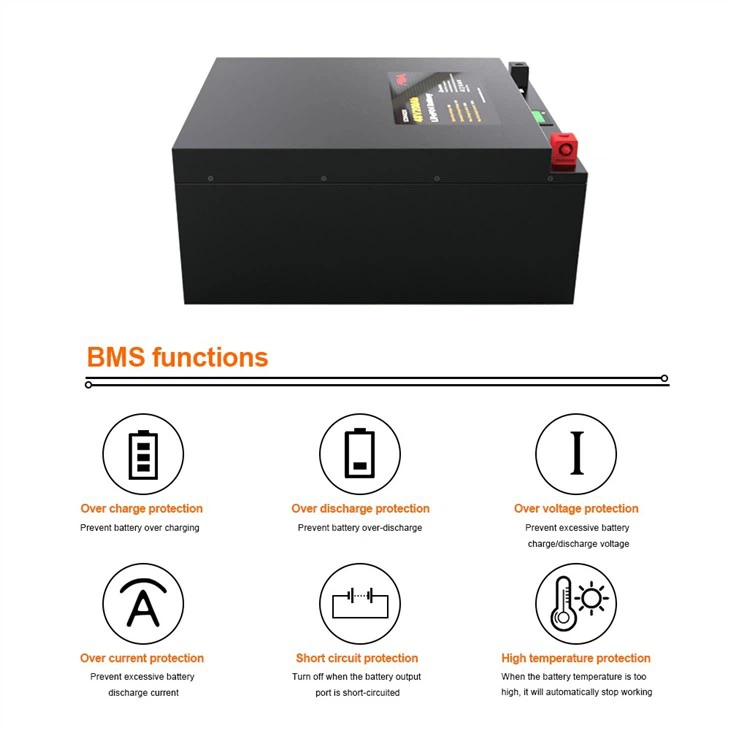
Our 48V batteries are also equipped with advanced battery management systems (BMS) to ensure safe and efficient operation. The BMS helps to protect the battery from over - charging, over - discharging, and short - circuits, extending the battery's lifespan and improving its performance.
Conclusion
The amp - hour rating of a 48V battery is a key factor in determining its performance and suitability for different applications. By understanding what the amp - hour rating means, the factors that affect it, and how to choose the right rating, you can make an informed decision when selecting a 48V battery.
If you are interested in purchasing 48V batteries for your specific application, we invite you to contact us for more information and to discuss your requirements. Our team of experts is ready to assist you in finding the perfect battery solution for your needs.
References
- Linden, D., & Reddy, T. B. (2002). Handbook of Batteries. McGraw - Hill.
- Gregory, R. P. (2011). Battery Management Systems: Design by Modelling. Springer.