


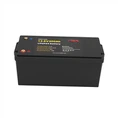

When it comes to AGM (Absorbent Glass Mat) and GEL batteries, one of the most frequently asked questions is about their maximum continuous discharge current. As a trusted AGM GEL battery supplier, I am here to provide in - depth insights into this crucial topic.

Understanding AGM and GEL Batteries
AGM and GEL batteries are both types of valve - regulated lead - acid (VRLA) batteries. They are sealed, maintenance - free, and offer several advantages over traditional flooded lead - acid batteries. AGM batteries use a fiberglass mat to absorb the electrolyte, while GEL batteries have a silica - based gel electrolyte. These designs make them spill - proof and suitable for a wide range of applications, from automotive use to renewable energy storage.
Factors Affecting the Maximum Continuous Discharge Current
The maximum continuous discharge current of an AGM GEL battery is not a fixed value and is influenced by several factors:
Battery Capacity
The capacity of a battery, measured in ampere - hours (Ah), plays a significant role. Generally, larger capacity batteries can handle higher continuous discharge currents. For example, a 200Ah AGM GEL battery can typically sustain a higher continuous current compared to a 50Ah battery. This is because a larger battery has more active material available to participate in the electrochemical reactions that produce electricity.
Battery Temperature
Temperature has a profound impact on battery performance. At lower temperatures, the chemical reactions within the battery slow down, reducing its ability to deliver high currents. Conversely, at elevated temperatures, the battery can supply higher currents, but excessive heat can also accelerate battery aging and reduce its lifespan. Most AGM GEL batteries are designed to operate optimally within a temperature range of 20 - 25°C (68 - 77°F).
Battery Age and Condition
As a battery ages, its internal resistance increases. This means that for a given voltage, the current it can deliver decreases. A well - maintained, new battery will have a lower internal resistance and can therefore handle higher continuous discharge currents compared to an old or damaged battery. Factors such as overcharging, deep discharging, and improper storage can all contribute to battery degradation.
Battery Design and Construction
The design of the battery, including the number and size of the plates, the type of electrolyte, and the internal connections, also affects its current - handling capabilities. Batteries with thicker plates and more robust internal structures are generally better able to withstand high continuous discharge currents.
Calculating the Maximum Continuous Discharge Current
While there is no one - size - fits - all formula for calculating the maximum continuous discharge current of an AGM GEL battery, a common rule of thumb is to use a C - rate. The C - rate is a measure of the rate at which a battery is charged or discharged relative to its capacity. For example, a 1C discharge rate means that the battery is being discharged at a current equal to its ampere - hour rating in one hour.
Most AGM GEL batteries are rated for a continuous discharge current of around 0.2C to 0.5C. So, for a 100Ah AGM GEL battery, the maximum continuous discharge current would be between 20A (0.2C) and 50A (0.5C). However, it's important to note that this is a general guideline, and the actual maximum continuous discharge current can vary depending on the factors mentioned above.
Importance of Knowing the Maximum Continuous Discharge Current
Understanding the maximum continuous discharge current of an AGM GEL battery is crucial for several reasons:

System Design
When designing a power system that uses AGM GEL batteries, such as a solar power system or an uninterruptible power supply (UPS), it is essential to ensure that the batteries can supply the required continuous current. If the current demand exceeds the battery's maximum continuous discharge current, the battery may overheat, suffer from reduced capacity, or even fail prematurely.
Safety
Operating a battery beyond its maximum continuous discharge current can pose a safety risk. Overheating can cause the battery to vent flammable gases, which can lead to explosions or fires. By staying within the recommended current limits, you can ensure the safe operation of your battery system.
Comparison with Other Battery Types
It's interesting to compare the maximum continuous discharge current of AGM GEL batteries with other battery types, such as lithium - ion batteries. Lithium - ion batteries, like the Fast Delivery LiFePO4 BMS Lithium Battery Pack 12V 200Ah Lithium Ion Battery, Deep Cycle 12V 200ah Lifepo4 BMS Inside, and 12v 150ah Lifepo4 Solar Battery, generally have a higher maximum continuous discharge current compared to AGM GEL batteries. This is due to their lower internal resistance and more efficient electrochemical reactions. However, AGM GEL batteries still have their advantages, such as lower cost and better tolerance to overcharging and deep discharging in some applications.
Real - World Applications
In real - world applications, the maximum continuous discharge current requirements vary widely. For example, in a small solar power system used to power a few lights and a small refrigerator, the continuous current demand may be relatively low, perhaps only a few amperes. In this case, a small - capacity AGM GEL battery can easily meet the requirements.
On the other hand, in a large industrial UPS system that needs to power critical equipment during a power outage, the continuous current demand can be very high, potentially in the hundreds of amperes. In such cases, multiple high - capacity AGM GEL batteries may need to be connected in parallel to meet the current requirements.
Tips for Optimizing Battery Performance
To ensure that your AGM GEL batteries can deliver the maximum continuous discharge current safely and efficiently, here are some tips:
- Proper Installation: Install the batteries in a well - ventilated area with a stable temperature. Avoid placing them near heat sources or in direct sunlight.
- Regular Maintenance: Although AGM GEL batteries are maintenance - free, it's still important to check their voltage and state of charge regularly. This can help you detect any potential issues early and take appropriate action.
- Avoid Overloading: Do not exceed the maximum continuous discharge current recommended by the battery manufacturer. If you need to increase the current capacity, consider using multiple batteries in parallel.
Conclusion
In conclusion, the maximum continuous discharge current of an AGM GEL battery is a complex parameter that depends on several factors, including battery capacity, temperature, age, and design. As a supplier, we understand the importance of providing accurate information about our products to help our customers make informed decisions.

If you are in the market for AGM GEL batteries or have questions about their maximum continuous discharge current, we encourage you to contact us for a detailed discussion. Our team of experts is ready to assist you in selecting the right batteries for your specific application and ensuring that you get the best performance and value from your investment.
References
- Battery University: A comprehensive online resource for battery technology and information.
- Manufacturer's specifications for AGM GEL batteries.