



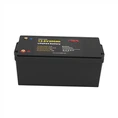
As a supplier of Brick Batteries, I'm often asked about the discharge curve of these innovative energy storage solutions. Understanding the discharge curve is crucial for anyone looking to optimize the use of Brick Batteries, whether for residential or commercial applications. In this blog post, I'll delve into what the discharge curve of a Brick Battery is, why it matters, and how it can impact your energy storage needs.
What is a Discharge Curve?
A discharge curve is a graphical representation of the relationship between the state of charge (SOC) of a battery and its terminal voltage over time during the discharge process. It shows how the voltage of the battery changes as it delivers electrical energy to a load. The shape of the discharge curve is influenced by various factors, including the battery chemistry, temperature, discharge rate, and the age of the battery.
For Brick Batteries, which typically use lithium iron phosphate (LiFePO4) chemistry, the discharge curve has some distinct characteristics. LiFePO4 batteries are known for their flat discharge curve, which means that the voltage remains relatively stable over a wide range of the state of charge. This is in contrast to other battery chemistries, such as lead-acid batteries, which have a more sloping discharge curve.
The Importance of the Discharge Curve
The discharge curve of a Brick Battery is important for several reasons. Firstly, it provides valuable information about the battery's performance and capacity. By analyzing the discharge curve, you can determine the available energy in the battery at different states of charge and estimate how long the battery will last under a given load.
Secondly, the discharge curve can help you optimize the use of the battery. For example, if you know the discharge curve of your Brick Battery, you can avoid over-discharging the battery, which can damage the battery cells and reduce their lifespan. You can also use the discharge curve to determine the optimal charging and discharging conditions for the battery to maximize its efficiency and performance.
Finally, the discharge curve is important for system design and integration. When designing an energy storage system with Brick Batteries, you need to consider the discharge curve to ensure that the system can meet the power and energy requirements of the load. The discharge curve can also help you select the appropriate charge controller and inverter for the system to ensure compatibility and efficient operation.
The Discharge Curve of Brick Batteries
As mentioned earlier, Brick Batteries typically use LiFePO4 chemistry, which has a flat discharge curve. The voltage of a LiFePO4 battery remains relatively stable at around 3.2 - 3.3 volts per cell over a wide range of the state of charge, typically from about 20% to 80%. This means that the battery can deliver a consistent voltage to the load, which is important for many applications, such as powering sensitive electronic devices.
When the state of charge drops below 20%, the voltage of the battery starts to decline more rapidly. This is known as the end-of-discharge voltage, and it is important to avoid discharging the battery below this point to prevent damage to the battery cells. On the other hand, when the state of charge reaches 100%, the voltage of the battery reaches its maximum value, typically around 3.6 - 3.7 volts per cell.


The flat discharge curve of Brick Batteries makes them well-suited for a variety of applications, including residential energy storage systems, off-grid solar power systems, and electric vehicles. In a residential energy storage system, for example, the flat discharge curve ensures that the battery can provide a stable voltage to power the home appliances and electronics, even as the state of charge decreases.
Factors Affecting the Discharge Curve
While the discharge curve of Brick Batteries is generally flat, there are several factors that can affect its shape and characteristics. These factors include:
- Discharge Rate: The discharge rate, or the rate at which the battery is discharged, can have a significant impact on the discharge curve. At higher discharge rates, the voltage of the battery may drop more rapidly, especially towards the end of the discharge cycle. This is because the internal resistance of the battery increases at higher discharge rates, which causes a greater voltage drop across the battery.
- Temperature: Temperature also plays a role in the discharge curve of Brick Batteries. At lower temperatures, the chemical reactions in the battery slow down, which can cause the voltage to drop more rapidly. On the other hand, at higher temperatures, the battery may experience increased self-discharge and reduced capacity, which can also affect the discharge curve.
- Battery Age: As the battery ages, its performance and capacity may degrade, which can also affect the discharge curve. Older batteries may have a more sloping discharge curve and a lower end-of-discharge voltage, indicating a reduced available energy.
Applications of Brick Batteries Based on the Discharge Curve
The flat discharge curve of Brick Batteries makes them suitable for a wide range of applications. Here are some examples:
- Residential Energy Storage: Brick 30KWh Battery For Home ESS is an ideal choice for residential energy storage systems. The flat discharge curve ensures that the battery can provide a stable power supply to the home, even during peak demand periods. Homeowners can use the battery to store excess solar energy generated during the day and use it at night or during power outages.
- Off-Grid Solar Power Systems: In off-grid solar power systems, Brick Batteries can store the energy generated by the solar panels and provide a reliable power supply when the sun is not shining. The Solar Home 15KWh Brick 51.2v 300ah Lifepo4 ESS is a great option for off-grid applications, as it can withstand the harsh environmental conditions and provide a long service life.
- Electric Vehicles: Brick Batteries are also being used in electric vehicles due to their high energy density, long cycle life, and flat discharge curve. The Sunnew 15KWh 48V 300Ah Stackable LiFePO4 Battery Pack can provide a stable power supply to the electric motor, ensuring a smooth and efficient operation of the vehicle.
Contact Us for Your Brick Battery Needs
If you're interested in learning more about Brick Batteries or are looking to purchase a battery for your specific application, we're here to help. Our team of experts can provide you with detailed information about the discharge curve, performance, and specifications of our Brick Batteries. We can also assist you in selecting the right battery for your needs and provide you with installation and maintenance support.
Contact us today to start a conversation about how our Brick Batteries can meet your energy storage requirements. Whether you're a homeowner, a solar installer, or an electric vehicle manufacturer, we have the solutions you need to power your future.
References
- Linden, D., & Reddy, T. B. (2002). Handbook of Batteries (3rd ed.). McGraw-Hill.
- Pistoia, G. (2010). Lithium Batteries: Advanced Materials, Technologies, and Applications. Elsevier.
- Tarascon, J.-M., & Armand, M. (2001). Issues and challenges facing rechargeable lithium batteries. Nature, 414(6861), 359-367.