



What is the discharge rate of a 48V battery?
As a reputable 48V battery supplier, I often encounter inquiries from customers regarding the discharge rate of 48V batteries. Understanding the discharge rate is crucial for anyone looking to use these batteries effectively, whether in electric vehicles (EVs), renewable energy storage systems, or other applications. In this blog post, I will delve into the concept of the discharge rate, its significance, and how it varies across different types of 48V batteries.
Understanding the Discharge Rate
The discharge rate of a battery refers to the rate at which it can deliver electrical energy over a specific period. It is typically expressed in terms of a C-rate, which is a measure of the current drawn from the battery relative to its rated capacity. For example, a 1C discharge rate means that the battery is being discharged at a current equal to its rated capacity. If a 48V battery has a capacity of 100Ah (ampere-hours), a 1C discharge rate would correspond to a current of 100A.
The C-rate is an important parameter because it determines how quickly the battery can be discharged and, consequently, how much power it can deliver. Higher C-rates allow for faster discharge, which is beneficial in applications where high power output is required, such as in electric vehicles during acceleration or in power tools. On the other hand, lower C-rates are suitable for applications that require a more sustained, steady power supply, such as in renewable energy storage systems.
Factors Affecting the Discharge Rate
Several factors can influence the discharge rate of a 48V battery. These include the battery chemistry, temperature, state of charge (SOC), and the internal resistance of the battery.
- Battery Chemistry: Different battery chemistries have different discharge characteristics. For example, lithium-ion batteries, such as LiFePO4 (lithium iron phosphate) batteries, generally have a higher discharge rate compared to lead-acid batteries. Lithium-ion batteries can typically handle higher C-rates, making them suitable for high-power applications. In contrast, lead-acid batteries have a lower discharge rate and are better suited for applications that require a more moderate power output.
- Temperature: Temperature plays a significant role in the performance of a battery. At low temperatures, the chemical reactions within the battery slow down, which can reduce the battery's capacity and discharge rate. Conversely, high temperatures can increase the internal resistance of the battery, leading to a decrease in efficiency and potentially damaging the battery. Therefore, it is important to operate 48V batteries within their recommended temperature range to ensure optimal performance.
- State of Charge (SOC): The state of charge of a battery also affects its discharge rate. As the battery discharges, its voltage and capacity gradually decrease. At a low SOC, the battery may not be able to deliver the same high current as it can when fully charged. Therefore, it is important to monitor the SOC of the battery and avoid discharging it below a certain level to prevent damage.
- Internal Resistance: The internal resistance of a battery is a measure of its opposition to the flow of current. A battery with a high internal resistance will experience a greater voltage drop when a current is drawn from it, which can reduce its efficiency and discharge rate. Factors such as the battery chemistry, age, and temperature can all affect the internal resistance of a battery.
Discharge Rates of Different 48V Battery Types
As a 48V battery supplier, I offer a range of battery types, each with its own unique discharge characteristics. Here is a brief overview of the discharge rates of some common 48V battery types:
- Lead-Acid Batteries: Lead-acid batteries are one of the oldest and most widely used battery chemistries. They are relatively inexpensive and have a moderate discharge rate. Lead-acid batteries typically have a C-rate of around 0.2C to 0.5C, which means they can be discharged at a current of 20% to 50% of their rated capacity. For example, a 48V lead-acid battery with a capacity of 200Ah can typically be discharged at a current of 40A to 100A.
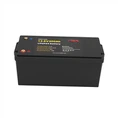
- Lithium-Ion Batteries: Lithium-ion batteries, particularly LiFePO4 batteries, have gained popularity in recent years due to their high energy density, long cycle life, and high discharge rate. LiFePO4 batteries can typically handle C-rates of up to 1C or higher, making them suitable for high-power applications. For example, a Deep Cycle 48V 200ah EV Battery can be discharged at a current of up to 200A, allowing for rapid acceleration in electric vehicles.
- Nickel-Metal Hydride (NiMH) Batteries: NiMH batteries are another type of rechargeable battery that offers a good balance between energy density and discharge rate. They have a slightly lower discharge rate compared to lithium-ion batteries but are still capable of delivering a relatively high current. NiMH batteries typically have a C-rate of around 0.5C to 1C.
Importance of Choosing the Right Discharge Rate
Choosing the right discharge rate for a 48V battery is crucial for ensuring optimal performance and longevity. If the discharge rate is too high for the battery, it can lead to overheating, reduced capacity, and a shorter cycle life. On the other hand, if the discharge rate is too low, the battery may not be able to meet the power requirements of the application.
When selecting a 48V battery, it is important to consider the specific requirements of the application, such as the power output, discharge time, and operating conditions. For high-power applications, such as electric vehicles or power tools, a battery with a high discharge rate, such as a LiFePO4 battery, is recommended. For applications that require a more moderate power output, such as renewable energy storage systems, a lead-acid battery or a NiMH battery may be more suitable.
Our 48V Battery Offerings
As a 48V battery supplier, I offer a wide range of high-quality batteries to meet the diverse needs of our customers. Our product lineup includes Deep Cycle 48V 200ah EV Battery, Rechargeable Smart BMS Bluetooth Lithium Ion Battery 48v 100ah Lithium Battery Lifepo4 Battery, and Deep Cycle 200ah 48v Lithium Iron Phosphate Rechargeable Lifepo4 Lithium Battery Pack.


Our LiFePO4 batteries are known for their high energy density, long cycle life, and high discharge rate. They are equipped with a smart BMS (battery management system) that provides overcharge, over-discharge, and short-circuit protection, ensuring the safety and reliability of the battery. Our lead-acid batteries, on the other hand, offer a cost-effective solution for applications that require a more moderate power output.
Conclusion
In conclusion, the discharge rate of a 48V battery is an important parameter that determines its ability to deliver electrical energy. Understanding the discharge rate and its influencing factors is crucial for selecting the right battery for your application. As a 48V battery supplier, I am committed to providing high-quality batteries that meet the specific needs of our customers. Whether you are looking for a high-power battery for an electric vehicle or a reliable battery for a renewable energy storage system, we have the right solution for you.
If you have any questions or would like to discuss your battery requirements, please feel free to contact us. We would be happy to assist you in choosing the right 48V battery for your application and provide you with all the information you need to make an informed decision.
References
- Linden, D., & Reddy, T. B. (2002). Handbook of Batteries (3rd ed.). McGraw-Hill.
- Burke, A. F. (2007). Battery and ultracapacitor selection for electric, hybrid electric, and fuel cell vehicles. Journal of Power Sources, 168(2), 269-277.
- Ehsani, M., Gao, Y., & Emadi, A. (2010). Modern Electric, Hybrid Electric, and Fuel Cell Vehicles: Fundamentals, Theory, and Design (2nd ed.). CRC Press.