


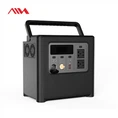
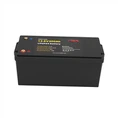

Hey there! As a supplier of Brick Batteries, I often get asked about what's going on inside these nifty energy storage devices. So, I thought I'd take a deep dive and break down the internal structure of a Brick Battery for you.
Let's start with the basics. A Brick Battery is a type of energy storage system that's designed to store electrical energy efficiently and release it when needed. It's like a big rechargeable battery on steroids, and it can be used in a variety of applications, from residential solar energy storage to large - scale industrial power backup.
The Core Components
1. Battery Cells
At the heart of every Brick Battery are the battery cells. These are the building blocks that actually store the electrical energy. Most of the Brick Batteries we supply use lithium - iron - phosphate (LiFePO4) cells. Why LiFePO4? Well, they're known for their long cycle life, high safety, and good thermal stability.
LiFePO4 cells work based on the principle of electrochemical reactions. When the battery is charging, lithium ions move from the cathode to the anode through an electrolyte. During discharge, the lithium ions move back from the anode to the cathode, releasing electrical energy in the process. This back - and - forth movement of lithium ions is what allows the battery to store and release energy.
For example, our LiFePO4 51.2V 200Ah 10Kwh Brick Battery is packed with high - quality LiFePO4 cells. These cells are carefully selected and tested to ensure they meet our strict quality standards. They're arranged in a series - parallel configuration to achieve the desired voltage and capacity.
2. Battery Management System (BMS)
The Battery Management System is like the brain of the Brick Battery. It's responsible for monitoring and controlling the battery cells to ensure they operate safely and efficiently. The BMS does several important things:
- Cell Balancing: Over time, individual battery cells can become unbalanced in terms of their state of charge. The BMS constantly monitors the voltage of each cell and balances them if necessary. This helps to extend the overall lifespan of the battery.
- Over - charge and Over - discharge Protection: It prevents the battery cells from being over - charged or over - discharged, which can damage the cells and reduce their performance.
- Temperature Monitoring: The BMS keeps an eye on the temperature of the battery cells. If the temperature gets too high or too low, it can take appropriate actions, such as adjusting the charging or discharging rate.
Without a reliable BMS, the battery cells could be at risk of damage, and the overall performance of the Brick Battery would be severely affected.
3. Thermal Management System
Heat is the enemy of battery performance and lifespan. That's why a good thermal management system is crucial for a Brick Battery. The thermal management system helps to keep the battery cells at an optimal temperature range.
There are different ways to manage the temperature of a battery. One common method is using a liquid - cooling system. In a liquid - cooling system, a coolant is circulated around the battery cells to absorb the heat generated during charging and discharging. Another method is air - cooling, where fans are used to blow air over the battery cells to dissipate the heat.
Our Brick Batteries are designed with an efficient thermal management system. This ensures that the battery cells operate at a stable temperature, which in turn improves the battery's performance and extends its lifespan.
4. Enclosure
The enclosure of a Brick Battery serves several important functions. Firstly, it provides physical protection for the internal components. It shields the battery cells, BMS, and thermal management system from external impacts, dust, and moisture.
Secondly, the enclosure helps with heat dissipation. It's designed in such a way that it allows the heat generated inside the battery to escape effectively. Some enclosures are made of materials with good thermal conductivity, which helps to transfer the heat away from the battery cells.
Finally, the enclosure also plays a role in safety. It can be designed to prevent the spread of fire in case of a battery malfunction.
Different Configurations for Different Needs
We offer a range of Brick Batteries with different capacities and configurations to meet the diverse needs of our customers. For example, our Brick 30KWh Battery For Home ESS is a great choice for larger homes or small businesses that need a significant amount of energy storage. It's made up of multiple battery modules connected in a specific configuration to achieve the 30KWh capacity.
On the other hand, our Brick 20KWh Battery For Home ESS is suitable for medium - sized homes. It provides a good balance between capacity and cost, and it can store enough energy to power essential appliances during a power outage or to use the excess solar energy generated during the day.


Why Choose Our Brick Batteries?
- Quality: We source the best battery cells and components for our Brick Batteries. Every battery goes through a rigorous testing process before it leaves our factory to ensure it meets the highest quality standards.
- Performance: Thanks to the advanced internal structure, our Brick Batteries offer high energy density, long cycle life, and excellent charge - discharge efficiency.
- Safety: With features like a reliable BMS and a well - designed thermal management system, our Brick Batteries are extremely safe to use.
If you're in the market for a high - quality energy storage solution, our Brick Batteries could be the perfect fit for you. Whether you're looking to store solar energy for your home or need a power backup for your business, we've got you covered.
If you're interested in learning more about our Brick Batteries or want to discuss your specific requirements, feel free to reach out to us. We're always happy to have a chat and help you find the best energy storage solution for your needs.
References
- Linden, D., & Reddy, T. B. (2002). Handbook of Batteries. McGraw - Hill.
- Tarascon, J. M., & Armand, M. (2001). Issues and challenges facing rechargeable lithium batteries. Nature, 414(6861), 359 - 367.