



Hey there! As a 24V battery supplier, I often get asked about the maximum current a 24V battery can supply. It's a super important question, especially for those who are looking to use these batteries in various applications. So, let's dive right in and explore this topic.
First off, what exactly is current? In simple terms, current is the flow of electric charge. It's measured in amperes (A), and it tells us how much charge is passing through a point in a circuit per unit of time. When it comes to a 24V battery, the maximum current it can supply depends on several factors.
One of the key factors is the battery's chemistry. We offer different types of 24V batteries, like lead - acid, lithium - ion, and specifically lithium iron phosphate (LiFePO4). Each type has its own characteristics when it comes to current delivery.
Lead - acid batteries have been around for a long time. They're relatively inexpensive and can provide a decent amount of current. However, they have some limitations. For example, they can't handle high - current discharges for long periods without suffering damage. Their internal resistance is relatively high, which means that as the current increases, the voltage drop across the battery also increases. This can lead to inefficiencies and reduced performance.
On the other hand, LiFePO4 batteries are a popular choice these days. They have a lower internal resistance compared to lead - acid batteries, which allows them to supply higher currents more efficiently. Our Golf Cart EV Battery 24V 100Ah Rechargeable Deep Cycle Lithium Iron Phosphate LiFePO4 Batteries are a great example. These batteries are designed for deep - cycle use, which means they can handle repeated charging and discharging cycles. They can supply high currents when needed, making them ideal for applications like golf carts, which require quick bursts of power to accelerate.
Another factor that affects the maximum current a 24V battery can supply is its capacity. Battery capacity is measured in ampere - hours (Ah). A higher - capacity battery can generally supply more current. For instance, our Customized LiFePO4 24V 50Ah 100Ah Floor Cleaning Machine Battery Operated Floor Sweeper Battery comes in different capacities. The 100Ah version can supply more current than the 50Ah version over a given period. But it's important to note that just having a high - capacity battery doesn't mean it can supply an unlimited amount of current. There are still physical limitations based on the battery's design and internal components.
The temperature also plays a role in current delivery. Batteries generally perform better at moderate temperatures. In cold weather, the chemical reactions inside the battery slow down, which can reduce the maximum current it can supply. On the other hand, extremely high temperatures can cause the battery to degrade faster and may also limit its current - supplying ability.
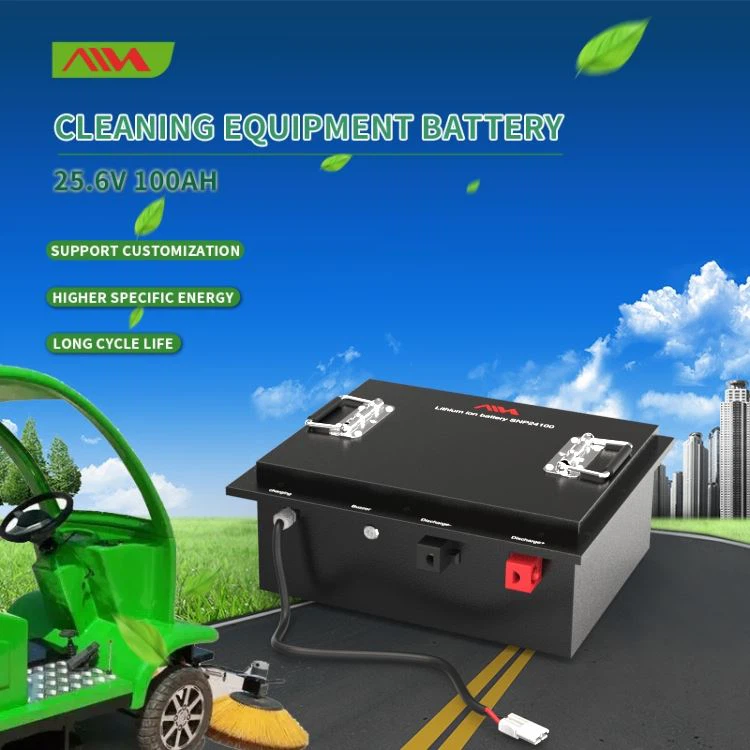
Let's talk about some real - world applications. Take our Sweeper Robot 24V 100ah Lifepo4 Battery. Sweeper robots need to be able to move around, power their motors, and operate their cleaning mechanisms. They require a battery that can supply a relatively constant current over a period of time. The 24V 100Ah LiFePO4 battery is well - suited for this application because it can provide the necessary power without overheating or degrading quickly.
When designing a system that uses a 24V battery, it's crucial to consider the maximum current requirements of the load. The load is the device or devices that the battery is powering. If the load requires a high current, you need to make sure the battery can handle it. You also need to consider the wiring and connectors in the circuit. Poorly sized wiring or loose connectors can increase the resistance in the circuit, which can lead to voltage drops and reduced current delivery.
To determine the maximum current a 24V battery can supply, manufacturers usually specify a maximum continuous current and a maximum peak current. The maximum continuous current is the amount of current the battery can supply continuously without overheating or causing damage. The maximum peak current is the short - term maximum current the battery can supply for a brief period, like during startup or when a sudden high - power demand occurs.
For example, a 24V LiFePO4 battery might have a maximum continuous current rating of 50A and a maximum peak current rating of 100A for a few seconds. This means that under normal operating conditions, it can supply up to 50A continuously, but if there's a short - term high - power demand, it can briefly supply up to 100A.
In summary, the maximum current a 24V battery can supply is influenced by battery chemistry, capacity, temperature, and the design of the battery and the circuit. As a 24V battery supplier, we offer a range of batteries to meet different current requirements. Whether you need a battery for a golf cart, a floor - cleaning machine, or a sweeper robot, we have the right solution for you.
If you're in the market for a 24V battery and have questions about the maximum current it can supply or which battery is best for your application, don't hesitate to reach out. We're here to help you make the right choice and ensure that your system operates efficiently and reliably.
References:

- Battery Technology Handbook
- Industry standards for 24V battery design and performance