



As a supplier of 48V batteries, I often encounter questions from customers regarding the response time of these batteries to load changes. Understanding this aspect is crucial for applications where rapid adjustments to varying loads are required, such as in electric vehicles, renewable energy storage systems, and uninterruptible power supplies (UPS). In this blog post, I'll delve into the factors that influence the response time of a 48V battery and how it impacts different applications.
What is Response Time?
Response time, in the context of a battery, refers to how quickly the battery can adjust its output current and voltage to meet sudden changes in the load. When a load demands more power, the battery needs to increase its output rapidly without significant voltage drops. Conversely, when the load decreases, the battery must reduce its output efficiently. A fast response time ensures stable power delivery and prevents damage to the load due to voltage fluctuations.
Factors Affecting the Response Time of a 48V Battery
1. Battery Chemistry
The type of battery chemistry plays a significant role in determining the response time. Lithium-ion batteries, especially Lithium Iron Phosphate (LiFePO4), are known for their excellent response times. LiFePO4 batteries have a high charge and discharge rate capability, allowing them to quickly adapt to load changes. For example, in an electric vehicle, when the driver accelerates, the LiFePO4 battery can rapidly supply the additional power needed to drive the motor.
On the other hand, lead-acid batteries have a slower response time. They have a higher internal resistance, which limits the rate at which they can deliver or absorb energy. This makes them less suitable for applications with rapid load changes.
2. Battery Capacity
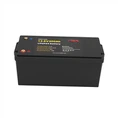
The capacity of the battery, measured in ampere-hours (Ah), also affects the response time. A higher capacity battery generally has a better ability to handle sudden load changes. For instance, a Deep Cycle 200ah 48v Lithium Iron Phosphate Rechargeable Lifepo4 Lithium Battery Pack can provide more energy over a short period compared to a lower capacity battery. This means it can respond more effectively to high load demands without significant voltage drops.
3. State of Charge (SOC)
The state of charge of the battery influences its response time. A battery with a high SOC can typically respond more quickly to load changes than a battery that is nearly depleted. When a battery is at a low SOC, its internal resistance increases, which slows down the charge transfer process. Therefore, maintaining an appropriate SOC is essential for optimal response performance.


4. Battery Management System (BMS)
A well-designed Battery Management System is crucial for ensuring a fast response time. The BMS monitors the battery's voltage, current, and temperature and controls the charging and discharging processes. It can also balance the cells in the battery pack, ensuring that each cell contributes equally to the overall performance. For example, our Rechargeable Smart BMS Bluetooth Lithium Ion Battery 48v 100ah Lithium Battery Lifepo4 Battery is equipped with a smart BMS that can quickly detect load changes and adjust the battery's output accordingly.
Impact of Response Time on Different Applications
1. Electric Vehicles
In electric vehicles, a fast response time is essential for smooth acceleration and deceleration. When the driver presses the accelerator pedal, the battery needs to supply a large amount of power instantaneously to drive the motor. A slow response time can result in a delay in acceleration, reducing the vehicle's performance. Our 48V 100ah Lifepo4 Bms Inside Battery is designed to provide a rapid response to load changes, ensuring a seamless driving experience.
2. Renewable Energy Storage Systems
Renewable energy sources such as solar and wind are intermittent, which means the power output can vary significantly. A battery with a fast response time is required to store the excess energy when the renewable source is producing more power than needed and release it when the production drops. This helps to stabilize the power grid and ensure a continuous supply of electricity.
3. Uninterruptible Power Supplies (UPS)
UPS systems are used to provide backup power in case of a main power failure. During a power outage, the battery in the UPS needs to immediately supply power to the connected load. A fast response time is crucial to prevent any disruption to the operation of critical equipment such as servers, medical devices, and industrial machinery.
Measuring the Response Time of a 48V Battery
Measuring the response time of a battery typically involves applying a step load change and monitoring the battery's output voltage and current. The time it takes for the battery to reach a stable output after the load change is recorded as the response time. Specialized equipment such as electronic load testers and data loggers are used to perform these measurements accurately.
Improving the Response Time of a 48V Battery
To improve the response time of a 48V battery, the following steps can be taken:
- Choose the Right Battery Chemistry: Opt for lithium-ion batteries, especially LiFePO4, for applications that require a fast response time.
- Select an Appropriate Battery Capacity: Ensure that the battery has enough capacity to handle the expected load changes.
- Maintain a Proper State of Charge: Regularly monitor and maintain the battery's SOC to ensure optimal performance.
- Use a High-Quality BMS: A smart and efficient BMS can significantly improve the battery's response time.
Conclusion
The response time of a 48V battery is a critical factor that affects its performance in various applications. By understanding the factors that influence the response time and taking appropriate measures to improve it, we can ensure stable power delivery and enhance the overall efficiency of the system. As a 48V battery supplier, we are committed to providing high-quality batteries with excellent response times to meet the diverse needs of our customers.
If you are interested in our 48V battery products or have any questions regarding battery response time, please feel free to contact us for procurement discussions. We look forward to serving you and providing the best battery solutions for your applications.
References
- Linden, D., & Reddy, T. B. (2002). Handbook of Batteries. McGraw-Hill.
- Tarascon, J.-M., & Armand, M. (2001). Issues and challenges facing rechargeable lithium batteries. Nature, 414(6861), 359-367.