


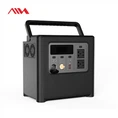
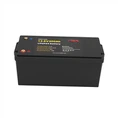

Hey there! As a home battery supplier, I often get asked about the self - discharge rate of home batteries. It's a super important topic, especially if you're looking to invest in a reliable power source for your home. So, let's dig into what self - discharge rate is all about.
What Exactly is the Self - Discharge Rate?
The self - discharge rate of a home battery is the rate at which it loses its charge when it's not in use. Think of it like a leaky bucket. Even if you're not taking water out of the bucket, over time, water will seep out on its own. Similarly, a battery will lose its stored energy even when it's just sitting there.
This rate is usually expressed as a percentage per unit of time, like per month or per year. For example, if a battery has a self - discharge rate of 5% per month, and it starts with a full charge of 100%, after one month, it'll have around 95% of its charge left.
Why Does Self - Discharge Happen?
There are a few reasons behind self - discharge. First off, chemical reactions within the battery are a big culprit. Batteries work through chemical processes to store and release energy. But sometimes, these chemical reactions can happen spontaneously, even when the battery isn't connected to any device. This causes a slow but steady loss of charge.
Another factor is the battery's internal resistance. When there's internal resistance, it generates heat, and this heat can speed up the chemical reactions, leading to a higher self - discharge rate.
Environmental conditions also play a huge role. High temperatures, for instance, can really ramp up the self - discharge rate. If you store your home battery in a hot attic or a shed on a sunny day, it'll lose its charge faster compared to if it were stored in a cool, dry place.
Why is the Self - Discharge Rate Important for Home Batteries?
For home batteries, the self - discharge rate is a critical factor. You rely on these batteries to store energy, whether it's from solar panels or the grid, and then use that energy when you need it, like during a power outage.
If a battery has a high self - discharge rate, you might find that when you actually need it, there's not much charge left. It's like filling up your car's gas tank and coming back a week later to find half of it gone. You're not going to get very far!


On the other hand, a low self - discharge rate means your battery will hold its charge for longer. This gives you more peace of mind, knowing that when you flip the switch during a blackout, your battery will be ready to power your essential appliances, like your fridge or your lights.
How Can You Measure the Self - Discharge Rate?
Measuring the self - discharge rate isn't too complicated, but it does take some time. First, you fully charge the battery. Then, you disconnect it from any charging source and let it sit for a set period, say a month. After that time, you measure the remaining charge.
The formula to calculate the self - discharge rate is:
[Self - Discharge Rate (%)=\frac{Initial Charge - Final Charge}{Initial Charge}\times100]
For example, if you start with a 100% charge and after a month, the battery has 90% of its charge left, the self - discharge rate for that month is (\frac{100 - 90}{100}\times100 = 10%) per month.
Different Types of Home Batteries and Their Self - Discharge Rates
There are several types of home batteries out there, and each has its own typical self - discharge rate.
Lead - Acid Batteries
These are some of the oldest and most common types of batteries. They usually have a relatively high self - discharge rate, around 3 - 20% per month. This can vary depending on the quality of the battery and the storage conditions. Lead - acid batteries are sensitive to temperature, so if they're stored in a warm environment, the self - discharge rate can be on the higher end.
Lithium - Ion Batteries
Lithium - ion batteries are becoming more and more popular for home use. They have a much lower self - discharge rate compared to lead - acid batteries, typically around 1 - 5% per month. This is one of the reasons why they're so appealing for home energy storage. They can hold their charge for a long time, making them reliable for when you need them.
Nickel - Metal Hydride (NiMH) Batteries
NiMH batteries have a self - discharge rate that's in the middle of the range, usually around 10 - 30% per month. They used to be quite popular, but with the rise of lithium - ion batteries, their use in home energy storage has decreased.
How to Minimize the Self - Discharge Rate
If you want to make sure your home battery holds its charge for as long as possible, there are a few things you can do.
First, store the battery in a cool, dry place. As I mentioned earlier, high temperatures can increase the self - discharge rate. A basement or a climate - controlled storage area is ideal.
Second, keep the battery properly maintained. Make sure it's clean and free from any damage. If there are any signs of corrosion or leaks, address them right away.
Also, if you're not going to use the battery for a long time, don't keep it fully charged. It's better to store it at around 50 - 60% charge. This can help reduce the stress on the battery and lower the self - discharge rate.
Our Home Batteries and Self - Discharge
At our company, we understand the importance of a low self - discharge rate. That's why we carefully select the batteries we offer to our customers. Our lithium - ion batteries, in particular, are known for their excellent self - discharge performance. With a self - discharge rate of as low as 1% per month, you can be confident that your battery will be ready when you need it.
We also offer a range of portable power solutions, like the 700W Portable Generator For Outdoor Camping, the SNE1000W Portable Power Station, and the 800W Portable Generator For Outdoor Camping. These are great options if you need power on the go, and they also have low self - discharge rates to ensure they're reliable.
Conclusion
The self - discharge rate of a home battery is a key factor to consider when choosing a power source for your home. It can determine how reliable your battery will be when you need it most. By understanding what causes self - discharge, how to measure it, and how to minimize it, you can make an informed decision about which battery is right for you.
If you're interested in learning more about our home batteries or are thinking about making a purchase, don't hesitate to reach out. We're here to help you find the perfect power solution for your home.
References
- Linden, D., & Reddy, T. B. (2002). Handbook of Batteries. McGraw - Hill.
- Koksbang, R., & Christensen, P. A. (2019). Battery Systems Engineering. Wiley.