



In the vast expanse of the solar system, each celestial body holds its own unique secrets and characteristics. As a supplier of Solar System Home products, I've always been fascinated by the scientific details of these cosmic neighbors, and today, I'd like to delve into the surface gravity of Mercury, one of the most intriguing planets in our solar system.
Mercury, the closest planet to the Sun, is a world of extremes. It's a small planet, with a diameter of about 4,880 kilometers, which is only about 38% of Earth's diameter. Despite its small size, Mercury has a relatively high density, which is a key factor in determining its surface gravity.
Surface gravity is the gravitational acceleration experienced at the surface of a celestial body. It's determined by two main factors: the mass of the body and its radius. The formula for calculating surface gravity is (g = \frac{GM}{r^{2}}), where (g) is the surface gravity, (G) is the gravitational constant ((G= 6.67430×10^{-11}m^{3}kg^{-1}s^{-2})), (M) is the mass of the celestial body, and (r) is its radius.
Mercury has a mass of approximately (3.3011×10^{23}) kg and a mean radius of about (2439.7) km ((2.4397×10^{6}) m). Plugging these values into the formula, we can calculate the surface gravity of Mercury.
First, we substitute the values into the formula:
[
\begin{align*}
g&=\frac{GM}{r^{2}}\
&=\frac{6.67430\times 10^{- 11}\times3.3011\times 10^{23}}{(2.4397\times 10^{6})^{2}}\
&=\frac{6.67430\times3.3011\times 10^{-11 + 23}}{2.4397^{2}\times10^{12}}\
&=\frac{22.033\times10^{12}}{5.952\times10^{12}}\
&\approx3.7\ m/s^{2}
\end{align*}
]


To put this into perspective, Earth's surface gravity is approximately (9.8\ m/s^{2}). So, the surface gravity of Mercury is about (38%) of Earth's surface gravity. This means that if you were to stand on Mercury, you would weigh only about (38%) of what you weigh on Earth. For example, if you weigh (100) kg on Earth, you would weigh only about (38) kg on Mercury.
The relatively low surface gravity of Mercury has several implications. For one, it affects the planet's ability to hold onto an atmosphere. With a weak gravitational pull, Mercury has a very thin and tenuous atmosphere, known as an exosphere. This exosphere is composed mainly of atoms blasted off the surface by the solar wind and micrometeoroid impacts. The low surface gravity also means that it would be easier to launch a spacecraft from Mercury compared to Earth.
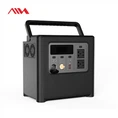
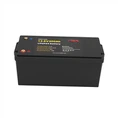
As a Solar System Home supplier, we are always looking for ways to incorporate the latest scientific knowledge into our products. Our energy storage solutions, such as the Stackable Household Lithium 51.2v 200ah, 51.2v 300ah Lifepo4 15KWh Solar ESS, and 20kWh Residential Energy Storage System, are designed to be efficient and reliable, whether you're on Earth or in a future space settlement.
Understanding the surface gravity of planets like Mercury is crucial for future space exploration and colonization. For instance, if we were to build a base on Mercury, the low surface gravity would require different construction techniques and equipment compared to a base on Earth. Structures would need to be designed to withstand the lower gravitational forces, and transportation systems would need to be optimized for the reduced weight.
In addition, the energy requirements for a base on Mercury would be different. Our energy storage solutions can play a vital role in providing a stable power supply. The solar energy on Mercury is much more intense than on Earth due to its proximity to the Sun. However, the long periods of daylight and darkness (a day on Mercury lasts about 176 Earth days) mean that efficient energy storage is essential. Our stackable lithium batteries and solar energy storage systems are designed to store the excess solar energy during the day and release it during the long nights.
We believe that by combining scientific knowledge with innovative technology, we can create products that are suitable for a wide range of environments, including those on other planets. Our commitment to quality and sustainability ensures that our products are not only effective but also environmentally friendly.
If you're interested in learning more about our Solar System Home products or have any questions about how they can be used in different gravitational environments, we'd love to hear from you. Whether you're a space enthusiast, a researcher, or a potential customer, we're here to provide you with the best solutions for your energy storage needs. Contact us to start a discussion about your specific requirements and how we can help you achieve your goals.
In conclusion, the surface gravity of Mercury is a fascinating aspect of this small but mighty planet. It has significant implications for the planet's atmosphere, potential for space exploration, and the development of future space habitats. As a Solar System Home supplier, we are excited to be part of the journey towards a future where humans can live and work in the solar system, and we look forward to working with you to make that vision a reality.
References
- NASA Solar System Exploration: Mercury. Available at https://solarsystem.nasa.gov/planets/mercury/overview/
- Carroll, B. W., & Ostlie, D. A. (2007). An Introduction to Modern Astrophysics. Addison - Wesley.