



What is the Temperature Range for AGV Battery Operation?
As a seasoned supplier of AGV batteries, I've witnessed firsthand the pivotal role that temperature plays in the performance and longevity of these essential power sources. In the world of Automated Guided Vehicles (AGVs), where reliability and efficiency are non - negotiable, understanding the optimal temperature range for battery operation is crucial.
The Importance of Temperature in Battery Performance
Batteries are electrochemical devices, and temperature has a profound impact on the chemical reactions that occur within them. These reactions are responsible for the storage and release of electrical energy. When the temperature is too high or too low, the performance of the battery can be severely compromised.
High temperatures can accelerate the rate of chemical reactions inside the battery. While this might initially seem beneficial as it could potentially increase the battery's output, it also leads to a faster degradation of the battery's components. The electrodes can corrode more quickly, and the electrolyte can break down, reducing the battery's capacity over time. In extreme cases, high temperatures can even lead to thermal runaway, a dangerous condition where the battery overheats uncontrollably and can cause a fire or explosion.
On the other hand, low temperatures slow down the chemical reactions. This results in a decrease in the battery's ability to deliver power. The internal resistance of the battery increases, which means that more energy is wasted as heat when the battery is discharging. As a result, the AGV may experience reduced speed, shorter run - times, and in some cases, may not even be able to start up at all.
Optimal Temperature Range for AGV Batteries
The optimal temperature range for most AGV batteries, especially those based on lithium - iron - phosphate (LiFePO4) chemistry, is typically between 20°C and 40°C (68°F - 104°F). In this range, the chemical reactions within the battery occur at an ideal rate. The battery can deliver its rated capacity efficiently, and the rate of degradation is minimized.
When the battery is operating within this sweet spot, the AGV can achieve its maximum performance in terms of speed, payload capacity, and run - time. The charging process is also more efficient, with less energy being wasted as heat and a shorter charging time overall.
Challenges at High Temperatures
When the temperature exceeds 40°C, the challenges for AGV batteries start to mount. As mentioned earlier, the increased rate of chemical reactions can lead to accelerated degradation. For example, the positive electrode in a LiFePO4 battery can start to lose its structure, which reduces the number of lithium ions that can be stored and released during the charging and discharging cycles.
Another issue at high temperatures is the increased risk of overcharging. Since the battery's internal resistance decreases at higher temperatures, it can accept more current during charging. If the charging system is not properly calibrated to account for the temperature, overcharging can occur, which further damages the battery.

To mitigate these issues, AGV battery systems often incorporate thermal management systems. These can include cooling fans, heat sinks, or even liquid - cooling systems. These measures help to dissipate the excess heat and keep the battery within the optimal temperature range.
Challenges at Low Temperatures
At temperatures below 20°C, the performance of AGV batteries takes a nosedive. The increased internal resistance means that the battery cannot deliver its full capacity. For example, a battery that is rated for 100Ah at 25°C might only be able to deliver 80Ah or less at 0°C.
Cold temperatures can also cause problems during the charging process. Lithium - ion batteries, including LiFePO4 batteries, are particularly sensitive to charging at low temperatures. If charged below a certain temperature (usually around 0°C), lithium metal can plate on the negative electrode. This not only reduces the battery's capacity but also poses a safety risk as the lithium metal can cause a short - circuit within the battery.
To address these challenges, AGV batteries can be equipped with heating systems. These systems can warm up the battery to an acceptable temperature before charging or during operation, ensuring that the battery can perform at its best.
Our AGV Battery Solutions
As an AGV battery supplier, we understand the importance of temperature management. That's why our batteries are designed with built - in temperature sensors and thermal management systems. These features allow the battery to monitor its own temperature and take appropriate actions to maintain it within the optimal range.
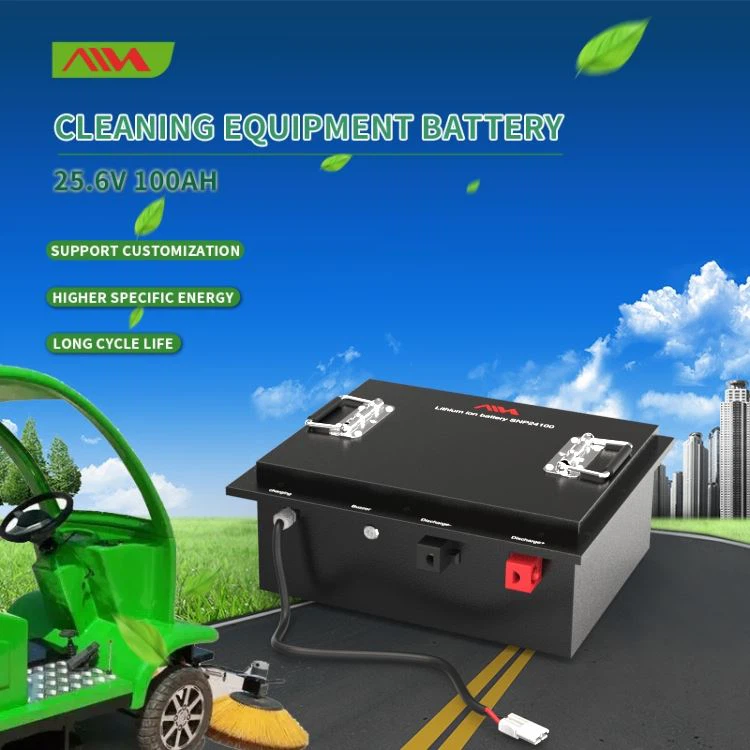
We offer a wide range of AGV batteries, including Customized LiFePO4 24V 50Ah 100Ah Floor Cleaning Machine Battery Operated Floor Sweeper Battery, Cleaning Equipment Battery Pack 24V 50ah, and Sweeper Robot 24V 100ah Lifepo4 Battery. These batteries are specifically designed to meet the demanding requirements of AGV applications, with a focus on reliability, efficiency, and long - term performance.
Conclusion
The temperature range for AGV battery operation is a critical factor that can significantly impact the performance and lifespan of the battery. By understanding the optimal temperature range and the challenges associated with high and low temperatures, AGV operators can take steps to ensure that their batteries are operating under the best possible conditions.
If you are in the market for high - quality AGV batteries that are designed to handle a wide range of temperatures, we invite you to contact us for a detailed discussion. Our team of experts is ready to assist you in selecting the right battery solution for your specific application.
References
- Linden, D., & Reddy, T. B. (2002). Handbook of Batteries. McGraw - Hill.
- Tarascon, J. M., & Armand, M. (2001). Issues and challenges facing rechargeable lithium batteries. Nature, 414(6861), 359 - 367.